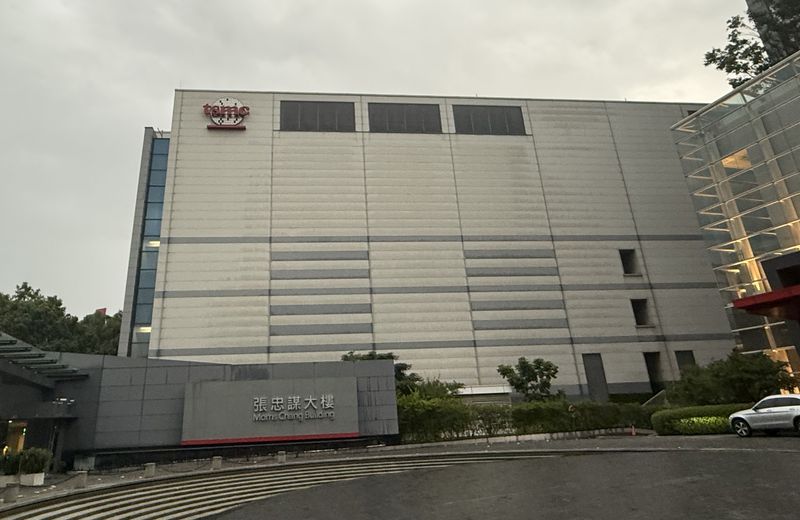
A view of the Morris Chang Building, the headquarters of TSMC, the world's largest foundry company, in Hsinchu Science Park, Taiwan. Photo by Choi Hye-rim. 【Hsinchu, Taiwan·Seoul = Jung Won-il, Lim Subin】 "You cannot win the AI race by selling memory alone."As the global race for AI dominance moves beyond simple semiconductor production and toward a full ecosystem spanning accelerators, servers, models, and services, concerns are deepening in Korea's semiconductor industry. Korea has secured world-class memory competitiveness, but control of the AI value chain remains in the hands of U.S. Big Tech and NVIDIA. Industry observers say Korea urgently needs to build a "K-AI ecosystem" that tightly connects design, packaging, and AI models by leveraging its memory leadership, much as Taiwan has spent more than 30 years building a robust industrial ecosystem around TSMC.
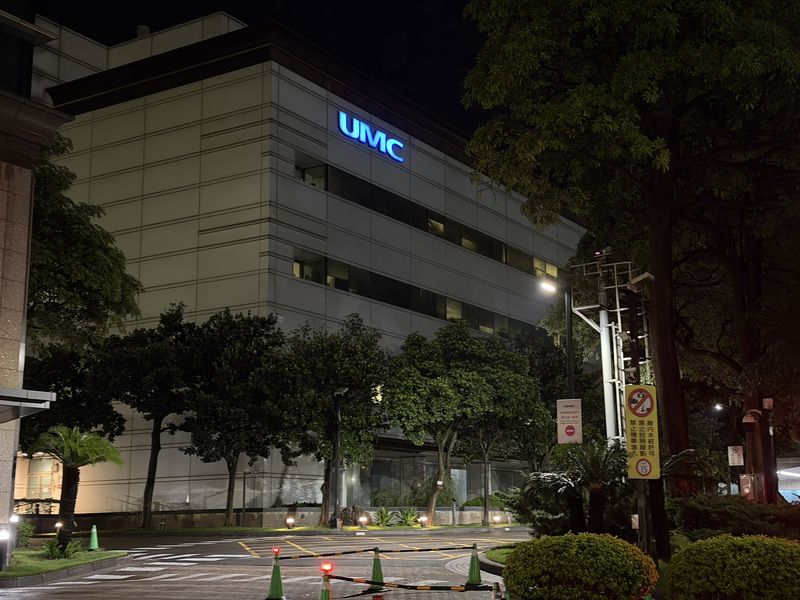
A view of the headquarters of Taiwan's UMC, located just over 1 kilometer from TSMC's headquarters in Hsinchu Science Park. UMC is regarded, along with TSMC, as one of Taiwan's flagship foundry companies. Photo by Jung Won-il. According to industry sources on the 22nd, the global AI rally has evolved into a competition between ecosystems that combine semiconductor design, production, and packaging with infrastructure and software capabilities. Taiwan is a leading success story. Experts say Taiwan's true strength lies not only in TSMC as a single company, but in the dense semiconductor ecosystem built around it.
From the early days of developing the foundry industry, Taiwan has grown its fabless ecosystem alongside TSMC. Starting with close cooperation with domestic fabless firms such as MediaTek, it has now linked packaging player ASE and manufacturer Foxconn to complete a powerful supply chain that extends from design and production to back-end processes and final assembly.
Korea, by contrast, remains heavily dependent on its "memory duo" of Samsung Electronics and SK hynix. There is no dispute that memory is one of the biggest beneficiaries of the AI era, but concerns over the weak foundation in non-memory sectors such as fabless chip design remain unresolved.
Paradoxically, the arrival of the AI era is opening a new path for Korea. General-purpose memory, once a high-volume, standardized business, is now becoming an industry that requires joint design with customers, customized packaging, and system-level optimization.
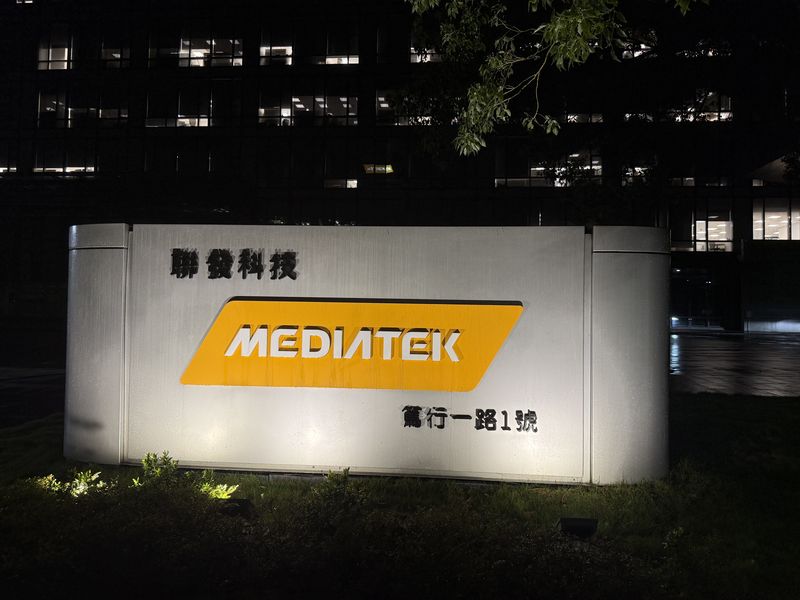
A plaque installed in front of the headquarters of MediaTek, Taiwan's largest fabless company, located just over 1 kilometer from TSMC's headquarters in Hsinchu Science Park. Photo by Choi Hye-rim. The key is High Bandwidth Memory (HBM). HBM has become an essential component that determines the performance of AI accelerators, and with each new generation it is evolving into a highly customized product tailored to individual customers.
Ahn Ki-hyun, executive vice president of the Korea Semiconductor Industry Association, explained, "In the past, memory was like bread — made first and sold later. AI memory is becoming more like a lunchbox, produced to match customer orders." He added, "The memory industry itself is gradually shifting toward a foundry-like business model."
Industry officials say this shift is a prime opportunity to expand Korea's AI ecosystem. In the past, it was enough to make one chip well. Now, survival depends on organic collaboration among memory, AI accelerators, advanced packaging, servers, and AI models. Just as Taiwan built its fabless ecosystem around TSMC, Korea must use its overwhelming memory competitiveness as leverage to create a co-growth ecosystem spanning design, packaging, and AI models.
Ahn said, "If we remain in a structure that only supplies memory, we will ultimately be stuck playing the role of a subcontractor to global Big Tech." He added, "It is important to create a market where domestic AI semiconductors, memory, and AI models can grow together."
soup@fnnews.com Lim Subin Jung Won-il Reporter