Global Crypto Exchanges Expand Into K-Stock and Index Futures [Crypto Briefing]
- Input
- 2026-06-22 14:44:17
- Updated
- 2026-06-22 14:44:17
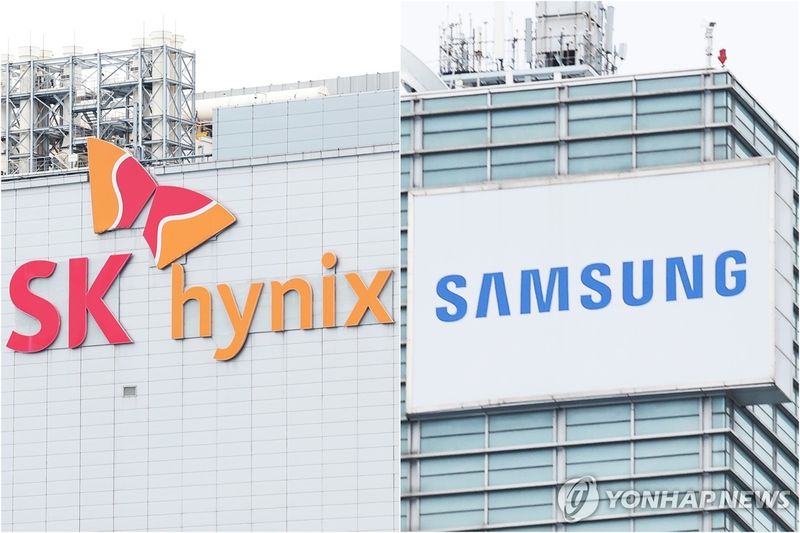
[Financial News] Major overseas exchanges, including Binance, the world’s largest crypto exchange, as well as Bybit and Coinbase, are successively expanding support for futures and tokenized products tied to Korea’s flagship stocks and indices, such as Samsung Electronics and SK hynix. As crypto trading volumes plunge, exchanges are reshaping their businesses toward traditional financial markets, including stocks and derivatives. By contrast, South Korea is unable to participate in the related market because of delayed regulatory reform and restrictions that prevent crypto exchanges from entering traditional finance.
According to Tiger Research and industry sources on the 22nd, Binance’s average daily altcoin spot trading volume has fallen about 85% from a peak of roughly $45 billion in October 2025 to around $7.7 billion now. The combined average daily trading volume of other centralized exchanges, excluding Binance, also dropped about 70% over the same period, from a peak of roughly $63 billion to $18.8 billion.
As business models that relied on crypto trading fees face their limits, the growth of Hyperliquid, a decentralized exchange, is also seen as a factor pressuring centralized exchanges. Of the top 30 assets by perpetual futures trading volume on Hyperliquid, 23 were products linked to traditional assets such as stocks and commodities.
As a result, exchanges seeking to absorb traditional asset infrastructure are also adding derivatives based on Korea’s leading stocks to their product lineup. Earlier this month, Binance began offering trading services for U.S. stocks and exchange-traded funds, including Apple and Google, through its own app to users in certain regions, excluding U.S. residents.
Instead of directly custodying securities, Binance chose a structure in which orders are routed through Nest Trading, a broker licensed by Abu Dhabi Global Market (ADGM). Bybit has also launched a lineup of perpetual futures tied to traditional assets, beginning support for perpetual futures trading in SK hynix, Samsung Electronics and others. Coinbase and Kraken, both regulated exchanges in the United States, are also expanding into financial platforms.
On the 16th, Coinbase announced plans to issue tokenized stocks that are 1:1 physically linked to U.S.-listed shares. Kraken has secured infrastructure that would allow it to operate crypto derivatives businesses, including perpetual futures, in the United States, based on Bitnomial, a CFTC-registered exchange it acquired in May.
While global crypto exchanges are bringing traditional financial assets onto the blockchain, South Korea is said to be lagging in regulatory reform, limiting domestic players’ participation in related markets. Traditional financial institutions are effectively barred from crypto-related businesses and exchange operations, while domestic crypto exchanges cannot handle stocks or derivatives under the Capital Markets Act.
This has increased calls for regulatory reform aligned with global standards, including the General Act on Digital Assets. Lee Jun-ho, a researcher at Hana Securities, said, "On global exchanges, futures products tracking domestic indices and individual stocks are already being traded." He added, "In addition to futures tracking the iShares MSCI South Korea ETF (ticker: EWY), which is listed in the United States, Binance is also trading futures on Samsung Electronics and SK hynix." He noted that "even if global demand for domestic products and trading volume increase, the benefits are captured by global institutions and exchanges."
[email protected] Kim Mi-hee Reporter