The United States and Iran Draw Up a 60-Day Roadmap for a Ceasefire Deal... Agree on Solutions for the Strait of Hormuz and Lebanon
- Input
- 2026-06-22 14:25:58
- Updated
- 2026-06-22 14:25:58
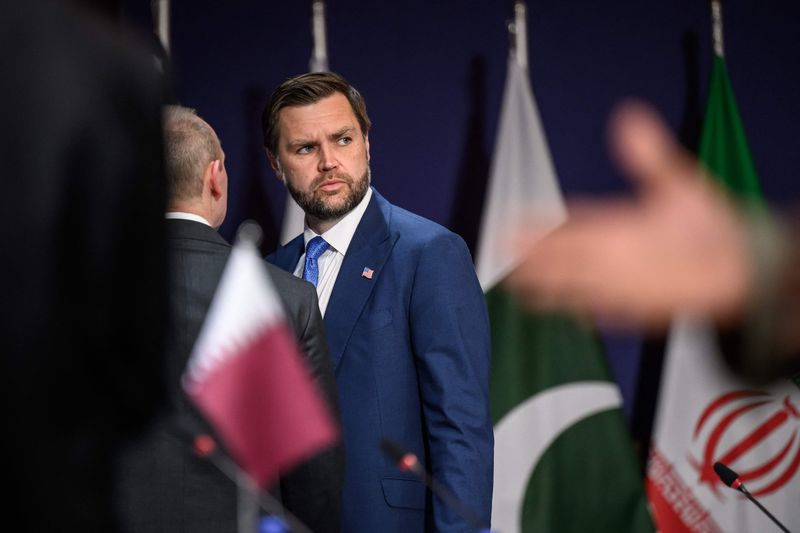
[Financial News] The United States and Iran, which held their first detailed ceasefire talks since the ceasefire memorandum took effect, issued a joint statement on the 22nd local time after 18 hours of overnight negotiations. At the meeting, the two sides agreed to draw up a roadmap for a final ceasefire deal over the next 60 days and to create a framework for managing tensions in the Strait of Hormuz and Lebanon.
60-Day Negotiation Roadmap, Mention of the Strait of Hormuz and Lebanon
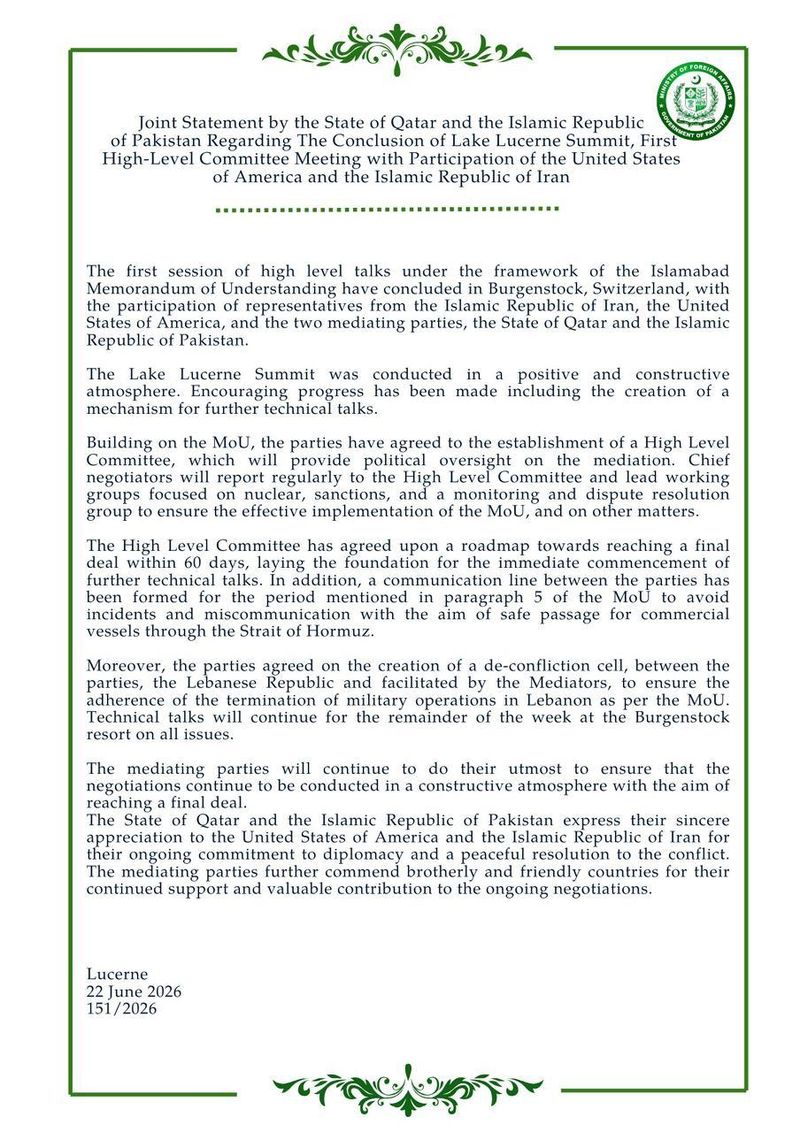
According to foreign media, including the BBC, representatives from Pakistan and Qatar, which served as mediators in the talks, issued the joint statement on the 22nd after wrapping up the four-way meeting with the United States and Iran at the Bürgenstock Resort near Lake Lucerne in Switzerland. The statement said the United States and Iran had agreed to establish a "high-level committee" on how to implement the ceasefire memorandum signed on the 17th. The ceasefire negotiators will regularly brief the committee on progress and will lead working groups on nuclear issues, sanctions, monitoring, and dispute resolution.According to the statement, this meeting was the first session of the high-level committee, and the committee agreed on a "roadmap for a final agreement within 60 days." It also said the committee had "established a hotline between the parties during the period specified in Article 5 of the memorandum (60 days) to prevent accidents and misjudgments and ensure the safe passage of merchant vessels through the Strait of Hormuz." It further stated that the parties "agreed, with the assistance of the mediating countries, to establish a de-escalation mechanism between the parties and Lebanon to ensure compliance with the cessation of military operations in Lebanon under the memorandum." The statement also said that "technical talks on all agenda items will continue for the rest of this week at the Bürgenstock Resort." Pakistan and Qatar said in the statement that they would "do their utmost to ensure that the negotiations continue in a constructive atmosphere with the goal of reaching a final agreement."
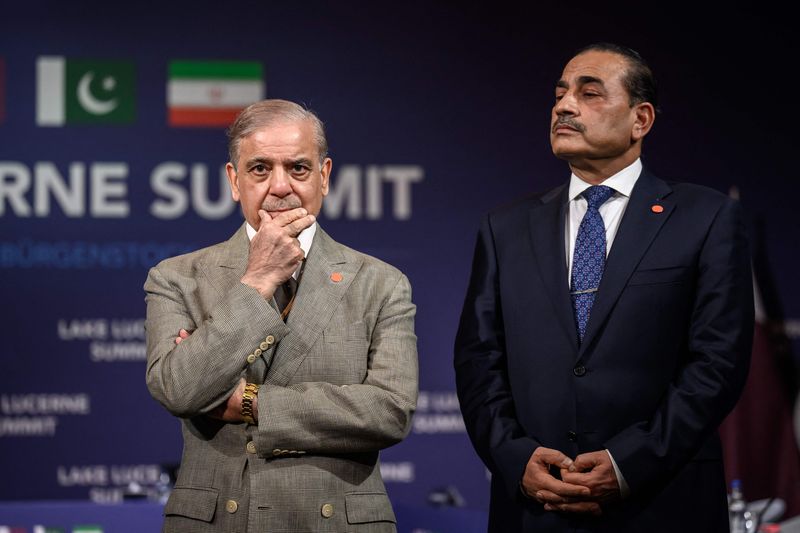
The first person to announce the statement was Prime Minister of Pakistan Shehbaz Sharif. Sharif has overseen the ceasefire talks between the United States and Iran since April, together with Chief of Army Staff of Pakistan Asim Munir. Munir and other Pakistani leaders used their ties with U.S. President Donald Trump and contacts with President of Iran Masoud Pezeshkian to bring the negotiations together. Christopher Clary, an associate professor of political science at the University at Albany, State University of New York, told local media that "Pakistan has gone from having virtually no influence in the Middle East in early 2025 to becoming a major diplomatic and military actor in the region today." He added that even though Qatar was involved in the agreement, "the fact that Pakistan's standing has risen relatively remains unchanged."
Iran claims sanctions relief and access to frozen funds
Iranian Minister of Foreign Affairs Abbas Araghchi posted the joint statement on X on the 22nd and said that, thanks to mediation by Pakistan and Qatar, the sides had made a "major breakthrough" in implementing the memorandum. He said the "first substantive test is the Lebanon dispute-resolution mechanism," explaining that the structure designed to prevent renewed military clashes in Lebanon would be a key indicator of the agreement's sustainability. Araghchi also claimed that U.S. restrictions on Iran's "exports of oil and petrochemical products were lifted, the blockade was removed, some frozen assets were released, and a large-scale reconstruction and development plan for Iran has begun." The sanctions relief and other measures he mentioned were not included in the joint statement.On the same day, Esmaeil Baghaei, spokesperson for the Iranian Ministry of Foreign Affairs, told Iranian state broadcaster in an interview that "we agreed with the United States to establish a mechanism related to the safe passage of ships through the Strait of Hormuz, and this is an important matter." He said, "We discussed issuing permits needed for Iran's oil exports and the release of frozen funds, and this is a very important issue. Considerable progress has been made," adding that "war must end on all fronts, including Lebanon." Baghaei said, "At this stage, the work of the negotiating team is over, but the working teams will continue discussions tomorrow at a meeting attended by the mediating countries on matters needed for the effective implementation of the memorandum." He added, "According to Article 13 of the memorandum, these conditions must be implemented first before entering negotiations for a final agreement." Article 13 of the memorandum says that final talks on the remaining provisions will proceed only after fighting stops on all fronts, including Lebanon, the United States lifts its maritime blockade on Iran, permits Iranian oil product exports, and releases frozen Iranian assets overseas.
[email protected] Park Jong-won Reporter