Gas stations on the brink of collapse... "Road occupancy fees should be cut in half"
- Input
- 2026-06-22 09:41:10
- Updated
- 2026-06-22 09:41:10
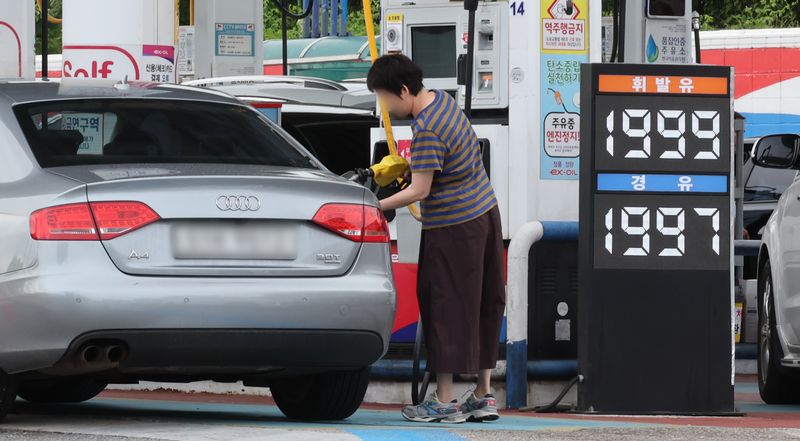
[Financial News] The gas station industry, facing heavier management burdens from declining sales and rising officially assessed land prices, is calling for a reduction in road occupancy fees. While EV and hydrogen charging facilities receive various tax breaks and fee reductions, gas stations must bear the full cost of road occupancy fees, raising concerns over fairness among energy supply facilities.
On the 22nd, the Korea Petroleum Distribution Association said the total road occupancy fees imposed on 1,602 gas stations nationwide last year came to about 4.547 billion won. The average charge per station was about 2.84 million won, with an average occupied area of 187 square meters and an average fee of about 50,174 won per square meter.
The association estimated that if this average is applied to all 10,443 gas stations operating nationwide last year, annual road occupancy fees would reach about 29.6 billion won. It plans to ask the government to ease the burden on gas station entrances and exits by lowering the fees and improving the calculation standards.
According to the association’s analysis, a 50% cut in road occupancy fees would save about 14.8 billion won nationwide. Based on the 1,602 gas stations surveyed, the burden relief would amount to about 2.274 billion won.
By region, Seoul was expected to see the largest reduction, at about 6.5 billion won. It was followed by Gyeonggi Province with about 2.1 billion won and Busan with about 1.5 billion won. The combined expected reduction for the three regions was estimated at about 10.2 billion won.
The association said that in the Seoul metropolitan area and other major cities, where officially assessed land prices are high, the measure would help reduce excessive road occupancy costs. In regional areas, it would also cut fixed costs for small gas stations struggling with lower sales and population decline.
Gas station entrances and exits are currently classified as essential infrastructure for the safe entry and exit of vehicles and for fuel supply. However, road occupancy fees are calculated based on the officially assessed land price of adjacent land, creating large regional differences in the burden despite the facilities serving the same function.
The industry also pointed out that EV and hydrogen charging facilities receive various fee reductions, while gas stations must pay road occupancy fees in full. It said the public role of these energy supply facilities is similar, but support policies differ.
Meanwhile, the association said it plans to propose to the relevant ministries a 50% reduction in road occupancy fees for gas station entrances and exits, a cut in the calculation rate from 0.02 to 0.01, and the introduction of a regional standard price cap.
[email protected] Lee Dong-hyuk Reporter