"Samsung Electronics and SK hynix, and even the NPS"... As the semiconductor rally heats up, the depletion date has been pushed back by 4 to 7 years
- Input
- 2026-06-22 08:00:09
- Updated
- 2026-06-22 08:00:09
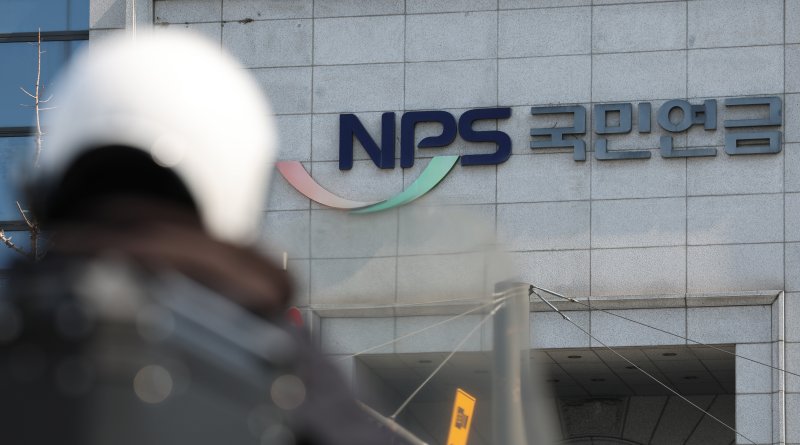
[Financial News] Thanks to the strong performance of the domestic stock market, which even broke through the 9,000-point KOSPI level, the National Pension Service (NPS) breathed a sigh of relief. Higher investment returns are estimated to have delayed the fund depletion date by about four to seven years. Still, experts say the NPS must not only consider the risk of short-term market shocks, but also prepare for a decline in the fund.
Domestic stock assets have risen by 57 trillion won this year, easing concerns over depletion
According to a comprehensive review of the National Pension Fund Management Overview and materials for the 2026 National Pension Fund Operation Committee meeting released on the 21st, the NPS fund assets stood at about 1,526 trillion won at the end of March. That was up about 68 trillion won from the end of last year, when the total came to 1,458 trillion won. Domestic stocks accounted for 320.9 trillion won of the total.
Domestic stocks within the NPS fund were found to have increased by more than 57 trillion won from 263.7 trillion won at the end of last year. Their share of total fund assets also rose by 3 percentage points, from 18.1% to 21.1%, in just three months. The gains appear to have been driven by the KOSPI's rally, led by semiconductor stocks.
As the fund grew on the back of the stock market rally, the NPS, which had been worried about depletion for years, has gained some breathing room. As recently as June last year, a report by the National Assembly Budget Office (NABO) on the fiscal and policy impact of the National Pension parametric reform projected that the pension fund would move into deficit in 2048 and be depleted in 2065.
However, in a report released on the 18th titled "Revised Fiscal Outlook for the National Pension Fund Following Improved Fund Management Performance," NABO said, "Reflecting the increase in reserves through 2025, the point at which the fiscal balance turns to deficit has been delayed by two years, and the depletion date has been pushed back by four years." It estimated that the deficit would begin in 2050 and the fund would be exhausted in 2069.
Based on macroeconomic outlooks for South Korea and major overseas economies, NABO projected the average fund management return rate at 4.6% over the forecast period from 2026 to 2100. It also said that if returns were 1 percentage point higher on average, the depletion date would be pushed back by 12 more years to 2082.
In 2025, the domestic stock segment of the NPS assets posted a return of 35.12%, driving the overall asset return of 18.82%. The long-term return outlook remains unchanged, but as of the end of 2025, the fund was larger than initially expected, which became the starting point for the fiscal projection and delayed the estimated depletion date.
In response, Vice Health Minister Hyun Soo-yeop said at a Cabinet meeting last month, "In the previous fiscal projection, the depletion date was 2071, but this time, because returns were so strong in 2025, it has been tentatively pushed back by about seven years."
A MOHW official also explained, "Last year, domestic stock returns were so strong that the fund grew larger than originally expected. The effect of pension reform had already been factored in, and internally we roughly estimated that, on top of that, the depletion year would be delayed by about seven years due to the strong performance of domestic stocks."
Returns vary depending on market volatility... securing sustainability is the key issue
Still, some say preparations for market volatility are also necessary. Although the projected depletion date has been pushed back, the sustainability of fund management remains limited, and unexpected market swings could affect future performance.
Kim Woo-rim, an analyst at NABO's Social Cost Estimation Division, pointed out that "consistently posting 4.6% returns is different from an average of 4.6% that includes negative years." In fact, the NPS recorded negative returns in 2022 (-8.22%), 2018 (-0.92%), and 2008 (-0.18%).
Kim added, "Economic shocks can happen at any time, so actual fund management performance can change significantly depending on return fluctuations. To secure long-term sustainability, the fund needs not only better investment performance, but also preparation for periods of fund decline."
[email protected] Kim Hee-seon Reporter