Trump Warns of 'Another Attack' as U.S.-Iran Talks Hit Snags on Day One
- Input
- 2026-06-22 06:27:08
- Updated
- 2026-06-22 06:27:08
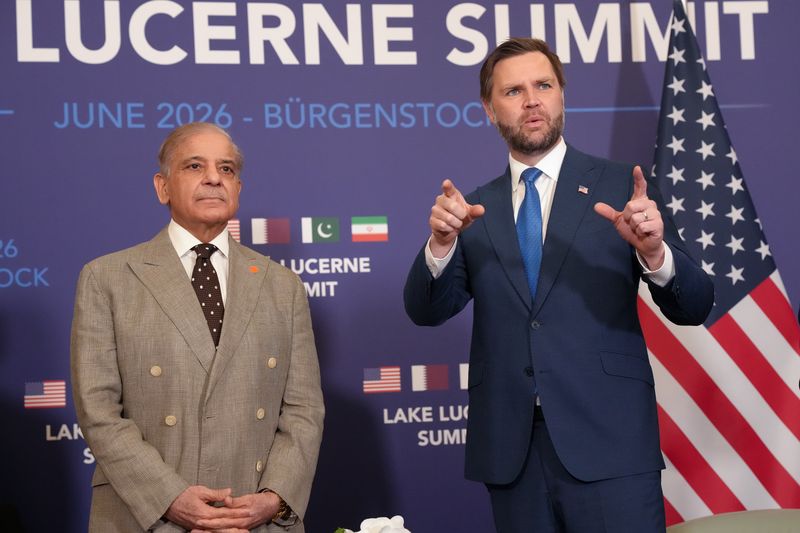
According to Associated Press (AP) and The New York Times on the 21st local time, the high-level talks between the United States and Iran in Bürgenstock, Switzerland, were tense from the outset. The talks were held to discuss detailed steps for implementing the provisional ceasefire agreement reached last week. Key items on the agenda included Iran's nuclear program, passage through the Strait of Hormuz, and the release of frozen Iranian assets.
However, just before the talks began, President Trump warned on Truth Social that "Iran must immediately stop the provocations by its proxy force in Lebanon, Hezbollah," adding that "otherwise, we will attack Iran again, much harder than last week." His remarks quickly chilled the atmosphere.
In response, Mohammad Bagher Ghalibaf, Iran's chief negotiator, fired back, saying, "They should be more careful with their words." He added, "Our military is ready to respond in other ways. They are the ones talking, but we are the ones acting."
Iranian state media reported that the talks entered a difficult phase and were temporarily suspended after Trump's insulting remarks. It also said the Iranian delegation later held separate consultations with the Qatari mediation team before leaving the venue.
However, a source familiar with the talks told AP that "the Iranian delegation is still participating in the negotiations and has not informed the mediators that it intends to withdraw."
The talks are the first step in turning the provisional agreement into a final peace deal over the next 60 days. The United States is demanding that Iran begin negotiations on its nuclear program and keep the Strait of Hormuz open.
Iran, meanwhile, says the Lebanon issue must be resolved first. It argues that it is difficult to discuss other matters while clashes continue between Israel and the pro-Iranian armed group Hezbollah. Israeli Prime Minister Benjamin Netanyahu has said Israel will not withdraw from southern Lebanon until the threat to Israel is completely removed, while Hezbollah maintains that it will not stop attacking unless Israel pulls out.
Differences over the nuclear issue also remain unresolved. The provisional agreement included a provision for Iran to dilute its stockpile of highly enriched uranium, but Iranian President Masoud Pezeshkian stressed that "we will never give up our right to enrich uranium, and the United States will have no choice but to accept it."
Trump also stepped up the pressure in an interview with Fox News, saying, "The Iranian president should be careful with his words."
[email protected] Lee Byung-chul, correspondent Reporter