Trump Threatens Iran on Social Media, Prompting Suspension of U.S.-Iran Talks in Switzerland
- Input
- 2026-06-22 05:58:30
- Updated
- 2026-06-22 05:58:30
[Financial News] U.S. President Donald Trump sharply criticized Iran for supporting Hezbollah, the armed group in Lebanon, and warned that he could strike Iran directly. The preliminary peace agreement between the United States and Iran, which was dramatically signed last week, is already being shaken again by renewed bloodshed in Lebanon and fears of a blockade of the Strait of Hormuz.
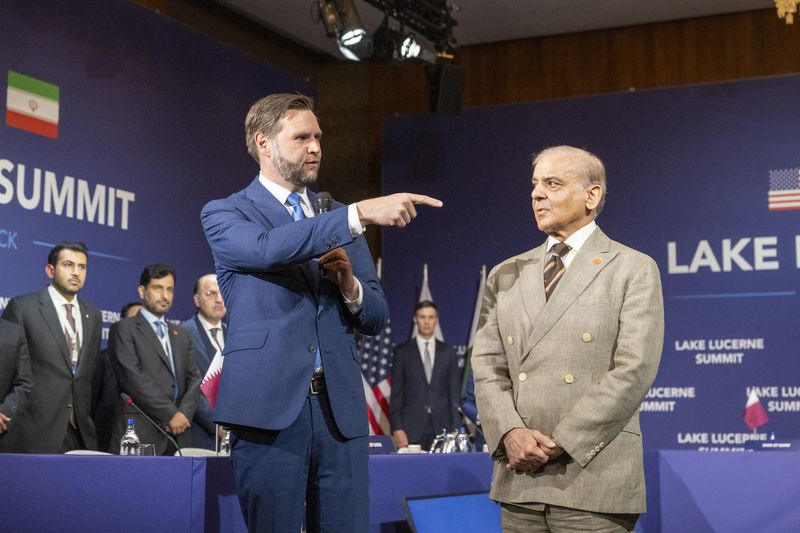
On the 21st local time, foreign media including The Wall Street Journal (WSJ) reported that Trump’s warning came while Vice President J.D. Vance was holding behind-the-scenes talks with the Iranian delegation at the Bürgenstock Resort on the shores of Lake Lucerne in Switzerland. The Iranian delegation strongly objected and walked out, leaving the prospects for resuming the talks uncertain.
The U.S. side had initially planned to discuss Iran's nuclear program, but the agenda had to be urgently revised because of the recent intense clashes between Israel and Hezbollah in Lebanon.
On his social media account, Trump wrote, "Iran must immediately stop its proxy forces, which are receiving massive funding from Tehran, from causing trouble in Lebanon. Otherwise, I will strike Iran as I did last week, or even harder!!!"
In an interview with Fox News, Trump said he had warned Iranian officials in a phone call the previous day not to close the strategic Strait of Hormuz.
According to reports, Trump told the Iranian side in a strong tone, "If you close the strait, your country will disappear," and added, "You won't even be able to go back to your 'damn' homeland."
In response, Nour News, which is affiliated with Iran's Supreme National Security Council (SNSC), said, "The Iranian delegation temporarily suspended the talks because of President Trump's threats." Iran's state broadcaster IRIB also reported that it remains unclear whether the talks will resume.
Mohammad Bagher Ghalibaf, the Iranian delegation's chief negotiator and Speaker of the National Assembly, posted on his X account, "The United States should be careful with its words," and added, "Our military is ready to respond in a completely different way, and no matter what they say, it is we who will act," signaling a possible military countermeasure.
The Swiss talks began with mediation by Qatar and Pakistan and later developed into direct negotiations between the United States and Iran.
After wrapping up the early round of talks on the 21st, Vice President Vance, who led the U.S. delegation, held a press conference and said, "We have made major progress over the past few hours, and the situation in Lebanon is also improving." He added that if Iran stops destabilizing activities, the two sides are "ready to open a new chapter in U.S.-Iran relations," striking an optimistic tone.
The first clause of the memorandum of understanding signed by the two countries on the 17th calls for a halt to fighting in Lebanon and the opening of the Strait of Hormuz. However, as armed clashes between Israel and Hezbollah continued, Iran declared on the 20th that it would close the Strait of Hormuz.
Tasnim News Agency, a military-focused Iranian outlet, warned, "The strait will not reopen unless the Lebanon ceasefire holds and Iran's oil exports are guaranteed." The U.S. military, however, countered that the strait remains open, while Lloyd's List reported that traffic is limited but some shipping continues.
The United States wants Iran to dispose of or transfer its stockpile of enriched uranium and hopes to see uranium enrichment halted for the next 20 years, while Iran is insisting on a 10-year suspension.
In return, the United States has offered broad sanctions relief as an incentive, including allowing Iran to sell oil and unfreezing its assets.
[email protected] Yoon Jae-joon Reporter