[Editorial] Even in regular jobs, older workers have overtaken young people. A breakthrough is urgently needed.
- Input
- 2026-06-21 19:07:41
- Updated
- 2026-06-21 19:07:41
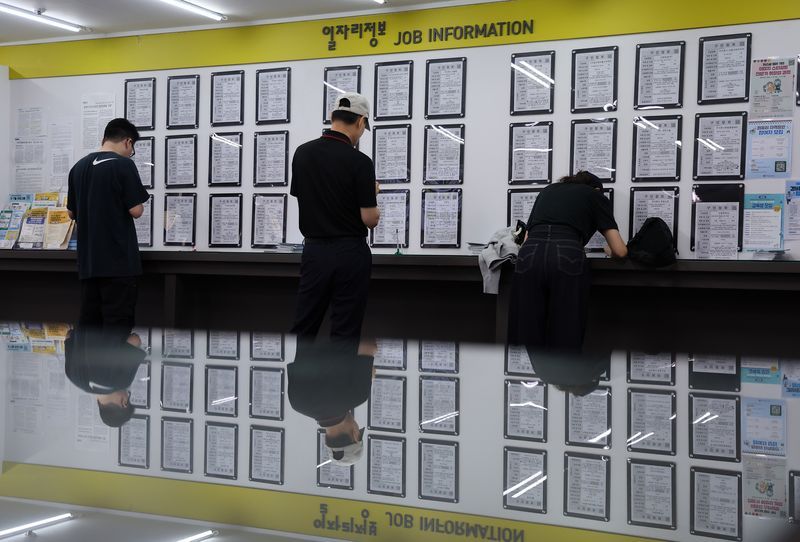
The growing participation of older workers in the labor market is not, in itself, a negative development. As life expectancy rises and concerns over retirement income deepen, it is natural for people over 60 to keep working. The problem is that while jobs for older workers are increasing, young people are finding it harder and harder to enter the market. The number of regular young workers has declined for four straight years since 2022. More troubling is the pace. Over the past four years, the young population fell by 9.0 percent, but the number of regular young workers dropped by 17.0 percent. This year, the decline is even steeper. The rate of decrease in regular jobs for young people is far more than three times the population decline rate.
It is also worth noting that young people face an even tougher path during an era of industrial upheaval. According to the National Data Office's economically active population survey, manufacturing remains the largest employment sector, but its share of total employment has continued to shrink and fell below 15 percent in May for the first time since statistics began in 2013. Korean companies are benefiting from the global semiconductor boom, but jobs in the semiconductor sector account for only 4 percent of all manufacturing jobs.
As the broader manufacturing industry, excluding semiconductors, remains in a slump, the number of manufacturing workers has fallen for 23 consecutive months, and young hiring has been hit first. According to administrative employment trend data, manufacturing jobs for people in their 40s and younger fell by 250,000 over the past seven years, while jobs for those aged 50 and older increased by 330,000. The aging of production-line workers is becoming increasingly evident. To make matters worse, regular jobs for young workers are also declining in the information and communications industry. The spread of Artificial Intelligence adoption and a hiring culture centered on experienced workers have rapidly eliminated entry-level and new graduate positions.
If this trend is left unchecked, it will become a problem not just for young individuals but for the entire Korean economy. Failure by young people to enter the labor market will trigger a chain reaction that leads to lower birth rates, weak domestic demand, regional decline, and a weaker growth potential. It is encouraging that the government has said it will roll out youth employment measures on a regular basis, but symbolic, short-term fixes will not be enough. Short internships, one-off subsidies, and jobs created merely to pad the numbers have clear limits.
To keep young people from being pushed out at the threshold of industrial transition, Korea needs a practical ladder that connects new hiring, training, and job transitions. More fundamentally, the government should pursue a range of incentives to encourage companies to hire new workers and inject vitality by improving market flexibility. Only by cutting away structural inefficiencies and low productivity can room be created for new hiring. In addition, the uniform demand from entrenched regular workers to extend the retirement age should be reconsidered through a gradual approach.