‘Dujjonku popularity has cooled, so what now?’ Pistachio imports jump fivefold as industry faces a backlash
- Input
- 2026-06-21 16:40:31
- Updated
- 2026-06-21 16:40:31
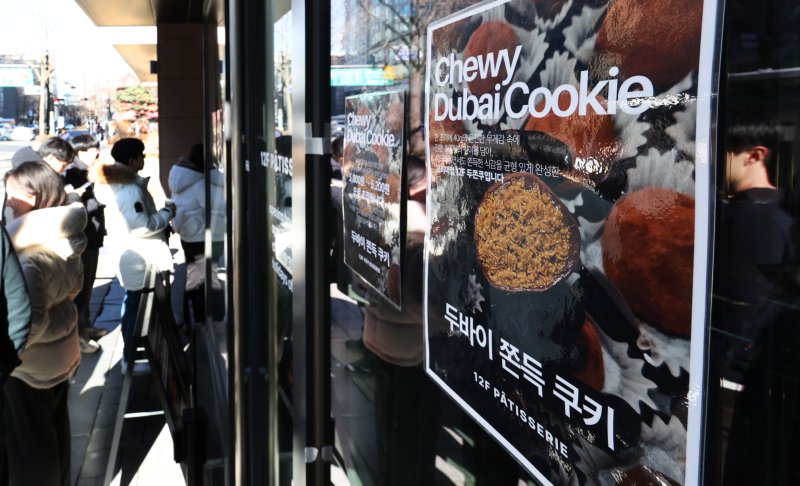
[Financial News] The popularity of the “Dubai chewy cookie” known as Dujjonku, which swept South Korea’s dessert market from late last year through this spring, has driven imports of pistachios, a key ingredient, to nearly five times their level this year. Cocoa imports, another ingredient widely used in Dujjonku, have also risen by nearly 90% over the past two years. Even as high exchange rates and elevated oil prices have sharply increased the cost burden of imported ingredients, these items have enjoyed an unusual boom amid the Dujjonku craze.
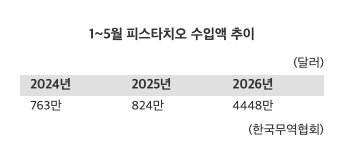
According to the Korea International Trade Association (KITA) on the 21st, pistachio imports totaled $44.48 million from January to May this year. That compares with $7.63 million in the same period of 2024 and $8.24 million in the same period last year. Compared with last year, imports surged by $36.24 million, or 440%, this year. The sharp increase is being attributed to the Dujjonku trend. Dujjonku is a dessert that combines Dubai chocolate with rich pistachios and crispy kadaif noodles for a distinctive texture.
Since late last year, demand has surged on social networking services despite the price exceeding 7,000 won per piece, to the point that even an early-morning queue did not guarantee a purchase. Not only ordinary cafes but also Chinese and Japanese restaurants jumped into Dujjonku sales, while major coffee chains such as Starbucks and Dunkin' Donuts developed their own products, leading to shortages of pistachios and kadaif.
In particular, food and beverage companies joined the rush, launching pistachio-related products one after another and pushing imports even higher. Lotte Wellfood introduced six Dubai-style pistachio products, including Myeonga Chaltteok Pie, while Crown Confectionery released a Pistachio Corn Snack and Hollys unveiled the Dujjonku Dolce Latte.
Along with pistachios, imports of cocoa, the main ingredient in the chocolate used for Dujjonku, also rose sharply. Cocoa imports by powder volume reached $38.03 million from January to May this year. That is up $16.27 million, or 88.8%, from $18.32 million in the same period of 2024. The figure also far exceeds last year’s total of $34.59 million, which had already been lifted by the Dubai chocolate and Dujjonku craze.
Unlike the Dujjonku boom, the import burden for pistachios and cocoa has worsened. Cocoa prices, which had already surged last year due to El Niño in West Africa, the main production region, remained elevated into early this year, adding to cost pressures. Global demand for Dubai chocolate products also made it harder to secure cocoa powder supplies, driving up import prices further. In fact, pistachio prices have risen from 15,000 won per kilogram to 28,000 won over the past year. Cocoa powder retail prices have also jumped from the 30,000-won range to as high as 60,000 won per kilogram in the past year.
Despite the sharp rise in raw material costs, domestic food companies rushed to import these ingredients in order to ride the Dujjonku wave that has led the dessert market. However, as the craze faded, some companies and retailers were left with inventory burdens and mounting losses.
“Cocoa and other prices have stabilized a lot now, but when Dujjonku was trending, companies had to move from product development to securing supply, so the import burden was indeed heavy,” an industry source said.
security@fnnews.com Park Kyung-ho Reporter