Iran Says It Will Reclose the Strait of Hormuz; U.S. Military Says Ship Traffic Continues
- Input
- 2026-06-21 03:25:21
- Updated
- 2026-06-21 03:25:21
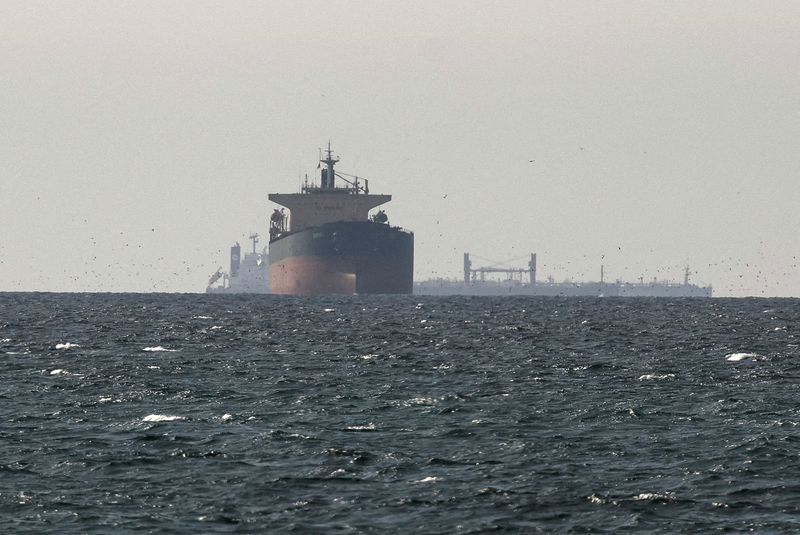
Iran declared on the 20th local time that it would once again block the Strait of Hormuz. The move was a response to Israel's attack on Hezbollah in Lebanon.
The U.S. military, however, said the strait was not blocked and that ship traffic was continuing normally.
Even so, shipping lines that felt threatened had little choice but to avoid the passage, despite the U.S. military's statement.
Although the United States and Iran signed a previous Memorandum of Understanding (MOU), follow-up talks have not taken place. Some observers say Iran is trying to use the Strait of Hormuz as leverage to gain the upper hand in negotiations.
Reclosure declaration
According to the Financial Times (FT), the Islamic Revolutionary Guard Corps (IRGC) declared that the strait would be blocked. It cited Israel's 'crimes' and the United States' 'violation' of the ceasefire agreement.
Earlier, Iran signed the MOU with the United States on the 17th and agreed to gradually reopen the Strait of Hormuz. The two sides had also planned to begin detailed discussions in Switzerland on the 19th.
But Iran postponed the talks after Hezbollah, the Lebanese armed group it supports, clashed with Israel.
Israel and Hezbollah agreed to a ceasefire on the 19th through mediation by the United States, Qatar, and Iran, but the fighting has continued.
U.S. military says traffic continues
Iran declared that it would block the strait, but the U.S. military denied it.
The New York Times (NYT), citing U.S. Central Command (CENTCOM) spokesman Navy Col. Tim Hawkins, reported that "Iran is not controlling the strait."
Hawkins said, "Ship traffic is continuing," adding, "The United States is also monitoring the situation to ensure that it remains that way."
In a post on social media platform X, CENTCOM said that "merchant vessel traffic through the Strait of Hormuz increased on the 20th as the United States continued operations to support freedom of navigation."
According to CENTCOM, 55 merchant ships passed through the strait that day, and more than 17 million barrels of crude oil were transported.
Follow-up talks in Switzerland
Iran is not completely walking away from talks with the United States.
Iran's Foreign Ministry said it had sent a delegation to Switzerland. Iranian media reported that the negotiating team, led by Mohammad Bagher Ghalibaf, speaker of Iran's parliament, included Foreign Minister Abbas Araghchi, Central Bank Governor Abdol Nasser Hemmati, and Deputy Oil Minister Hamid Bord.
On the U.S. side, special envoy Steven Charles Witkoff and presidential son-in-law Jared Kushner had already traveled to Switzerland.
The talks will focus on detailed ways to implement the MOU.
The immediate priority is to keep the Strait of Hormuz open and stable.
Keeping the Strait of Hormuz open, through which 20% of the world's oil and natural gas shipments pass, is essential to easing the energy crisis.
Iran trying to seize the initiative in nuclear talks
The nuclear issue, which triggered the war, is expected to be the central focus of the talks between the two sides in Switzerland on the 21st.
According to Pakistan, which has mediated the ceasefire talks between the two sides, working-level discussions between the United States and Iran will be held on the 21st.
The nuclear negotiations, which have already drawn complaints even from the ruling Republican Party that too many concessions were made, are expected to turn out unfavorably for the United States.
By bringing the option of blocking the Strait of Hormuz back into play, Iran has made it clear that the balance of leverage in the talks is tilting in its favor.
[email protected] Song Kyung-jae Reporter