"What Happens to the 1.15 Billion Barrels of Missing Oil Even After the 'Reopening of the Strait of Hormuz'?"
- Input
- 2026-06-20 05:13:24
- Updated
- 2026-06-20 05:13:24
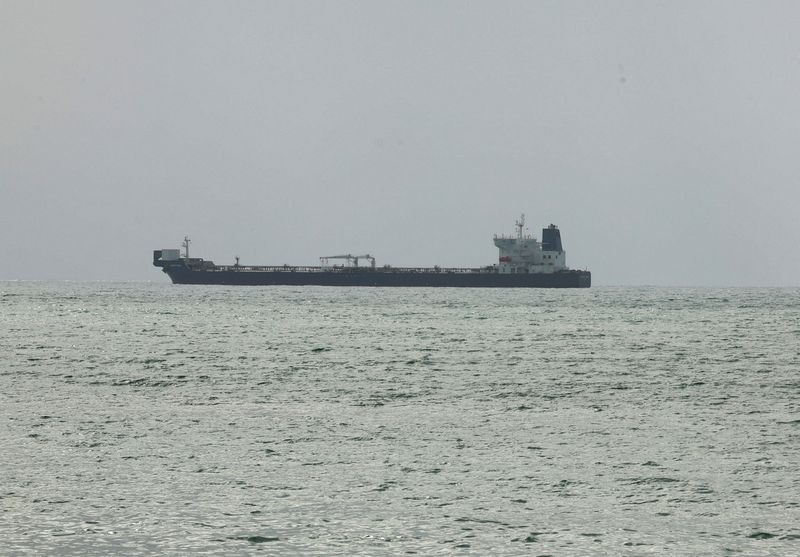
Although the Strait of Hormuz has reopened after the United States and Iran reached a ceasefire memorandum of understanding, concerns are growing that a return to normal market conditions remains far off.
On the first day after the MOU was signed, 25 oil tankers were already reported to have passed through the strait. U.S. Vice President JD Vance said on the 18th local time that "more than 12 million barrels of oil passed through the strait overnight."
However, CNN cited data from analytics firm Kpler on the 19th and said it was pessimistic about a quick stabilization in oil supply and demand, noting that 1.15 billion barrels of oil had already disappeared from the international oil market during the blockade.
Even though the Strait of Hormuz, which handles 20% of global oil and natural gas transport, has reopened, pessimism is rising that it may be too late.
Despite the reopening of the strait, the market is rapidly approaching a tipping point.
The International Energy Agency's strategic petroleum reserve (SPR) has shrunk to its lowest level since 1990. The U.S. SPR is also at its lowest level in 43 years. Commercial inventories held by companies have also fallen to the point that they are disrupting normal business operations.
At the Group of Seven (G7) summit in France on the 17th, U.S. President Donald Trump said, "In about four weeks, the reserves will be depleted."
Tipping point
The U.S.-Iran ceasefire MOU pushed oil prices lower.
Brent Crude Oil fell 7.7% over the past week, while West Texas Intermediate (WTI) crude oil dropped 9.8%, as prices moved lower on expectations that a deal between the two sides was imminent.
So far this month, Brent and WTI have each plunged 12%. Brent, which had surged well above $126 per barrel during the height of the war, is now down to around $80.
Analysts say the market at least entered the conflict with a buffer of oversupply, which helped limit the shock.
Even with that buffer, concerns are mounting that global oil inventories are shrinking rapidly and that the market is nearing a tipping point. About 190 million barrels of inventory have disappeared in the roughly three months since the Iran war began.
In the United States, now one of the world's largest oil producers, the Cushing, Oklahoma oil pipeline hub, a key distribution center for supplying oil across the country, is facing the risk of shutdown. There is not enough oil to maintain normal pressure in the pipeline. The same is true around the world.
In his remarks on the 17th, Trump stressed that if the Strait of Hormuz does not reopen, the global economy will face disaster, underscoring the need to preserve the U.S.-Iran ceasefire MOU.
Oil prices set to rise again(?)
The Strait of Hormuz has reopened, but the road to normalization remains long.
Mines laid in the strait must be removed, and empty tankers must once again pass through the waterway to load oil from Gulf countries.
Oil wells in Gulf countries that were shut down because there was nowhere to store crude must also be restarted. Some wells may not be usable at all.
This is not something that can be resolved quickly.
The oil industry expects it will take months to return to prewar levels.
For that reason, many analysts worry that current oil prices are too low and could rebound soon. They say the market is overlooking the current risk of oil depletion.
Helima Croft, head of global commodity strategy at RBC Capital Markets, said the market had "gotten seven steps ahead of itself," adding that "everyone seems to be saying, 'It's over now!'" She emphasized, however, that "there are huge logistical problems that must be overcome to return to past levels."
The concern is that once the excitement over the reopening of the Strait of Hormuz fades, market fundamentals will ultimately take over and push oil prices higher again.
Even if production rises by nearly 5 million barrels per day, as the IEA expects, it would still take about a year to make up for the 1.15 billion barrels of supply lost during the war.
Pessimism exaggerated
However, markets do not always move logically, and some say the concerns of pessimists are being exaggerated.
Jay Hatfield, CEO of Infrastructure Capital Advisors, said he expects the current market momentum to continue as OPEC producers, eager to secure cash, sharply expand output.
There is also hope that the massive oil inventories built up before the war will help cushion the market shock.
Vikas Dwivedi, global oil and gas strategist at Macquarie Group Limited, said, "There was plenty of cushion, and we have been living off it," adding, "Inventories are lower than they were before last year, but they are not at a critical level."
U.S. distillate inventories are at their lowest level since 2003, but they are only 12.4% below the five-year average. U.S. gasoline inventories are also just 5% lower than a year earlier.
Dwivedi stressed that inventory risks are real, but said oil bulls are overinterpreting the problem.
[email protected] Song Kyung-jae Reporter