Iran says transit fees for ships applying to pass through the Strait of Hormuz will be waived for 60 days
- Input
- 2026-06-19 06:00:55
- Updated
- 2026-06-19 06:00:55
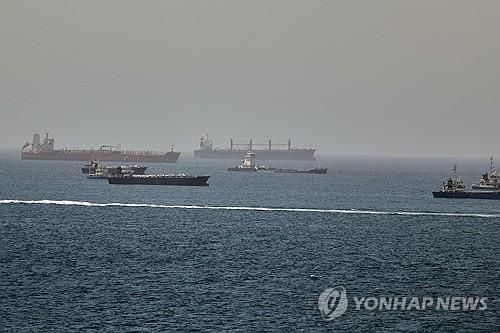
[Financial News] Iran has decided to fully waive transit fees for merchant ships passing through the Strait of Hormuz for the next 60 days, in line with a ceasefire Memorandum of Understanding (MOU) signed with the United States. The move is seen as an effort to quickly restore the global oil shipping route, which had been paralyzed by war, and to revive a more favorable atmosphere for negotiations.
The Supreme National Security Council of Iran (SNSC) said in a statement on the 18th (local time) that "no fees will be charged to ships applying to pass through the Strait of Hormuz for the next 60 days, in accordance with Article 5 of the Memorandum of Understanding (MOU)."
The SNSC explained that "all costs will be borne by the Government of the Islamic Republic of Iran" and that the measure was intended to "uphold the spirit of the Memorandum of Understanding (MOU) and achieve its objectives quickly."
As a result, ships seeking to use the Strait of Hormuz can submit a transit application in advance through the Persian Gulf Strait Administration (PGSA). Iranian authorities plan to process the requests they receive as a top priority.
The measure is a follow-up step taken shortly after the United States and Iran signed the ceasefire MOU. The two sides agreed to reopen the Strait of Hormuz and lift the maritime blockade on Iran, and they also decided to hold follow-up talks over the next 60 days on Iran's nuclear disarmament.
Iran, however, stressed that the strait has not yet fully returned to normal.
The SNSC said that "safety risks still remain around the strait" and added that "ships must strictly comply with the times and routes designated by the authorities."
It also said, "We plan to gradually expand transit volume while assessing compliance with safety guidelines," adding that "preventing maritime accidents and ensuring safe navigation are top priorities."
Iran also said it plans to gradually implement measures to secure safety in the strait, including mine-clearing operations, in accordance with the MOU.
Market watchers say the decision is a symbolic step toward normalizing the international crude oil supply chain. The Strait of Hormuz is a key maritime passage through which about 20% of the world's seaborne crude oil passes. During the war, fears of a blockade and transit restrictions sent global oil prices soaring, but they have recently stabilized after the ceasefire agreement.
[email protected] Kim Kyung-min Reporter