Diesel Subsidy Extended Through September; AI to Monitor Prices of Ramen and Bread Starting Next Year
- Input
- 2026-06-18 18:26:23
- Updated
- 2026-06-18 18:26:23
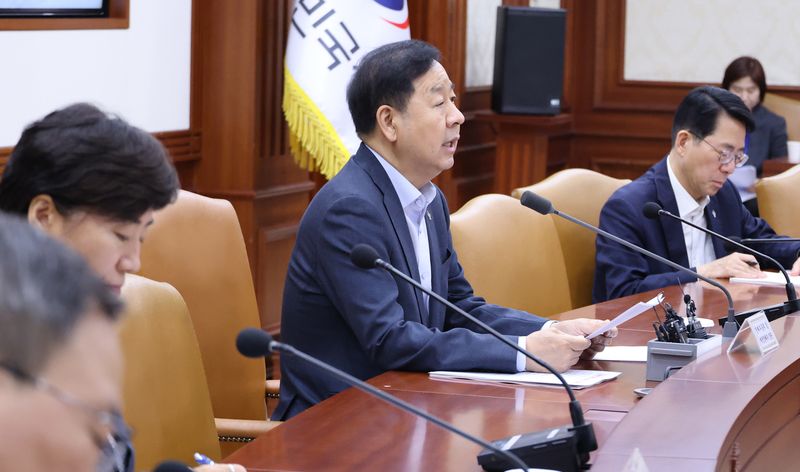
At the 11th meeting of the Task Force of Related Ministers for Special Management of Consumer Prices at Government Complex Seoul on the 18th, Koo said, "The impact of rising raw material prices still remains, and much of the uncertainty has yet to be resolved. The government will remain vigilant at all times and respond by mobilizing all available measures to stabilize consumer prices."
Accordingly, the government will extend the diesel fuel price-linked subsidy for freight and passenger transport operators, which had been set to end at the end of June, through the end of September to ease fuel costs in the transport sector. It also plans to expand the support to chartered buses. Currently, the government pays a fuel subsidy covering 70% of any diesel price above 1,700 won per liter.
The zero tariff policy for LNG, LPG, and crude oil used to produce LPG will remain in effect through the end of the year. The individual consumption tax on LNG for power generation will be cut by 15% for six months from July through December this year, and the flexible fuel tax rate on LPG butane, which is currently reduced by 25%, will also be extended by one month until July 31.
In the agricultural and food raw materials sector, the government plans to support tariff quotas that are up to 30% lower than the original tariff rates for a total of 22 items, including three fruits, 17 food ingredients, and two feed ingredients. Tariff quota support for three fruits currently under assistance, including bananas, mangoes, and pineapples, will be extended until mid-August, while tariff quotas for 10 food ingredients, including egg products, will be extended through the end of the year. Tariff quotas for seven food ingredients, including grape concentrate, and two feed ingredients, including palm meal and potato modified starch, will be newly applied through year-end.
The government plans to implement the second-half tariff quota measures starting July 1, after submitting revisions to the regulations on tariff quotas and the enforcement decree of the Individual Consumption Tax Act to a Cabinet meeting. Koo explained, "We will strengthen inspections at each stage of import and distribution so that the tariff reduction effect can be fully reflected in consumer prices."
Local public utility rates in the second half of the year, which face upward pressure from rising energy prices and other factors, will be managed under a policy of keeping them frozen as much as possible.
Koo said, "Working closely with local governments led by the Ministry of the Interior and Safety, we will delay and spread out the timing of public utility rate hikes and minimize increases." He added, "We will also actively support financial assistance, including special grants, for outstanding local governments that are working hard to stabilize prices."
To prepare for rapidly changing domestic and external conditions, including geopolitical risks and abnormal weather, the government also plans to build a permanent consumer price monitoring system using Artificial Intelligence (AI) for more proactive and precise price management.
At present, the government monitors agricultural, livestock, and fisheries products, but starting next year it plans to share indicators such as prices, rates of change, and risk levels for processed foods as well. It has initially selected 13 processed foods, including ramen and bread, and eight industrial goods, including laundry detergent and toilet paper. The final list will be decided in July after reviewing data availability and other factors.
The Ministry of Data and Statistics plans to link data between agencies and build a web-scraping system so that AI can automatically collect price information on the selected items online. It will also establish criteria for classifying price fluctuation risk levels and an explanation framework in November this year, taking item characteristics into account. The newly created indicators will be shared with relevant ministries next year.
The government also plans to use AI to forecast supply and demand for agricultural products and analyze the causes of price fluctuations. It believes AI can analyze factors affecting wholesale prices and production volumes, such as weather data and fertilizer input levels. It also plans to expand the number of agricultural items subject to supply and demand forecasting beyond the current six. The government is currently conducting price and production forecasts for zucchini and apples in 2024, Napa cabbage and garlic in 2025, and apples and radishes in 2026.
[email protected] Seo Young-joon Reporter