Erase the hints, keep quiet: the 'Warsh-style Fed' takes the stage
- Input
- 2026-06-18 18:23:36
- Updated
- 2026-06-18 18:23:36
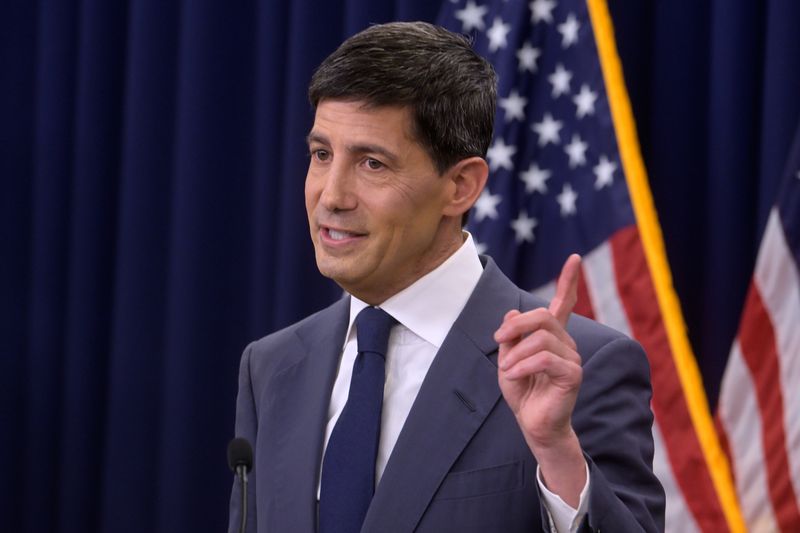
■ First step in 'Warsh-style Fed reform'... five task forces launched
On the 17th (local time), Warsh announced the creation of five task forces as his first official reform measure since taking office. The new task forces will focus on five areas: the Fed's policy communication methods, management of its $6.7 trillion balance sheet, the collection and use of economic data, changes in productivity and the labor market driven by the spread of new technologies such as artificial intelligence (AI), and the Fed's inflation policy framework.
"An oversized Fed balance sheet distorts markets"... balance sheet of $6.7 trillion targeted
The balance sheet task force is drawing the most attention. Warsh has argued that the Fed's assets, which swelled to $6.7 trillion through the financial crisis and the COVID-19 pandemic, have distorted market price signals and excessively expanded the role of the central bank. The task force will review from the ground up the appropriate size of the balance sheet and the operation of quantitative tightening (QT).
The data task force will review the economic indicators and analytical systems used in Fed policy decisions. Warsh has argued that existing statistics alone cannot fully capture a rapidly changing economy, and that the Fed should make greater use of real-time data and new analytical methods.
The AI and productivity task force will study how the spread of artificial intelligence (AI) affects productivity, the labor market, and long-term inflation, and how those effects should be reflected in monetary policy. Warsh has said that AI will boost productivity and, over the long term, create a disinflationary effect by lowering prices for goods and services.
The communications task force will be responsible for redesigning the Fed's policy messaging. Warsh has argued in his confirmation hearing and elsewhere that the dot plot and forward guidance reduce policy flexibility. He has also taken a negative view of frequent public remarks by Fed officials and the press conferences held after every meeting, saying they can send unnecessary signals to the market. On this day, Warsh said, "Press conferences should be held only when there is an important announcement."
The inflation framework task force will review the Fed's inflation measurement and policy decision-making system. Warsh has stressed the need for a new policy framework. He outlined a broad plan for how each task force will operate and said more details would be released in the coming days. "The goal is to build a Fed that makes policy with a clearer and more objective perspective," he emphasized.
■ Statement and dot plot revised... Warsh-style communication cuts back on 'hints'
Among the five task forces, the first visible changes appeared in communications. The FOMC policy statement and dot plot released that day reflected Warsh's philosophy almost directly.
According to The Wall Street Journal (WSJ) and other major foreign media outlets, this month's policy statement was 132 words long, down sharply from 345 words in April. Its structure was also changed, with the policy decision placed at the beginning and a brief description of economic conditions following afterward. The statement also removed all details explaining which members voted for or against the decision and why any dissenting votes were cast.
Forward guidance weakened... greater policy flexibility secured
The biggest change came in the way the Fed communicates with the market. The Fed sharply scaled back so-called forward guidance, which signals the future direction of monetary policy, and significantly shortened the statement.
Warsh explained, "It is a little more concise, a little simpler, and some old expressions have been removed." He added, "This statement focuses on including only the facts we need to communicate." For years, Wall Street has tried to predict the Fed's next move by analyzing even the smallest wording changes in the statement, but under the Warsh era, that kind of "hint reading" is expected to become much more difficult.
Warsh also did not submit his own dot plot. He has long criticized the Fed for sending too many signals to the market through the dot plot and forward guidance. His view is that if the future path of interest rates is laid out too specifically, it becomes harder to adjust policy flexibly when economic conditions change.
[email protected] Reporter Lee Byung-chul Reporter