[Editorial] Yeongdeok and Gijang nuclear plants welcomed by residents; now is the time to move faster
- Input
- 2026-06-18 18:07:33
- Updated
- 2026-06-18 18:07:33
In the era of artificial intelligence (AI), electricity is as essential to industry as air. If supply is insufficient, data centers stop running. If power is expensive, factories leave. If supply is unstable, investment will not come. Warnings that electricity demand will surge in the years ahead are plentiful. The International Energy Agency (IEA) projects that annual electricity consumption by data centers worldwide will nearly double from 485 TWh in 2025 to 950 TWh in 2030. South Korea is no exception. The 12th Basic Plan for Electricity Supply and Demand Steering Committee forecast that the country's annual peak electricity demand will reach 138.2 GW in 2040, nearly 40 percent higher than in 2025. Power shortages in the AI era are now a reality facing South Korean industry.
It is painful that we failed to respond quickly to the rapidly changing energy environment. While countries around the world raced to secure power, we reversed nuclear policy with each administration, delayed plans, and destabilized the ecosystem. Nuclear equipment suppliers lost orders, and skilled workers left the field. The supply chain has been severely weakened. We must also remember that confirming new nuclear sites does not immediately solve the power shortage. Completion is still a decade away.
The government should treat this decision not as an end, but as a new starting point. It must simplify procedures and encourage the sites so construction can move faster, despite the delay. Plans to expand nuclear power should also be accelerated. The Nuclear Society previously proposed that the 12th electricity plan include two to four additional large reactors and two SMRs. The government should clearly present an additional roadmap so it can meet the surging demand for electricity.
Expectations for the first SMR are also high. Compared with large reactors, SMRs have shorter construction periods and can be built near various demand centers, including data centers, reducing the burden of building transmission networks. As global commercialization competition is still in its early stages, South Korea could become a new export powerhouse if it first accumulates real construction and operating experience. For that reason, the first SMR in Gijang, Busan, should be more than a demonstration project. It must become a stage on which the world can see the technology and safety of a Korean SMR.
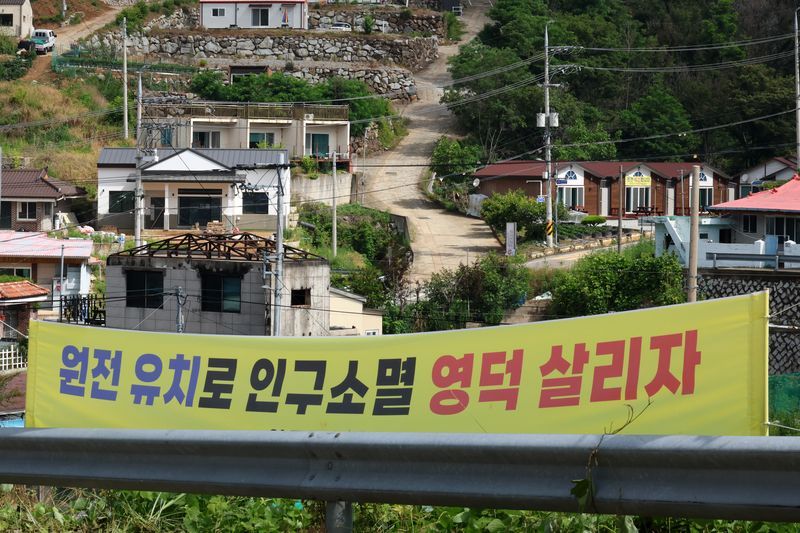
Expanding the transmission network is another task that cannot be delayed. Across the country, delays in transmission line construction are becoming a bottleneck in power supply. Only when the grid that carries electricity spreads like a web can both nuclear power and renewable energy grow their ecosystems. The change seen in the site-selection process is also noteworthy. Unlike in the past, local sentiment has clearly shifted toward welcoming nuclear plants. In both Yeongdeok and Gijang County, public acceptance was an important evaluation factor.
Local residents are beginning to see nuclear plants not simply as dangerous facilities, but as opportunities for the local economy, jobs, subsidies, and industrial infrastructure. That is a rational judgment. There must be no more policy swings every time a new administration takes office. South Korea should lead the era of energy transformation by improving speed and execution.