Delivery App '360 Billion Won' Coexistence Plan Blocked by KFTC... Industry Says "Disappointing"
- Input
- 2026-06-18 14:34:38
- Updated
- 2026-06-18 14:34:38
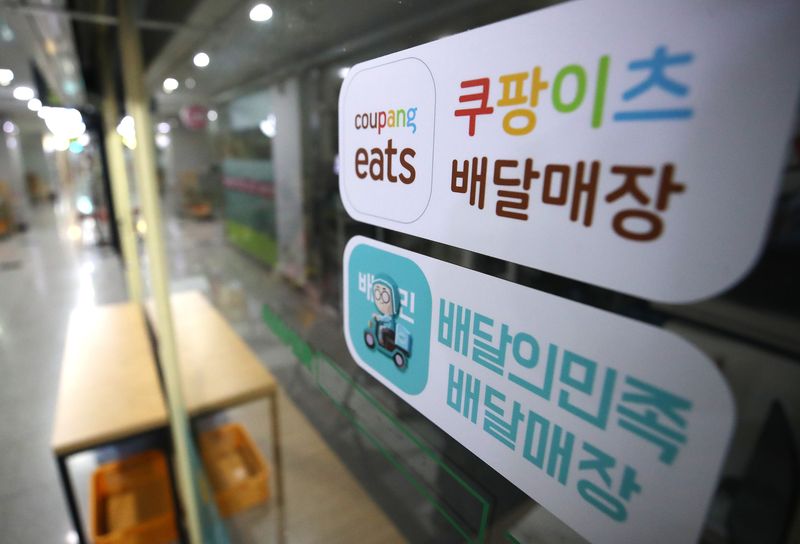
In response, Woowa Brothers stated in a press release, "We are disappointed that the application for a consent decree, which would have allowed us to quickly restore competitive order in the market and directly support small business owners, was rejected. " They added, "We will place mutual growth and shared development as the top priorities in our management, listen more attentively to the voices of business owners, and do our best to create a delivery ecosystem where business owners, customers, and platforms grow together. " Coupang Eats also stated, "We have submitted a consent decree proposal that actively considers mutual growth with partner stores," adding, "We plan to faithfully explain the company's position through future deliberation procedures.
" First, Baemin voluntarily rectified its violations and proposed, through the consent decree, measures to support delivery fees totaling 51 billion won over three years to increase the profitability of store delivery users, as well as measures to alleviate the burden of brokerage fees totaling 10 billion won over three years to ease the burden on small business owners. The total scale of mutual growth support measures, including the creation of a mutual cooperation fund of approximately 140 billion won and support for coupon costs for partner stores, amounts to 300 billion won. Regarding this plan, numerous small business organizations conveyed official support to the Fair Trade Commission, emphasizing the urgent need for immediate, practical support.
Coupang Eats, which had preemptively implemented corrective measures, also applied for a consent decree and proposed a support plan for partner stores worth 60 billion won. The main contents include support for tenant businesses affected by the operation of Wow Stores, subsidies for commissions and delivery fees, advertising and marketing support, and programs to revitalize the food service industry. This is evaluated as a demonstration of an active commitment to mutual growth, exceeding the maximum fine of 42 billion won announced by the Fair Trade Commission (FTC) regarding the most-favored-one (MFD) agreement with Coupang Eats.
However, the FTC dismissed the proposals, determining that they were insufficient to restore competitive order. Consequently, both companies will present their respective positions during the subsequent deliberation process.
It is estimated that the fine the FTC could impose on Baemin, whose revenue related to the MFD demand is calculated at approximately 730 billion won, would range from a minimum of 239 billion won to a maximum of 510 billion won. With Coupang Eats' revenue related to the MFD demand also at 710 billion won, the fine is expected to be determined in the range of 25 billion to 42 billion won.
However, Coupang still faces allegations of tying practices related to the Wow Membership, for which it did not apply for a consent decree. An industry insider emphasized, "Approximately 360 billion won in mutual growth funds from both companies, which could have returned to vendors, has fallen through and is now set to be forfeited to the state as fines," adding, "Rather than blanket regulations, it is necessary to discuss alternatives within a new framework, such as negotiating priority support measures for small and medium-sized businesses.
"
[email protected] Ju Won-gyu, Kim Chan-mi Reporter