As banks tighten lending to curb debt-fueled investing, concerns grow over a "balloon effect" toward regional banks
- Input
- 2026-06-19 08:18:09
- Updated
- 2026-06-19 08:18:09

According to the financial sector on the 19th, the four regional banks — iM Bank, Busan Bank, THE JEONBUK BANK LTD., and Gwangju Bank — have not moved to lower lending limits or suspend new household loans, despite tighter household lending rules from the financial authorities.
iM Bank, THE JEONBUK BANK LTD., and Gwangju Bank said their current household loan balances are being managed stably in line with internal control standards. Rather than immediately introducing additional lending restrictions, the banks plan to monitor future household loan growth and then review their response measures.
Some regional banks are discussing partial restrictions on loan inflows and stronger management measures. Kyongnam Bank has restricted new loan applications through loan comparison platforms — Naver Pay, Kakao Pay, Toss, Finda, and Banksalad — since last week. Busan Bank is also reportedly reviewing ways to tighten household loan management internally.
After major commercial banks, the three Internet-only banks — KakaoBank Corp, K Bank, and Toss Bank — have also begun tightening lending. With financial authorities closely monitoring household loan growth, they are taking preemptive steps by limiting loan ceilings.
In particular, the three Internet-only banks are independently strengthening household loan management even before detailed discussions with the financial authorities. Since loan demand can flow in quickly through non-face-to-face channels, the move appears aimed at preventing a sharp short-term surge in household lending. A bank official described it as "a preemptive response to household loan growth."
The banking sector is worried that as lending barriers rise at both commercial banks and Internet-only banks, loan demand could shift to regional banks. If loan limits at major banks fall while demand remains steady, more borrowers may turn to regional banks with relatively higher ceilings.
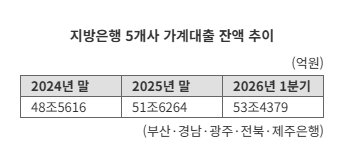
A banking industry source said, "Regional banks have relatively more room in their targets for managing household loan growth than commercial banks, so they have not immediately raised lending barriers significantly." The source added, "However, if a balloon effect emerges and demand shifts because of lending restrictions at commercial banks and Internet-only banks, regional banks may also introduce additional management measures such as lower limits or restrictions on non-face-to-face channels."
[email protected] Lee Hyun-jung Reporter