"Wage increases, including semiconductor bonuses, are fueling inflation... It could reach 3% in the second half" [Rising Prices]
- Input
- 2026-06-17 18:50:06
- Updated
- 2026-06-17 18:50:06
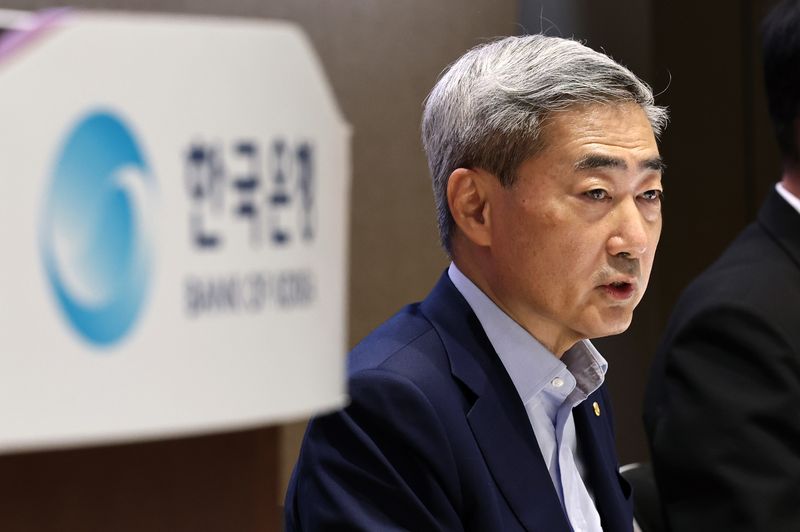
Kim Young-joo, head of the Price and Employment Division in the Bank of Korea's Research Department, presented those views at a briefing on the "2026 first-half review of the inflation-targeting framework" held on the 17th at the central bank in Jung District, Seoul.
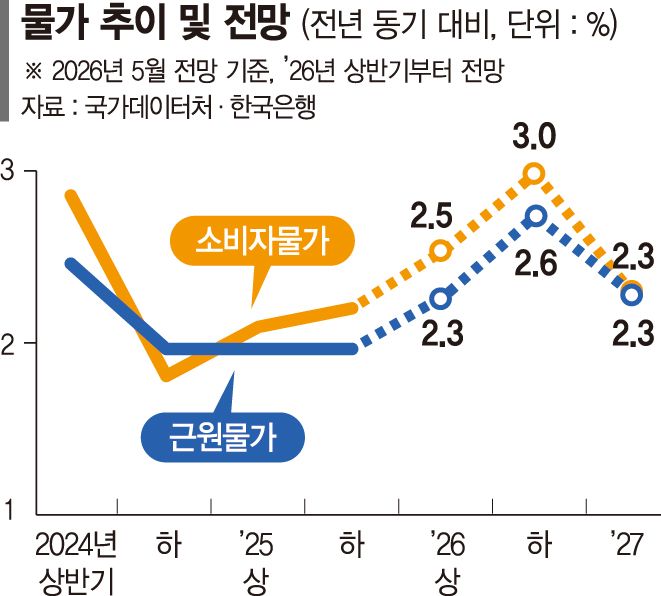
Kim said, "Next year, pressure from rising oil prices will ease, but demand-side pressure will gradually grow, and consumer and core inflation will exceed the target level of 2.0%."
The same view appeared in the minutes of the Monetary Policy Board meeting held in May. One member of the board said, "First-quarter growth this year far exceeded earlier expectations, and household income and government fiscal conditions have improved thanks to unprecedented operating profits at semiconductor companies, so demand pressure appears to have increased." A relevant department also noted that "while supply shocks are having the first impact on inflation, demand pressure is likely to expand gradually in the future."
The review materials also included an analysis of what happens when unusual special bonuses in the Information Technology sector spread into wage increases in other industries. Nominal wages in the first quarter alone rose 3.4% from a year earlier, and the IT sector's bonus contribution was as high as 1.3 percentage points.
Hwang Soo-bin, head of the Employment Trends Team in the Research Department, said, "When large special bonuses are concentrated in a few companies and paid out, upward pressure on prices becomes significantly stronger." She added that "large bonus payments scheduled next year at some major IT companies will be a factor that increases upward pressure on prices."
Lee Ji-ho, deputy governor for research and statistics at the Bank of Korea, also said, "There will be so-called 'human movement' among IT professionals, and there will likely be effects such as higher restaurant prices near companies that receive large bonuses or wage increases, as well as increased department store sales."
Still, supply-side inflationary pressure is expected to remain in place through this year. Consumer inflation and core inflation in the second half are projected at 3.0% and 2.6%, respectively. Although the ceasefire negotiations in the Iran-Iraq War have been finalized, oil prices are expected to be revised downward, but second-round effects remain a concern.
Kim said, "Cost-side price pressures, driven by high oil prices and a weak won, will gradually spread to items other than petroleum products." He added, "From the second half onward, the impact of higher oil prices will appear with a time lag, and pressure for public utility rate increases is also expected to rise gradually."
Kim also said that even if the ceasefire deal is ultimately finalized, it will take a considerable amount of time for international oil prices to fall back to prewar levels. That is because infrastructure must be rebuilt and countries will need to restock reserves. In fact, six months after the Russia-Ukraine War began, indirect effects on non-energy items such as industrial goods started to appear, and they lasted for about a year.
Shin Hyun-song, governor of the Bank of Korea, also pointed out, "The end of the war would allow ships trapped in the Strait of Hormuz to leave, which would help crude oil supply flow more smoothly." He added, "However, production cannot resume without measures such as clearing pipelines, so it will be difficult for prices to return to prewar levels in the short term."
[email protected] Kim Tae-il Reporter