Citi Sees Three Rate Cuts Starting in September, While Citadel Warns of Sticky Inflation and Hikes
- Input
- 2026-06-17 18:47:54
- Updated
- 2026-06-17 18:47:54
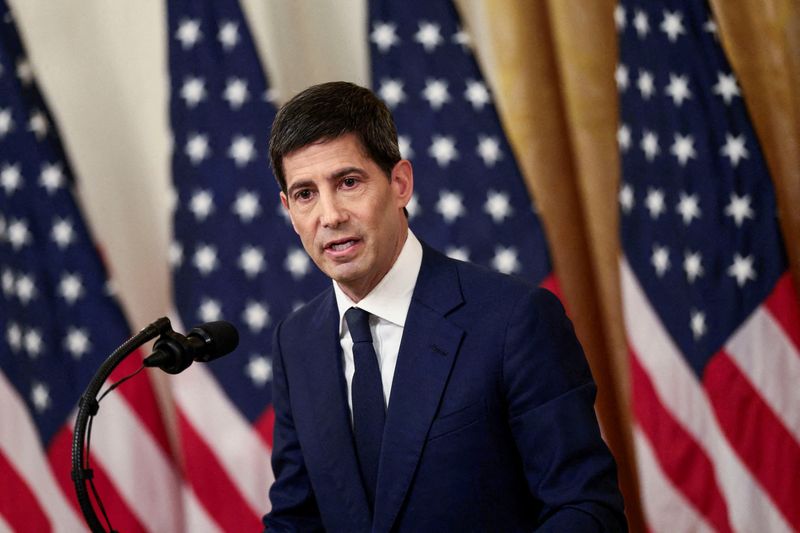
On the 16th local time, Andrew Hollenhorst, Citigroup's chief U.S. analyst, said that recent declines in global oil prices, following the announcement of a U.S.-Iran memorandum of understanding (MOU) on ending hostilities, would support rate cuts. Brent Crude Oil fell below $80 per barrel for the first time in three months that day.
Hollenhorst said the outcome would give Kevin Warsh, the Fed chair, much more flexibility. He added that "inflationary pressure has now shifted into deflationary pressure."
He predicted that no immediate easing bias would emerge at the Federal Open Market Committee (FOMC) meeting on the 16th and 17th. Still, he kept his earlier forecast that the Fed would cut rates three times starting in September, assuming the U.S. labor market weakens over the next few months. He also said the timing of rate cuts could be pushed back to next year if employment proves stronger than expected.
By contrast, Frank Flight, head of macro strategy at Citadel Securities, said in a report that "the odds are rising that the Fed could begin a rate-hike cycle as early as September." He explained that although global oil prices are falling after the recent interim peace deal between the U.S. and Iran, the inflationary pressure built up during the war has become deeply embedded across the economy. He added that "loose financial conditions, persistent supply chain disruptions, a reacceleration in the labor market, and a surge in Artificial Intelligence (AI) investment are combining to keep inflationary pressure in place."
Flight also expected Warsh to send a far more hawkish signal than the market expects at the first FOMC meeting he will chair since taking office. He offered a more aggressive scenario than current market expectations, saying that "the Fed is increasingly likely to raise rates three times starting in September."
He then argued that "rather than validating the market's dovish expectations, Chair Warsh will choose to preserve the Fed's credibility in fighting inflation." He also pointed to accelerating wage growth, especially in interest-rate-sensitive sectors, and noted that many components of the Consumer Price Index (CPI) are rising at an annual pace of more than 3% as signs of renewed inflation.
Meanwhile, the market sees Warsh as being caught between pressure for both rate cuts and hikes at the FOMC meeting he chaired for the first time in his third week in office. President Donald Trump is pressing for rate cuts, but the bond market is instead betting on the possibility of a rate hike later this year. Inflation is reaccelerating at the fastest pace in three years, and hawkish voices within the Fed are growing louder.
Wall Street believes that if Warsh signals that curbing inflation is his top priority, confidence in the Fed's independence will strengthen. On the other hand, there are growing concerns that market anxiety could rise if he appears to side with Trump's calls for rate cuts.
Warsh's biggest challenge is that the White House and financial markets are moving in opposite directions. Unlike Trump's push for rate cuts, the bond market is sending a very different signal. After the war between the U.S. and Iran, oil prices surged and revived inflation concerns, and with the labor market still firm, investors have begun pricing in the possibility of rate hikes.
[email protected] Hong Chaewan Reporter