Iran Resumes Oil Exports Two Months After Signing Peace Memorandum
- Input
- 2026-06-17 15:52:38
- Updated
- 2026-06-17 15:52:38
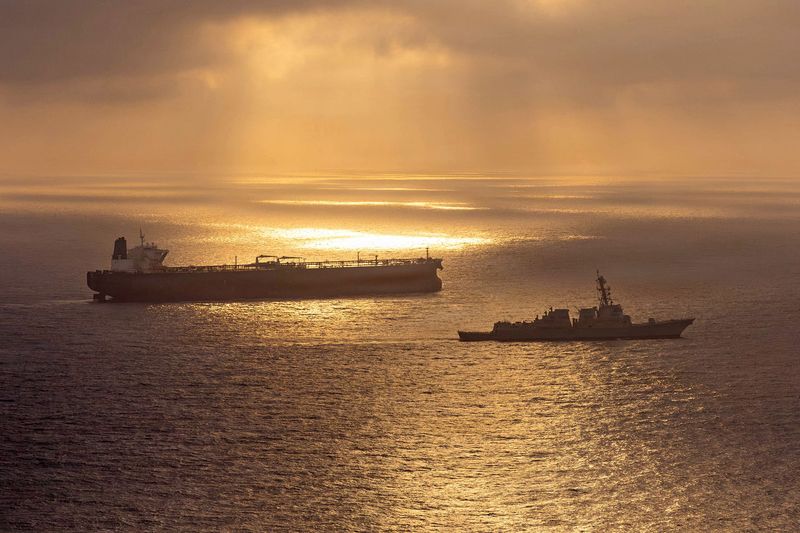
[Financial News] Iran, whose oil exports had been blocked by a U.S. maritime blockade since April, resumed shipments about two months later after reaching an agreement with the United States on a peace memorandum. U.S. sanctions related to Iran's oil trade are expected to be lifted after the memorandum signing ceremony later this month.
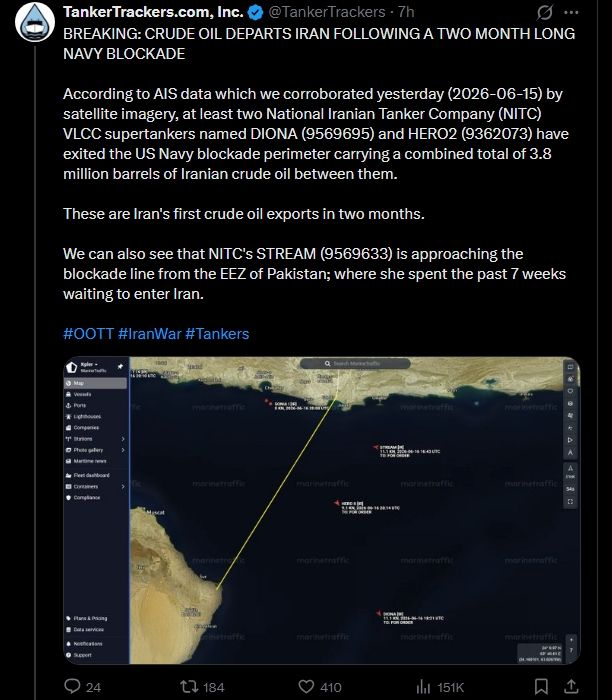
TankerTrackers, a U.S. vessel-tracking website, posted on X on the 16th local time that Iran's very large crude carriers, or VLCCs, had passed through the Strait of Hormuz and moved into the Indian Ocean. Based on satellite-verified automatic identification system, or AIS, data, TankerTrackers said that two VLCCs owned by the National Iranian Tanker Company, including the Dionaho and Hero 2, had moved beyond the U.S. Navy blockade line. It added that the two ships were carrying a combined 3.8 million barrels of Iranian crude.
TankerTrackers explained that another NITC tanker, the Stream Ho, was approaching the U.S. Navy blockade line from Pakistan's Exclusive Economic Zone, or EEZ. The vessel had been sailing in the Indian Ocean toward the Persian Gulf inside the Strait of Hormuz. TankerTrackers noted that the Stream Ho had been anchored in that area for the past seven weeks while waiting to enter Iran. About five hours after its first post, TankerTrackers added that a third NITC tanker had also slipped past the blockade line carrying 1 million barrels of Iranian crude.
Iran produced an average of 4.678 million barrels of oil per day in 2024, accounting for 4.7% of global supply and ranking sixth in the world after China. After the United States and Israel launched airstrikes on Iran on Feb. 28, Iran blocked the Strait of Hormuz, through which about 20% to 25% of international maritime oil traffic passes. Even so, it did not stop exporting its own oil. The United States, which entered a ceasefire with Iran on April 8, began stopping Iran-linked ships entering and leaving the Strait of Hormuz and nearby Iranian ports on April 13 in an effort to pressure Tehran into peace talks. U.S. Central Command, which handled the attacks on Iran, said in an X post on the 7th that it had turned back a total of 132 merchant ships and disabled six as of that date.
The blockade was lifted after the two sides agreed to the peace memorandum on the 15th. Majid Takht-Ravanchi, Iran's Vice Minister of Foreign Affairs, said through an Iranian government website on the 16th that the U.S. two-month maritime blockade on Iranian ports had been lifted ahead of the official signing ceremony for the peace agreement scheduled for the 19th. He emphasized that the lifting measures had already begun.
The Washington Post reported on the day, citing officials and government data, that Iran's average daily oil sales revenue in May was higher than in January, before the war. Iran's oil sales continued even though the U.S. had blocked most oil exports leaving the country, thanks to crude already stored on tankers in Asian waters and in floating storage facilities.
Iran's oil sales are expected to rise further after the peace memorandum signing ceremony. U.S. media outlets, including WSJ, reported on the 16th, citing officials, that the United States plans to lift sanctions related to Iranian oil exports immediately after the signing ceremony on the 19th. On the ICE Futures Exchange, Brent Crude Oil futures for August delivery closed at $78.96 per barrel, down 5.1% from the previous session. In U.S. trading, WTI futures for July delivery closed at $76.05 per barrel, plunging 5.8% from the previous session.
[email protected] Park Jong-won Reporter