[Editorial] Recognizing Even Company Cafeterias as Bargaining Targets Will Deepen Confusion in the Workplace
- Input
- 2026-06-16 19:13:53
- Updated
- 2026-06-16 19:13:53
The decision on Hyundai Motor Company is especially significant because it is the first case in the automobile industry to recognize a prime contractor’s employer status since the Yellow Envelope Act took effect. The subcontractor unions that demanded bargaining include not only the irregular workers’ branch handling line sequencing and parts transport at factories, but also groups representing cafeteria workers, security guards, and car masters at sales agencies. In other words, bargaining targets have expanded beyond direct production to include cafeterias, security, and sales.
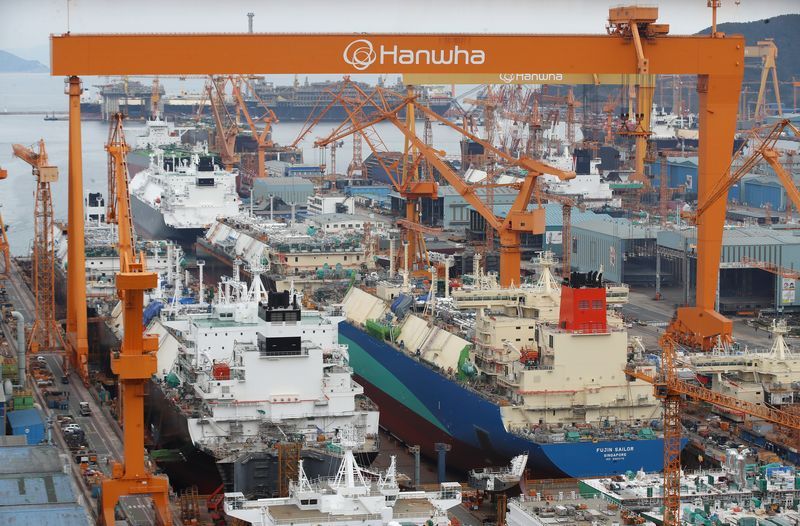
The Hanwha Ocean case is similar. By recognizing the prime contractor’s duty to bargain with labor unions at partner companies handling support work such as meal services and commuter buses, the ruling signals the possibility of a broader expansion of employer status. It is bound to have a significant impact on the subcontracting structure that has long been used across Korean industry to outsource non-core tasks.
Hyundai Motor Company is particularly symbolic of indirect employment in Korean manufacturing. This ruling is likely to become a benchmark for the broader industrial sector. There are also concerns that the burden of labor-management administration on prime contractors and the uncertainty facing business operations could grow. With Hyundai Motor Company’s suppliers numbering 8,500, it is difficult to predict how far the scope of bargaining obligations may expand.
Companies may now have to negotiate separately with numerous subcontractor unions, and if talks break down, the disputes could escalate into lawsuits. That raises fears of a slowdown in normal business activity. Hyundai Motor Company is also facing the possibility of strikes by its regular union, leaving it in the position of having to deal with both regular employees and subcontractor unions at the same time.
Business groups argue that the ruling may also conflict with the interpretation guidelines issued by the Ministry of Employment and Labor (MOEL) in February. The ministry said, "In a typical subcontracting relationship, the contractor may give the subcontractor general, results-oriented instructions regarding the content or procedures of contract performance." The point is that contractual supervisory authority must be distinguished from structural control that actually dominates and determines working conditions.
Business groups say the ruling interprets that boundary far too broadly. In fact, the Hyundai Motor Company case was decided only after several rounds of review, while the Hanwha Ocean case had been left unresolved by the Seoul Regional Labor Relations Commission. That shows how large the dispute remains over the scope of employer status recognition.
This ruling is likely to intensify demands for prime contractor bargaining against companies. The Korean Metal Workers' Union (KMWU) is already demanding prime contractor negotiations with affiliates such as Hyundai Mobis Company Limited. Requests for rehearings at the Central Labor Commission may also increase. More than 20 rehearing cases involving employer status for POSCO and Korea Zinc are currently pending there.
The Yellow Envelope Act began with the goal of protecting vulnerable workers. But if the abstract standard of actual control is extended to support work such as meal services, security, and commuter buses, it will be difficult to avoid criticism that the law is being applied beyond its original intent. Companies may respond by reducing outsourcing and subcontracting structures or by shifting production bases overseas to avoid uncertainty.
The government and the National Assembly should move quickly to establish clear legal and policy standards for determining employer status. It is important to define the boundaries of the system clearly so that worker protection and business predictability do not come into conflict.