Japan's real interest rates remain negative, leaving the yen weak
- Input
- 2026-06-16 18:43:48
- Updated
- 2026-06-16 18:43:48
■ Greater weight on upside inflation risks
Deputy Governor Shinichi Uchida, who stood in for Governor Kazuo Ueda at the press conference, said, "Price pass-through in transactions between companies is progressing faster than expected, and it could spread to overall consumer prices in the future." He added, "There is a risk that underlying inflation will exceed the 2% price stability target."
The BOJ had been monitoring how tensions in the Middle East might affect Japan's economy, but it concluded that downside risks had eased as the government rolled out energy support measures and companies diversified their raw material supply chains. Deputy Governor Uchida said, "The risk of the economy swinging sharply to the downside is lower than it was before."
Market attention is now focused on whether the BOJ will raise rates further. In a statement released that day, the BOJ said it would "continue to raise the policy rate and adjust the degree of monetary easing in line with economic, price, and financial conditions." Uchida also reaffirmed the prospect of additional hikes, saying, "Underlying inflation is approaching 2%, but financial conditions remain accommodative." He added that the timing and pace of future increases would depend on how developments in the Middle East affect the economy and prices.
The BOJ also revised its plan to reduce bond purchases. It will continue cutting purchases by 200 billion yen each quarter through March next year, then stop the reduction from April and keep monthly purchases at around 2 trillion yen. The move is seen as an effort to maintain market stability while continuing its exit strategy, as bond market volatility has increased and the yield on the 10-year bond briefly surged to 2.8% recently.
■ It did not lead to a stronger yen
The foreign exchange market reacted coolly despite the possibility of further tightening. In Tokyo trading that day, the USD/JPY exchange rate moved in the low 160-yen range, indicating a weaker Japanese yen. The yen had risen to around 160 per dollar just before the BOJ announced the rate hike, but selling pressure returned immediately after the decision.
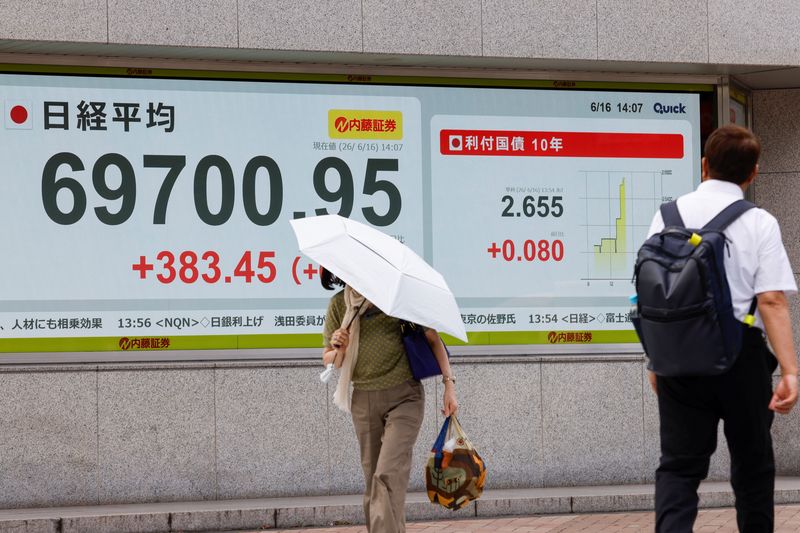
Market participants pointed to still-low real interest rates as the reason the yen failed to strengthen despite Japan's rate hike. Japan's consumer price inflation stood at 2.8% in April, far above the 1% policy rate. That means real interest rates in Japan remain negative. The interest-rate gap with the United States is also limiting a rebound in the yen. Although the nominal gap has narrowed, with the U.S. policy rate at 3.50% to 3.75%, the real-rate gap remains wide. The bond market was also unsupportive of the BOJ's decision. The yield on Japan's 10-year government bond rose 0.07 percentage point from the previous day to 2.645%, and briefly climbed to 2.655% during the session. Yields on the 20-year and 30-year bonds also moved higher.
Meanwhile, the stock market responded positively, saying uncertainty had been resolved. The Nikkei Stock Average (Nikkei 225) closed at 69,404.50, up 87.32 points, or 0.13%, from the previous session, setting a new all-time high. During the session, it also topped 70,000 for the first time ever.
[email protected] Reporter