Japan's real interest rate remains negative... no yen carry trade unwinding
- Input
- 2026-06-17 07:25:18
- Updated
- 2026-06-17 07:25:18
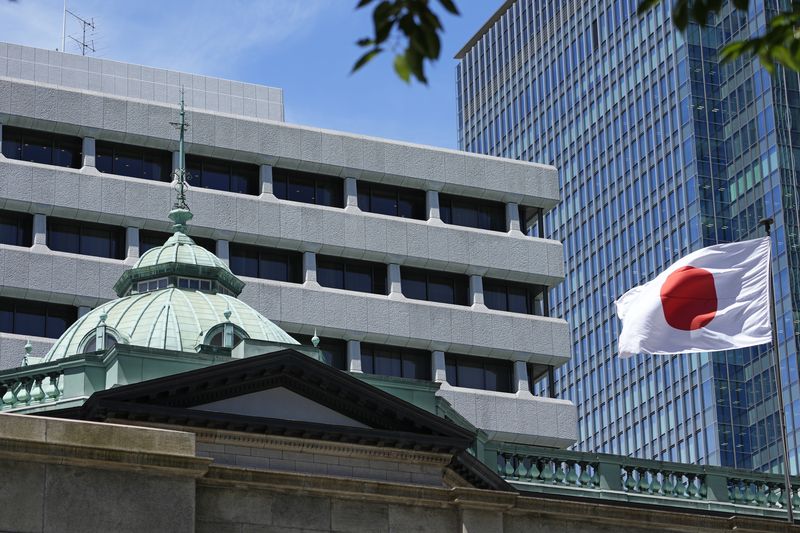
[Tokyo = Reporter Seo Hye-jin] The Bank of Japan (BOJ) raised its benchmark interest rate from 0.75% to 1.0% on the 16th, opening a '1% interest rate era' for the first time in 31 years. Yet financial markets remained calmer than expected.
Inflationary pressure driven by rising oil prices from the Middle East and a weaker yen was a key factor behind the policy decision. However, the feared 'yen carry trade unwinding' did not materialize clearly. Instead, relief over the easing of policy uncertainty helped sustain demand for risk assets.
■ BOJ puts the spotlight on inflation risks
At its Monetary Policy Meeting that day, the BOJ decided to raise rates, judging that inflation risks were greater than the risk of an economic slowdown. Shinichi Uchida, BOJ deputy governor, said at a press conference, "Price pass-through among companies is progressing faster than expected, and it could spread to overall consumer prices in the future," adding that "there is a risk that underlying inflation will exceed the 2% target."
He also said downside risks to the economy had eased, explaining that energy subsidies and diversification of raw material sourcing were helping absorb the shock.
In the market, the move was seen less as the start of a full tightening cycle and more as a gradual normalization from a long-running ultra-low-rate regime. Nihon Keizai Shimbun also noted that Japan is moving away from ultra-low interest rates, but its rates remain low compared with other major economies. Analysts also pointed out that the BOJ has not yet reached the lower end of its estimated neutral rate range of 1.1% to 2.5%, leaving room for further hikes.
In its statement, the BOJ said it would continue to raise the policy rate and adjust the degree of monetary easing in line with economic, price, and financial conditions. Deputy Governor Uchida also reaffirmed the central bank's gradual hiking stance, saying, "Financial conditions remain accommodative." He added, "The pace and final rate level will be adjusted while watching developments in the Middle East and inflation trends," underscoring a cautious approach.
■ Negative real rates and the U.S.-Japan rate gap remain a constraint
The rate hike had only a limited impact on the foreign exchange market. In Tokyo trading, the USD/JPY exchange rate moved in the low 160-yen range, extending the yen's weakness. Right after the announcement, selling pressure on the yen actually intensified.
A key reason is that real interest rates remain in negative territory. Even though Japan's consumer price inflation has risen to the mid-2% range, the policy rate is only 1%, limiting the effect of tightening. The persistent gap with the U.S. policy rate, which stands at 3.50% to 3.75%, is also continuing to restrain yen strength.
This continues to support the environment for the yen carry trade. Investors still see value in borrowing cheap yen to invest in higher-yielding assets, so the rate hike did little to trigger unwinding pressure. Market participants also argue that much of the rate-hike path has already been priced in, and that Japan's absolute rate level remains among the lowest in the world.
The stock market took the meeting results as a positive sign because they were broadly in line with expectations, and it extended its gains. The Nikkei 225 Stock Average closed at 69,404.50, up 87.32 points, or 0.13%, from the previous session, setting a new all-time high. During the session, it also briefly topped 70,000 for the first time.
[email protected] Seo Hye-jin Reporter