SpaceX Rises, While Domestic Space Stocks Turn Gloomy... "Benefits Expected in the Second Half"
- Input
- 2026-06-16 16:20:16
- Updated
- 2026-06-16 16:20:16
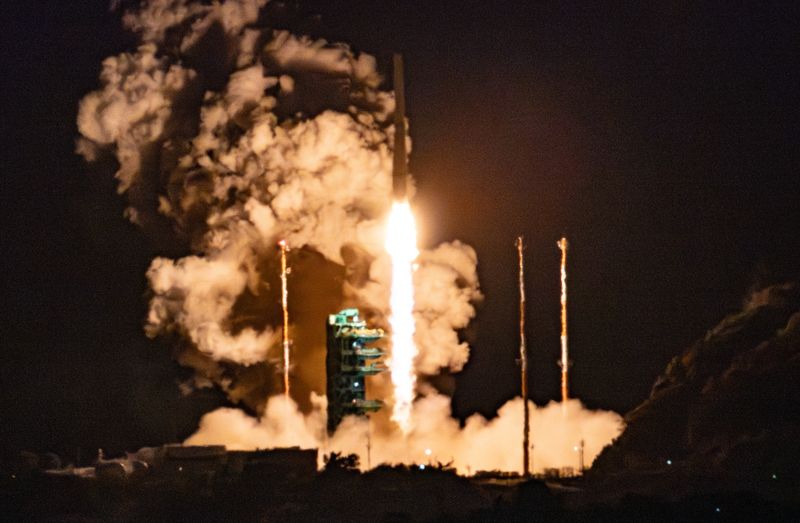
[Financial News] SpaceX, the U.S. aerospace and artificial intelligence company, has been on a steady upward run since its listing, but domestic space companies that were expected to benefit are moving lower. Analysts say space-related stocks could rebound in the second half of the year, when the industry is expected to expand, supported by both direct and indirect gains.
According to Koscom Corporation's ETF Check on the 16th, the PLUS Aerospace ETF fell 13.33% over the past month. The product is an exchange-traded fund made up of listed Korean space companies, including HVM, Korean Aerospace Industries, LIG Defense & Aerospace Co., Ltd., Sphere and Intellian Technologies.
By stock, HVM fell 20.04% this month, Korean Aerospace Industries dropped 7.96%, Sphere declined 15.53% and Intellian Technologies lost 24.57%. In contrast, SpaceX surged 42.57% from its listing day on the 12th through the previous day.
Earlier this year, domestic space stocks had been strong on expectations that the industry would expand. That was because space development was expected to accelerate this year, including NASA's Artemis Program, a lunar exploration project. There were also forecasts that SpaceX's listing would bring broader momentum to the space industry.
However, as geopolitical uncertainty deepened and profit-taking emerged, space stocks failed to hold their ground. Some analysts also said funds may have shifted from other names into SpaceX after its listing. The PLUS Aerospace ETF had been strong, rising 72.87% from the start of the year through March 12. But from March 12 to the latest session, it fell 21.9%.
Market watchers say the direction of domestic space stocks this year will depend on whether the space industry expands in the second half. SpaceX has decided to conduct a demonstration of its space-based AI computing infrastructure through the end of 2027. With rocket launches expected to rise sharply from the second half of this year, related Korean partners are likely to benefit.
Han Yoo-geon, a researcher at Hana Securities, said, "Space stocks have already corrected from their peaks amid worsening macro conditions, including recent wars and interest-rate hikes, but the downside should be limited." He added, "SpaceX is likely to invest the funds raised through its listing heavily in its core businesses." He also noted, "In particular, launch frequency is expected to jump to two or three times a week, so both direct and indirect benefits are expected for related companies."
There is also a view that the industry will grow over the medium to long term. As countries around the world intensify their competition for dominance in space, the sector is expected to expand, and Korean companies are seen as having clear areas of strength, including satellite manufacturing, data services and materials.
Kim Hwe-jae, a researcher at Daishin Securities, said, "The space industry is a long-term, high-growth cycle. It is projected to grow from $613 billion in 2024 to $1.8 trillion in 2035." He added, "With events such as lower launch costs, the expansion of low Earth orbit (LEO) communications and the advancement of electro-optics services concentrated from this year through next year, the space sector will have opportunities. At present, it can be seen as an 'industry formation stage' in which the positions of Korean companies in materials, launches, satellite manufacturing and communications equipment are becoming increasingly distinct."
[email protected] Lim Sang-hyuk Reporter