Ruling Party Revises Convention Rules as Jung Chung-rae May Bet on a Runoff Vote
- Input
- 2026-06-16 15:58:01
- Updated
- 2026-06-16 15:58:01
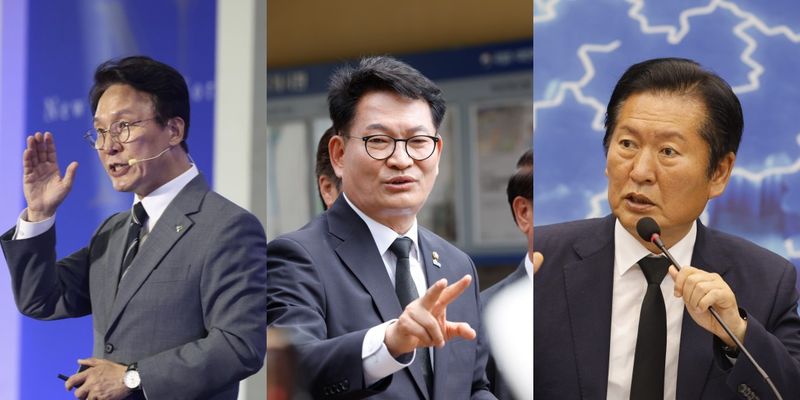
On the 16th, the party's Central Committee met and proposed a plan to simplify the formation of the preparatory committee and the election method for the party leader and Supreme Council members. Under the current party constitution, the preparatory committee must be formed at least 50 days before the start of candidate registration, and the election method for the party leader and Supreme Council members must be finalized at least 30 days before registration begins. The proposal would create an exception so those rules do not apply to this convention. If the item, put to an online vote that day, is approved, the party leadership will gain more time to flesh out the preparatory committee and the selection method for convention candidates.
The outline of the preparatory committee is expected to emerge as early as around the 26th, when the Party Affairs Committee is set to meet.
What remains is the method for choosing candidates for the convention. Some in political circles are watching whether Jung Chung-rae may seek to introduce a runoff vote and build alliances with other parties. Earlier, right after the local elections, Jung said at a press conference that he was considering making such a plan public.
The reason is that, aside from Jung, Kim Min-seok, then prime minister, and former party leader Song Young-gil are being mentioned as possible contenders for the party leadership at the convention.
Given that the preliminary round of the convention is expected to reflect a 100% vote share from party members with voting rights, the move is being seen as an attempt to advance through the preliminaries with the backing of the party's hard-line members. Jung's outreach to the Honam region, where the number of eligible party members exceeds 500,000, is also being read as groundwork for a bid for a second term. Still, some in the ruling camp say Kim and Song could join forces to block Jung's re-election. If Song, who has strong support in Honam, backs Kim, the votes going to Jung could be split.
For now, Jung's mention of a possible alliance with another party remains uncertain. He had originally hoped to secure votes from members with dual party memberships through an alliance or merger with the Rebuilding Korea Party, but that appears difficult now that Cho Kuk has suffered a political setback after losing the by-election for the National Assembly seat in Pyeongtaek, Gyeonggi Province. In addition, writer Yoo Si-min, who had supported a merger, stepped down from his advisory role at the Roh Moo-hyun Foundation on the 15th, a day earlier. Some analysts say this suggests that figures associated with the pro-Moon and pro-Jung camp, often referred to as the so-called Moon-Cho-Tol-Lae-Yu group, are losing influence.
[email protected] Song Ji-won Reporter