Strait of Hormuz tolls free for two months? "The United States agrees"
- Input
- 2026-06-16 13:56:59
- Updated
- 2026-06-16 13:56:59
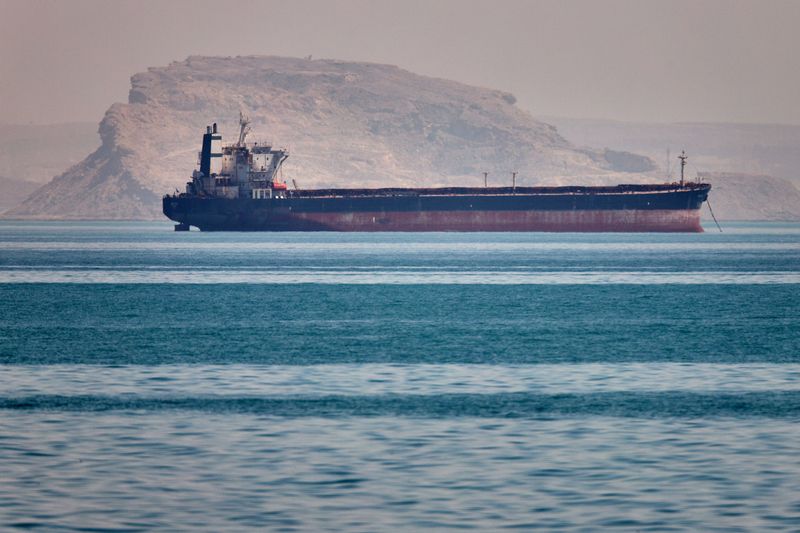
[Financial News] The United States and Iran agreed to sign a Memorandum of Understanding (MOU) to end the war and even completed signatures at the highest level. But within a day, the two sides sharply diverged over the key issue of whether to collect a "toll" for the Strait of Hormuz. U.S. President Donald Trump declared that the Strait of Hormuz would remain open for free, as it was before the war. Iran, however, countered that the United States had formally recognized its right to impose a "maritime service fee" after a 60-day temporary free passage period. Because the full text of the agreement has not been made public, the two sides are interpreting the same wording to suit their own interests. There are growing concerns that this issue could become the trigger for renewed physical clashes during the follow-up working-level negotiations.
Trump, who was in Évian-les-Bains, France, to attend the Group of Seven (G7) summit, stressed full freedom of navigation in the Strait of Hormuz during a bilateral meeting with French President Emmanuel Macron on the 15th local time. When asked what support he wanted from allies, Trump said, "We won't need a lot of help," and added, "We reached an agreement that the strait will be open, and there will be no tolls."
U.S. Vice President JD Vance also said in a CNBC interview, "The United States expects the Strait of Hormuz to remain open without tolls in the long term."
Iran, by contrast, says the agreement recognizes its sovereignty over the Strait of Hormuz and its legitimate right to collect fees, offering an interpretation that is the exact opposite of Washington's. Esmaeil Baqaei, spokesperson for Iran's Foreign Ministry, said at a briefing that, under the agreement with the United States, ships passing through the Strait of Hormuz will be charged "maritime service fees" rather than "tolls."
Baqaei said, "We are not trying to collect tolls," making clear that Iran intends to charge for essential services such as navigation support, environmental protection, and ship insurance, which the government has been promoting. Iran had previously announced plans to establish the Persian Gulf Strait Authority (PGSA), which would manage traffic through the Strait of Hormuz, and said it intended to impose fees. The United States and other Western countries have opposed the move, viewing it as a de facto toll system.
Iran's semi-official Fars News Agency went a step further, claiming that in the final stage of negotiations between the United States and Iran, the MOU wording was revised to emphasize Iran's sovereignty, effectively leading the United States to accept Iran's right to collect fees.
Citing sources, the agency said the final draft explicitly states that "future maritime navigation service management in the Strait of Hormuz will be determined by Iran and Oman," and argued that this means Iran has the right to collect fees. As a result, the prevailing view is that free passage for commercial vessels will be allowed only temporarily for 60 days after the MOU is signed, and that once those 60 days pass, Iran and Oman will manage the strait and begin collecting service fees in earnest.
Senior U.S. officials also acknowledged in a briefing that the MOU includes such language, and confirmed that the specific rules for passage and fee collection after that will need to be discussed in follow-up talks.
[email protected] Kim Kyung-min Reporter