KIOXIA Tops 50 Trillion Yen in Market Cap for the First Time, the Second-Highest in Japan's Stock Market History
- Input
- 2026-06-16 09:33:43
- Updated
- 2026-06-16 09:33:43
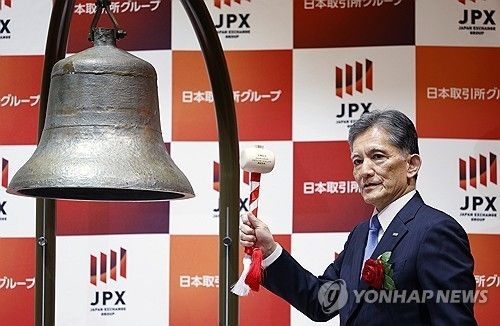
[The Financial News, Tokyo = Reporter Seo Hye-jin] KIOXIA's market capitalization surpassed 50 trillion yen, or about 472.93 trillion won, for the first time on the 16th, Nihon Keizai Shimbun reported. Among Japanese listed companies, it is only the second company to reach that level, after Toyota Motor Corporation.
On the Tokyo Stock Exchange that day, KIOXIA shares were trading at 91,930 yen at 9:20 a.m., up 1.12% from the previous session. Early in the session, buying pushed the stock up more than 3% to as high as 93,990 yen.
As a result, its market capitalization briefly topped 50 trillion yen. Until now, Toyota Motor Corporation had been the only Japanese listed company to exceed that threshold.
There have been other cases in the past where major companies commanded high valuations. After going public in 1987, Nippon Telegraph and Telephone Corporation (NTT) rode an investment boom and reached a market capitalization in the 40 trillion yen range. NTT Docomo also hit the 40 trillion yen range in 2000, helped by the i-mode craze and the IT bubble. However, neither company crossed the 50 trillion yen mark.
KIOXIA's soaring valuation is being driven by rising demand for memory semiconductors as the artificial intelligence (AI) industry expands. As major U.S. cloud providers, or hyperscalers, aggressively increase investment in data centers and AI infrastructure, demand for NAND flash memory is rising faster than expected.
According to QUICK consensus estimates, KIOXIA's net profit for the fiscal year ending March 2027, covering April 2026 to March 2027, is projected to reach 494.48 billion yen, about nine times higher than a year earlier. It is then expected to rise further to 634.01 billion yen in the fiscal year ending March 2028, covering April 2027 to March 2028. Investors are giving high marks not only to near-term earnings improvement but also to its medium- and long-term growth potential.
Changes are also emerging in trading practices across the memory industry. Memory supply contracts, which had long centered on short-term deals, are increasingly shifting to multi-year agreements. KIOXIA executives said more global corporate clients are seeking long-term supply contracts extending beyond 2029. This is seen as a factor that could improve earnings stability in the highly volatile memory sector.
Still, some in the market are warning of overheating. The semiconductor industry has traditionally been one of the most cyclical sectors, with boom-and-bust cycles. In fact, KIOXIA posted a final net loss in its fiscal year ending March 2024, covering April 2023 to March 2024.
There are also concerns that enthusiasm for AI-related stocks has become excessive. Because valuations already reflect expectations for future growth, share prices could become more volatile if the global economy slows, AI investment is cut back, or geopolitical risks emerge.
An industry source said, "KIOXIA is emerging as a key beneficiary of the AI era, but its current share price already reflects much of the growth expected over the next several years." The source added, "If actual demand growth falls short of market expectations, a stock price correction cannot be ruled out."
[email protected] Seo Hye-jin Reporter