Iran's "Reconstruction Fund" Draws Interest from South Korean and Japanese Firms? Operating Details Still Undecided
- Input
- 2026-06-16 10:22:58
- Updated
- 2026-06-16 10:22:58
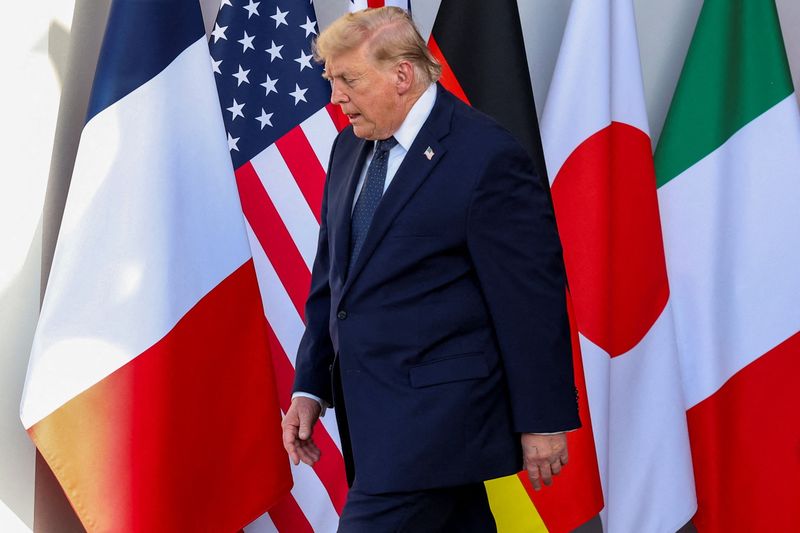
[Financial News] It has been reported that the U.S.-Iran memorandum of understanding on ending the war includes the creation of a $300 billion Reconstruction Fund for Iran, and claims have emerged that companies from South Korea and Japan are showing interest.
A Reconstruction Fund led by private companies
On the 15th local time, a senior U.S. official who spoke with the Financial Times said the Reconstruction Fund would not be financed by governments. Instead, it would be formed by companies seeking to invest in Iran, a country with a population of 90 million and abundant energy resources. The official said, "European, South Korean and Japanese companies, as well as U.S. companies, are interested in the fund," and predicted that "if sanctions on Iran are lifted, the fund could become quite large."Earlier, Mehr News Agency, an Iranian semi-official outlet, reported on the draft war-ending memorandum on the 12th and 14th. It claimed the MOU contains a clause under which the United States and its allies would provide Iran with a $300 billion Reconstruction Fund. On the 14th, Mehr also cited an official known as Mohammadi, an aide to Mohammad Bagher Ghalibaf, the speaker of parliament and Iran's chief negotiator in the peace talks, to reaffirm the clause. Mohammadi said of the fund, "The word compensation is not explicitly used, but the meaning is clear."
U.S. Vice President JD Vance also referred to the Reconstruction Fund in an interview with CBS on the 15th. He said, "If Iran follows through on its obligations, it will be able to access something financed by Persian Gulf countries." The two sides had already completed a digital signing of the MOU on the 15th and are expected to hold a formal signing ceremony in Switzerland on the 19th before continuing final peace and denuclearization talks with Iran.
U.S. President Donald Trump, who unilaterally withdrew from the Iran nuclear deal, the Joint Comprehensive Plan of Action (JCPOA), during his first term in January 2018, has claimed that former President Barack Obama gave Iran "a lot of cash" when he negotiated the JCPOA. According to the Financial Times, critics of the current memorandum are worried that Trump could end up giving Iran even greater financial benefits than Obama did.
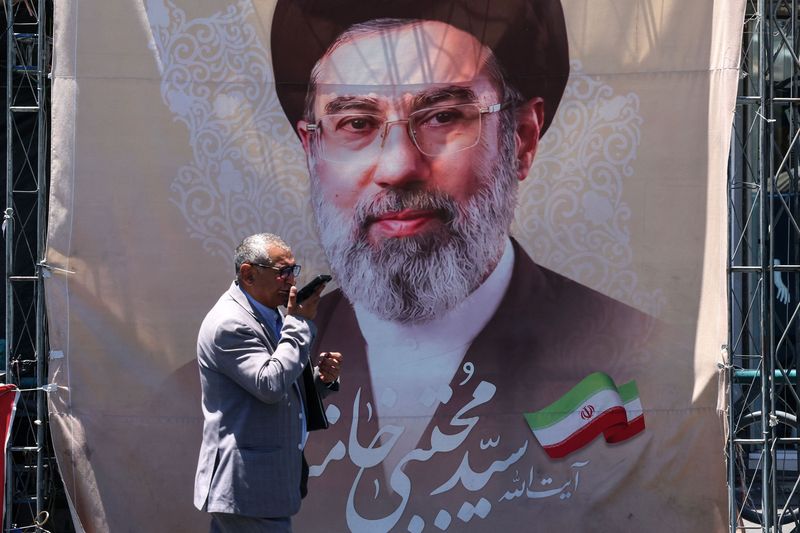
The specific operating structure remains undecided
The Financial Times noted that Trump is strongly averse to any situation that makes it appear as though he is politically rewarding Iran. In this regard, a Trump administration official told the Financial Times on the 15th that no dollars have flowed into Iran since the administration took office. However, a senior U.S. official explained that the United States could offer financial sanctions relief as a "small gesture" at the stage of "beginning to build trust" with Iran.The fund's specific mechanism and operating structure have not yet been disclosed. A U.S. official speculated that whether Iran can access the fund would be decided subjectively rather than according to specific criteria. The official said the sanctions relief included in the MOU, such as the unfreezing of Iranian overseas assets, would be carried out in stages depending on the denuclearization talks and the final outcome. "Sanctions relief is absolutely not tied to any specific action," the official said. "It is generally linked to whether Iran behaves appropriately, and the part we care about most is the nuclear program."
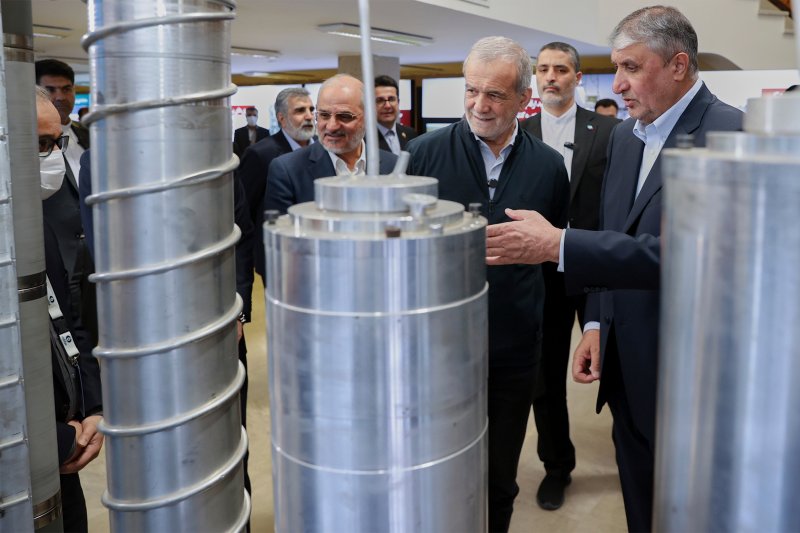
The Financial Times reported that Iran claims to have agreed in the MOU on how to handle enriched uranium. Before the war, Iran held more than 9 tons of enriched uranium, including 440 kilograms enriched to more than 60 percent. Uranium enriched to more than 90 percent can be used as material for nuclear weapons. The official claimed that Iran agreed to dilute the enriched uranium on its own territory under IAEA supervision so that it could not be used as a weapon. The official also said Iran's nuclear program had "already been systematically destroyed" after U.S. and Israeli strikes on nuclear facilities in June last year.
[email protected] Park Jong-won Reporter