"Money Made in the Stock Market Moving into Real Estate Is a Typical Pattern"... Bull Market Emerges as the Biggest Variable for Home Prices in the Second Half
- Input
- 2026-06-16 08:49:56
- Updated
- 2026-06-16 08:49:56
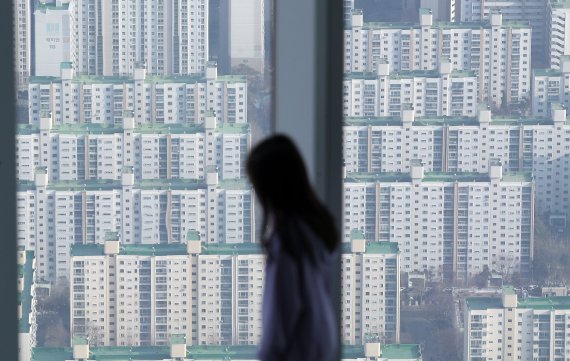
[Financial News] As the domestic stock market has shown strength in the first half of the year, a clear asset shift has emerged, with investment gains from stocks being used to fund home purchases.
Stock and bond sale proceeds used to buy high-priced homes account for 13%... up two to three times
According to Newsis on the 16th, an analysis of funding plans submitted by the Ministry of Land, Infrastructure and Transport showed that stock and bond sale proceeds used for home purchases totaled 3.7255 trillion won from January to April this year.
In particular, the share of stock and bond sale proceeds used in home transactions worth 1.5 billion won or more had stayed at around 3% to 4% from 2020 to 2025, but it surged to 13.2% in April this year. By age group, people in their 30s accounted for the largest amount at 1.2592 trillion won.
This is interpreted as a result of the domestic stock market being seen as a temporary phenomenon because of its high volatility, while real estate is viewed as a representative safe asset. As the KOSPI has been on an upward trend this year, investors who jumped into the bull market are ultimately channeling their money into real estate.
Real estate regulations and interest rate hikes could also curb home price gains
Ko Jong-wan, head of the Korea Asset Management Institute, analyzed that "people who make money in the stock market eventually moving into real estate, a safe asset, is a typical pattern that has repeated for a long time" and added that "even now, with supply in Seoul still lacking and home prices expected to keep rising, while jeonse prices are also climbing sharply, returns from the stock market are flowing into real estate as multiple factors converge."
Outlook for apartment move-ins has also improved, with this month's nationwide Apartment Move-in Outlook Index rising 10.5 points from the previous month to 84.6. The gain reflects expectations that the stock market boom will improve the funding conditions of prospective apartment occupants.
As some spare funds secured in the first half are expected to flow into the real estate market in the second half, tax reform and changes in the interest rate environment are adding to the mix, and various factors are expected to compete over the market's direction.
In particular, with gap investment banned in regulated areas of Seoul and Gyeonggi Province under the Land Transaction Permit System, and with measures such as tighter real estate taxation system and Loan regulations, as well as an interest rate hike, expected, there are views that price increases could be restrained.
Park Won-gap, senior real estate expert at KB Kookmin Bank, said, "In the second half, upward and downward factors are mixed," adding, "Various variables will be locked in a tight contest in the market."
However, even if these factors collide, some expect prices to keep rising as buying demand from end users continues amid a prolonged supply shortage. Ko said, "The ultimate goal of people without homes is, in the end, to buy their own home," adding, "Even if tax reform increases the burden on multi-home owners or non-resident single-home owners, it will not have a major impact on single-home end users."
[email protected] Kim Hee-sun Reporter