Vance Expects Long-Term Toll-Free Strait of Hormuz, but Shipping Industry Remains Cautious
- Input
- 2026-06-16 07:43:52
- Updated
- 2026-06-16 07:43:52
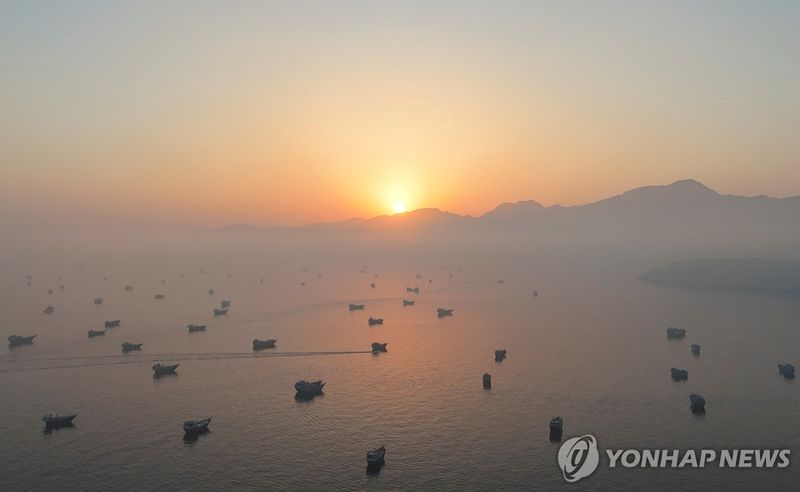
[Financial News] JD Vance, the U.S. vice president, said he expects the Strait of Hormuz, a key Middle East shipping lane, to remain open in the long term without tolls following the recent U.S.-Iran agreement.
By contrast, the global shipping industry remains cautious, saying that transit procedures and safety guarantees are still unclear.
Speaking on CNBC on the 15th local time, Vance said, "We expect the Strait of Hormuz to remain open long term without tolls, and we will flesh that out in the technical talks that follow."
Earlier, U.S. President Donald Trump announced that Iran had agreed to open the Strait of Hormuz free of charge in exchange for lifting the U.S. maritime blockade on Iran. The two sides are scheduled to sign a formal agreement to end the war in Switzerland on the 19th.
Iranian state media reported that the Strait of Hormuz would be open for 60 days without toll collection, after which it would be jointly managed with Oman.
That has raised concerns that Iran could reimpose tolls or tighten control in the long run.
Views also differ on developments on the ground. Vance claimed that "ship traffic through the Strait of Hormuz has already begun to increase over the past 24 hours."
However, Matt Smith, director of commodities research at shipping tracker Kepler, offered a different assessment, saying, "We have not yet seen large-scale vessel movement or a sharp increase in traffic in the Persian Gulf."
Global shipping companies and international shipping groups appear unwilling to rush back until a formal agreement is signed and specific safety standards are announced.
Lars Barstad, CEO of the global tanker operator Frontline, said, "Once the agreement is formally signed, ships will start moving quickly," but added, "What is missing is clear language on transit protocols. I hope more details emerge within days." Frontline currently has five tankers stranded in the Persian Gulf.
The International Maritime Organization (IMO) has raised its warning level, saying the announcements from the United States and Iran are too vague to determine the exact timing of transit or safe routes.
Jakob Larsen, head of maritime safety and security at the IMO, said, "The combination of overly optimistic announcements and a lack of detail means the security situation felt by the shipping industry remains unstable," adding, "At this point, it is extremely dangerous for ships to resume operations."
The biggest obstacle is believed to be the issue of mines laid in the strait.
Earlier this month, U.S. Secretary of State Marco Rubio reported to Congress that Iran had laid mines in the Strait of Hormuz.
Niels Rasmussen, chief shipping analyst at the IMO, said, "It will take weeks just for the hundreds of ships currently trapped in the Persian Gulf to get out through the strait," adding, "There is still no sign that the announcement of the agreement has changed conditions on the ground."
[email protected] Yoon Jae-joon Reporter