The Strait of Hormuz Reopens, but 'Reefs' Remain Everywhere... Supply Chain Recovery Could Take Three Months [U.S.-Iran Ceasefire]
- Input
- 2026-06-15 18:25:02
- Updated
- 2026-06-15 18:25:02
■ Oil prices plunge, 'the worst is over'
U.S. President Donald Trump said on the 14th local time, "If the United States and Iran sign a Memorandum of Understanding (MOU) on the 19th, the Strait of Hormuz will be opened immediately and the U.S. maritime blockade on Iran will also be lifted." In a phone interview with The New York Times (NYT) that day, he also claimed the deal would ultimately "guarantee permanent toll-free passage" through the Strait of Hormuz.
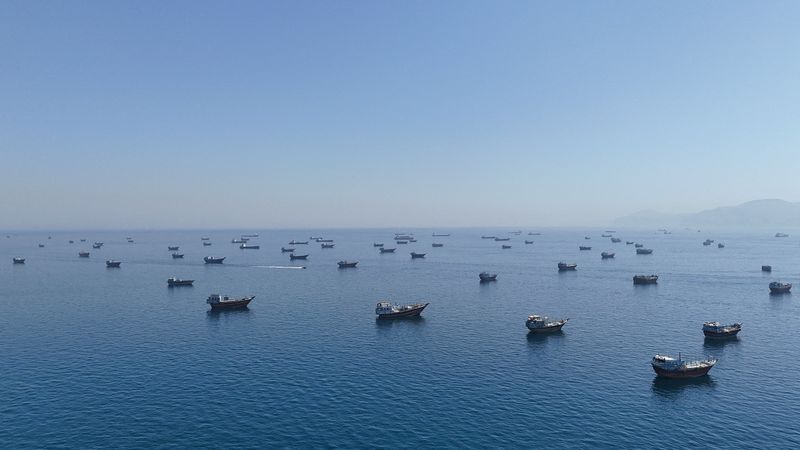
As a result, hundreds of tankers and cargo ships, including 24 South Korean vessels that had been stranded inside and outside the strait during the war, are preparing to resume operations in stages. Once crude oil and LNG transport restarts, Gulf oil producers that suffered production disruptions are also expected to gradually restore output.
In particular, Asian countries such as South Korea, Japan, and China, which rely heavily on the Middle East for crude oil and LNG imports, expect relief from energy supply concerns. The shipping industry is also watching for a possible easing of the sharply higher freight and insurance costs.
The market reaction was immediate. Brent Crude Oil for August delivery fell 4% to the low $83 range per barrel on the morning of the 15th, while West Texas Intermediate crude oil (WTI) also dropped to around $81. European natural gas futures also fell by more than 5%.
This suggests that fears of supply disruptions that had weighed on the market during the war are easing quickly. About 60 million barrels of crude oil and refined products trapped inside the strait during the blockade are expected to be released into the market, and as oil producers resume output, concerns over shortages are subsiding.
■ Even with the strait open, a long road remains
Still, market participants say a reopening of the Strait of Hormuz will not immediately bring conditions back to prewar levels.
First, physical supply chain normalization will take time. Even after the strait reopens, the industry expects it will take at least 60 to 90 days for supply chains to regain balance, given port congestion, logistics bottlenecks, and vessel reallocation. The roughly three-week voyage from the Middle East to Asia is also a factor.
It will also take considerable time to repair oil fields, refineries, and LNG export terminals that stopped operating during the war. Some facilities may require repair work for several months or longer, depending on the extent of the damage.
The biggest variable is Iran's claim to control over the strait. The United States says the reopening means freedom of navigation has been restored, but Iran maintains that it has authority over the waterway. During the war, Iran tightened inspections and controls on vessels, and in April it approved a draft of the Strait of Hormuz Sovereignty Enforcement Law, which includes provisions on transit permits and toll collection.
That leaves open the possibility of a clash between the United States' call for toll-free freedom of navigation and Iran's insistence on exercising control. Rodolphe Saadé, CEO of the world's third-largest shipping company CMA CGM, said at a recent hearing in the French Parliament, "Just because the Strait of Hormuz has reopened does not mean everything goes back to the way it was," adding, "There is no guarantee that another crisis will not emerge." He also noted that if follow-up talks on Iran's nuclear program and sanctions relief collapse, or if tensions flare again, Iran could once again use the strait as leverage in negotiations.
[email protected] Kim Kyung-min Reporter