"Samsung's HBM bet is on 'full-stack' ... strength lies in in-house base die production" - Mirae Asset Securities
- Input
- 2026-06-16 06:00:00
- Updated
- 2026-06-16 06:00:00
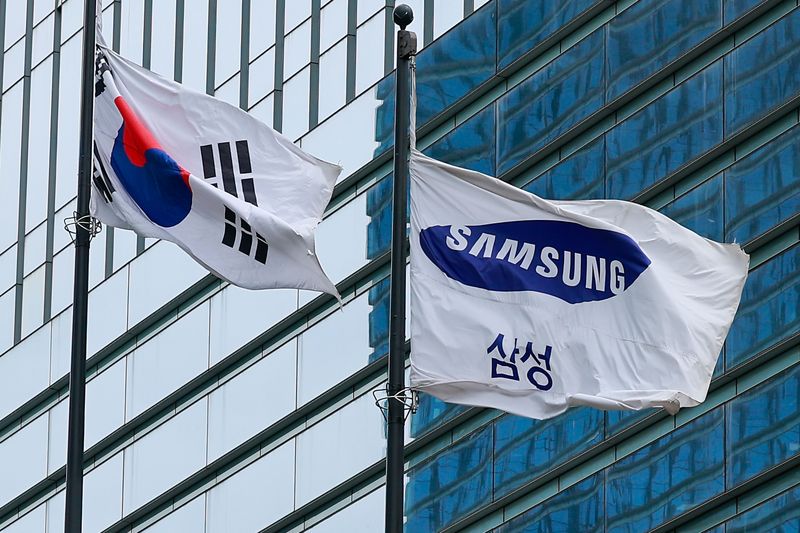
[Financial News] A securities industry analysis said that Samsung Electronics has secured differentiated competitiveness in the next-generation memory market despite intensifying competition. The company’s ability to produce the base die, a key component of High Bandwidth Memory (HBM), in-house through its full-stack semiconductor manufacturing capability, which includes both memory semiconductor and foundry operations, is expected to become a future competitive advantage.
Kim Young-geon, a researcher at Mirae Asset Securities, said in a report on the 16th that "from HBM4 (6th generation) onward, the importance of the base die, which uses a foundry process rather than the existing DRAM process, is increasing." He added that "Samsung Electronics has completed the in-house production of the base die by using the Samsung Foundry Division's 4 nm FinFET process." He also noted that "as the industry moves to HBM4E (7th generation) and HBM5 (8th generation), the importance of securing base die supply will grow even further."
Samsung Electronics' strengths in the HBM market are expected to become more evident. While global HBM rivals currently apply existing DRAM processes to the base die or outsource production to external foundries such as Taiwan Semiconductor Manufacturing Company Limited (TSMC), Samsung Electronics can use its own foundry to secure both production efficiency and cost competitiveness. Mirae Asset Securities estimated that the base die accounts for about 15% of the cost structure in HBM4.
The earnings outlook is also positive. Mirae Asset Securities forecast that SEC's operating profit this year will rise to around 39.5 trillion won. Last year, Samsung Electronics posted annual operating profit of 43.6011 trillion won. Operating profit next year is also expected to reach 52.9 trillion won.
Operating profit for the Device Solutions Division (DS Division), which oversees the semiconductor business, is estimated at 38.3 trillion won this year.
Kim said, "In the short term, it is time to focus on earnings growth, profitability and shareholder return, while in the medium to long term, we should also consider assigning a premium to the capability to internalize full-stack memory manufacturing."
[email protected] Im Su-bin Reporter