Japan's Nikkei surges 4.99% on easing U.S.-Iran tensions, nearing 70,000
- Input
- 2026-06-15 15:50:39
- Updated
- 2026-06-15 15:50:39
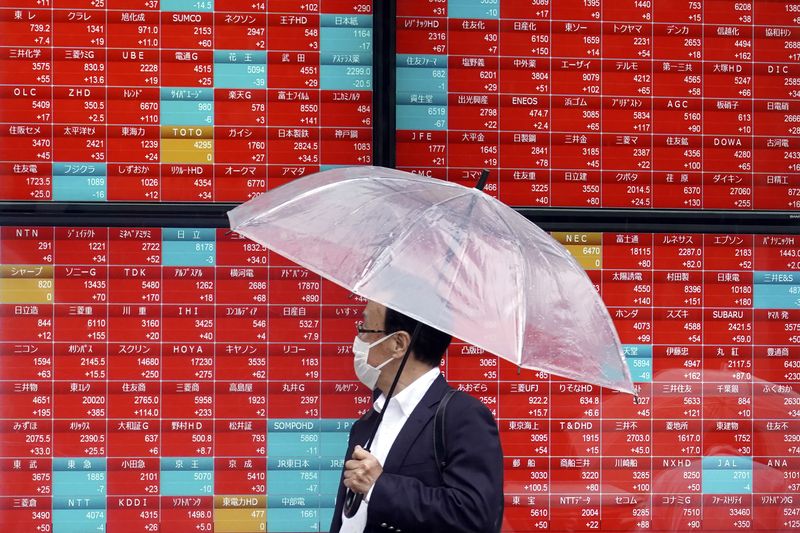
[Financial News, Tokyo = Reporter Seo Hye-jin] Japan's benchmark Nikkei Stock Average (Nikkei 225) broke above the 69,000 level on the 15th and hit a record high after news that the United States and Iran had agreed to end their fighting. The rally, which began with artificial intelligence (AI) and semiconductor stocks, spread across cyclical sectors such as autos, airlines, construction and chemicals, fueling market talk that a move above 70,000 is only a matter of time.
According to Nihon Keizai Shimbun, the Nikkei 225 closed at 69,317.50 on the Tokyo Stock Exchange (TSE), up 3,297.46 points, or 4.99%, from the previous session. It was a record closing high. In terms of point gains, it was the second-largest on record. During the session, it briefly climbed above 69,600, coming close to the 70,000 mark.
The sharp rise was driven by expectations that military tensions between the U.S. and Iran would ease.
Early that morning, U.S. President Donald Trump said on social media that the two countries had agreed to end the fighting. In particular, after Trump reaffirmed that the Strait of Hormuz would remain open, global oil prices fell sharply, easing concerns over inflation and supply chain disruptions. Expectations of lower U.S. interest rates added to the shift, quickly reviving global investors' appetite for risk assets.
Takayuki Ishibashi, vice president at Goldman Sachs Securities, said, "The market had already priced in the possibility of a ceasefire, but it had not fully reflected an end-of-fighting agreement, lower oil prices and lower interest rates."
AI and semiconductor-related stocks led the gains.
Tokyo Electron Ltd. rose more than 10% intraday to a record high. SoftBank Group jumped 13%, while Ibiden Co., Ltd. gained 19%, Advantest Corporation rose 8% and Kioxia Holdings Corporation climbed 11%.
Buying also concentrated in MLCC-related stocks, which are seen as beneficiaries of growing demand for AI servers. Murata Manufacturing Co., Ltd. hit the daily upper limit, while Taiyo Yuden surged 19%.
As fears of a blockade of the Strait of Hormuz eased, buying also flowed into sectors that had been viewed as losers from higher oil prices.
Daesung Construction rose 12% intraday and Kajima Corporation gained 10%. Airline stocks such as Japan Airlines (JAL) and ANA Holdings also strengthened.
Chemical stocks, including Mitsubishi Chemical Group and Mitsui Chemicals, also advanced on expectations that raw material costs would ease, while auto stocks led by Toyota Motor Corporation rose across the board.
Takehiko Masuzawa, head of equity trading at Philip Securities, said, "As concerns over oil prices and supply chains fade, investors are growing more anxious not to miss the rally."
Market participants are increasingly viewing the recent rally not as a simple AI-driven run, but as a broad-based bull market.
As even stocks that had been left behind in the rally began to surge, analysts said investor FOMO was becoming even stronger.
Richard Kay, portfolio manager at French asset manager Comgest, said, "After the end-of-fighting agreement, we plan to further increase our exposure to domestic-demand stocks such as retail and food." He added, "If the yen's weakness eases, domestic-demand stocks could benefit even more."
Some market experts also said the current stock market conditions could be the early stage of a bubble.
Keita Kubota, head of Japanese equity management at Neuberger Berman, said, "The pace of the rise is extremely steep." He added, "This is what a bubble market can look like."
Tomoo Kinoshita of Invesco Asset Management said, "I did not expect this much of a rise."
Nihon Keizai Shimbun reported that market expectations are growing that the Nikkei 225's 70,000 level is no longer a symbolic resistance line, but a level that could be crossed in the near term.
[email protected] Seo Hye-jin Reporter