Election Reform Requires Constitutional Amendment, but the National Assembly Remains Lukewarm
- Input
- 2026-06-15 15:22:59
- Updated
- 2026-06-15 15:22:59
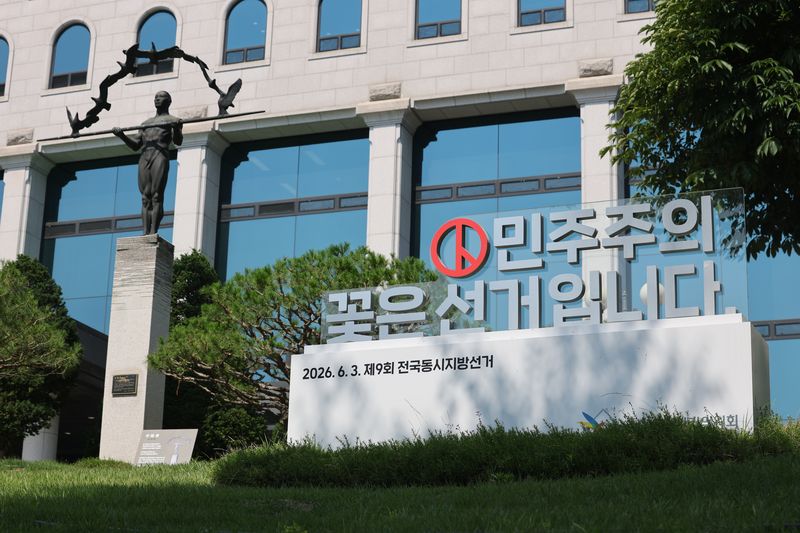
[Financial News] Public trust in the National Election Commission of the Republic of Korea (NEC) has collapsed over the June 3 local election ballot shortage incident. Political parties have begun discussing NEC reform, but talks on constitutional revision, which is essential to any reform process, have made little progress. As a special committee for a parliamentary investigation is set to begin work soon, lawmakers are expected to continue discussions on constitutional revision and other issues after reviewing the results.
According to political sources on the 15th, the Democratic Party of Korea and the People Power Party are each forming a task force and a special committee at the party level to discuss improvements to the election management system. The Democratic Party of Korea has launched the Task Force for Institutional Reform to Defend the People’s Right to Vote and plans to soon establish a party-level special committee. The People Power Party also plans to quickly form a task force to discuss reform measures.
Since the ballot shortage incident, the National Assembly has been debating legal revisions. People Power Party lawmaker Na Kyung-won has proposed an amendment to the Public Official Election Act that would require a rerun election whenever the NEC commits a "serious violation," such as a ballot shortage, regardless of the original election result. Independent lawmaker Han Dong-hoon said he would introduce an amendment to the Board of Audit and Inspection Act as his "first bill" to allow the BAI to inspect the NEC. Meanwhile, People Power Party leader Jang Dong-hyeok argued that the early voting system is the root cause of all the problems and called for its abolition. In effect, the opposition is waging a legislative campaign to reform the NEC.
However, experts broadly agree that constitutional revision is needed to fundamentally reform the "untouchable NEC." Both ruling and opposition parties agree that external oversight of the NEC should be strengthened, but the current Constitution places limits on what can be done. At present, only a National Assembly audit is possible, and some say measures are needed to make a BAI financial audit possible. One ruling party official said, "Without constitutional revision, NEC reform is virtually impossible," adding, "We will need to prepare a range of alternatives, including making the NEC non-permanent, by referring to overseas cases."
Within the Democratic Party of Korea, a "two-step one-point constitutional amendment" for NEC reform is being discussed. The plan is to complete legal revisions this year, including increasing the number of standing NEC commissioners and establishing an independent audit body, and then push for a one-point constitutional amendment next year. Kim Young-bae, deputy head of the task force, said on YTN Radio, "Because the Constitutional Court of Korea has ruled that the NEC should not be subject to BAI audits, one option is to revise the Constitution so that it can be audited by the BAI, or to enshrine an independent audit body in the Constitution. That two-step strategy is the Democratic Party's position."
The People Power Party also agrees that constitutional revision is necessary. A senior People Power Party floor official said, "We agree that constitutional revision is essential for NEC reform."
There are also calls for a special committee at the National Assembly level to comprehensively discuss legal revisions and constitutional amendment for NEC reform.
An official from the Office of the Speaker of the National Assembly said, "There is broad agreement that constitutional revision is needed, but our position is to wait and see the results of the parliamentary investigation that will begin soon," adding, "After the investigation ends, the ruling and opposition parties will hold discussions."
[email protected] Lee Hae-ram Reporter