"Is hair loss a matter of survival?"...Before pouring 100 billion won of National Health Insurance funds into it, the government asks the public
- Input
- 2026-06-15 08:49:01
- Updated
- 2026-06-15 08:49:01
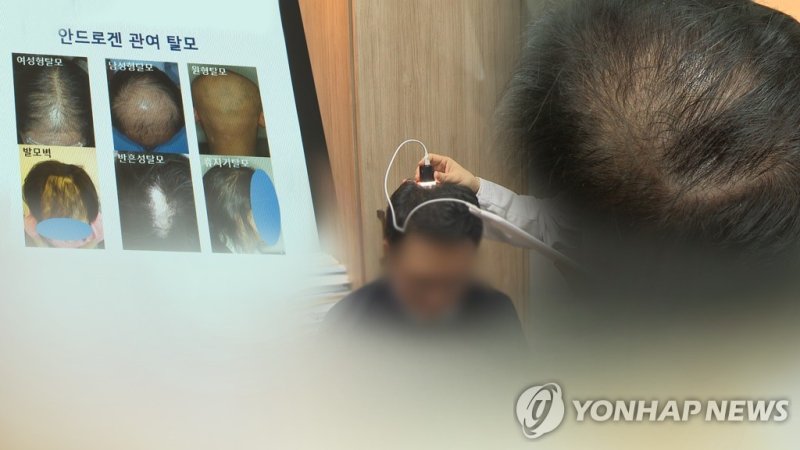
[Financial News] The Ministry of Health and Welfare plans to expand National Health Insurance coverage for hair loss treatment. To that end, it will hold a forum in July on the topic of "Applying National Health Insurance Benefits to Hair Loss Treatment" and gather opinions from various sectors to review the specific scope of coverage and the expected financial burden.
According to News1 on the 14th, the MOHW will push for expanded National Health Insurance benefits for hair loss treatment in the second half of this year after collecting public feedback. The ministry said it will review whether to provide insurance support after taking into account medical necessity and cost-effectiveness.
This follows Lee Jae-myung's instruction during a year-end briefing by the MOHW last year, when he said, "Recently, hair loss has increasingly been seen not as a cosmetic issue but as a matter of survival," and called for a review of benefit coverage. Lee had also pledged during the 2022 presidential campaign to apply National Health Insurance to hair loss treatment.
Hair loss is broadly classified into four types. In the case of alopecia areata, National Health Insurance coverage is available, with patients receiving support for clinic and hospital fees and medication costs at a 30% out-of-pocket rate. However, androgenetic alopecia, also known as M-shaped hair loss, as well as non-scarring alopecia and scarring alopecia, have remained outside insurance coverage.
According to Health Insurance Review and Assessment Service statistics, 88,760 patients in their 20s and 30s received treatment for hair loss in 2024. Of them, about 25,000 were treated for androgenetic alopecia. The actual number of patients is expected to be higher when those who did not visit clinics or hospitals are included.
In response, Minister Jeong Eun-kyeong told reporters on the 11th that "we have heard views that hair loss has a major impact on young people's health and daily lives, and that hair loss is also severe for young people." Jeong added, "We have already conducted working-level reviews on how much funding would be needed if it were covered by National Health Insurance," and noted that "a survey of 1,000 people conducted by the National Health Insurance Service also found positive responses to benefit coverage."
The main point of contention is, unsurprisingly, financial concerns. As estimates suggest that applying National Health Insurance to androgenetic hair loss treatment alone would require more than 100 billion won a year, intense debate is expected over how far coverage should extend under a limited insurance budget. If benefits are introduced, patient demand is likely to surge, and arguments over fiscal efficiency will also be unavoidable. Critics are also questioning whether a life-threatening disease and hair loss can be placed on the same level.
Regarding this, Jeong said, "There are also views that National Health Insurance should be operated with a focus on severe diseases," adding that "we will review possible measures while listening to public opinion through a very broad process of public discussion."
Meanwhile, the MOHW and the MOIS will hold the first Public Debate Forum on July 4 under the theme of "Applying National Health Insurance Benefits to Hair Loss Treatment." The forum will proceed by hearing expert presentations and then allowing the public to deliberate. Citizens who wish to participate can apply through the MOIS website and other channels by the 19th.
[email protected] Kim Hee-sun Reporter