U.S. and Iran take a cautious stance despite memorandum agreement: "We will watch to see whether promises are kept"
- Input
- 2026-06-15 08:53:29
- Updated
- 2026-06-15 08:53:29
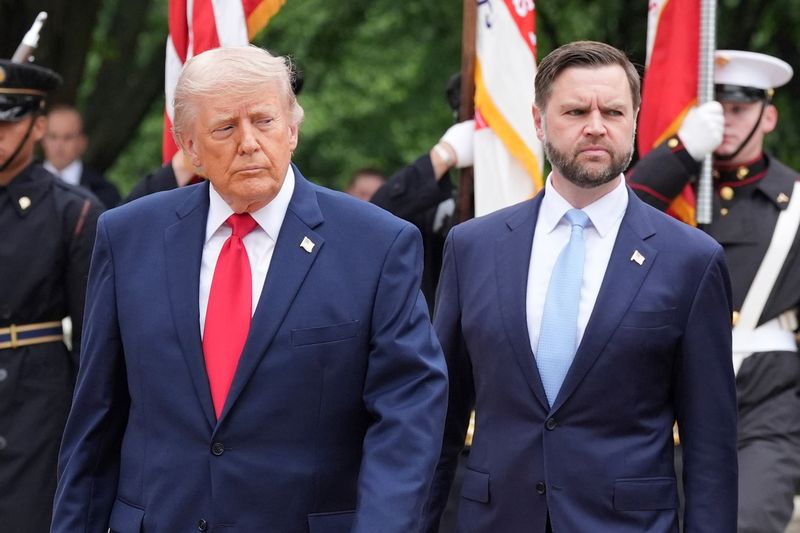
[Financial News] The United States and Iran have agreed to sign a memorandum of understanding for a 60-day ceasefire negotiation, but both sides took a cautious tone, saying they need to see whether the other side keeps its promises.
In an interview with Fox News on the 14th local time, U.S. Vice President JD Vance said the memorandum agreement with Iran was "a pivotal moment for the United States." He added that he would not say everyone is singing praises right away, arguing that "it will take some time to learn how to make peace."
On the 15th, Kazem Gharibabadi, Iranian Deputy Foreign Minister, said Iran had agreed with the United States to sign a memorandum on ending the war, and that the signing ceremony would be held on the 19th. He said the specific text of the memorandum would be released after the ceremony. He added that the two sides would hold final ceasefire talks for 60 days after the signing and verify the terms of the agreement. The verification will include ending hostilities and the maritime blockade, as well as lifting the freeze on Iranian assets overseas by the United States. The Government of Pakistan said on social media on the 15th that the signing ceremony would be held in Switzerland.
Vance said the memorandum consists of three elements. The first is "the immediate opening of the Strait of Hormuz and the accompanying lifting of the U.S. maritime blockade on Iran," he said. He identified the second element as a guarantee that Iran will not seek, acquire, or purchase nuclear weapons. He then explained that the third element is implementation of the agreement.
Vance emphasized, "Let me be clear: this is only possible if Iran carries out its promises."
On the same day, Gharibabadi also stressed, "A memorandum does not mean trusting our enemies," adding, "We will watch to see whether the United States carries out its promises." He also said, "The Iranian military will always keep its finger on the trigger."
The New York Times said the agreement was "essentially nothing more than a 60-day extension" of the ceasefire that began on April 8. It added that "the most important and difficult issues, namely the status of Iran's nuclear program and U.S. sanctions on Iran, have been pushed to the next round of negotiations."
U.S. political outlet Axios reported that "this memorandum will be the biggest diplomatic breakthrough in this war and will buy time to address the difficult issues related to Iran's nuclear program." It added, "If the agreement holds, it could ease the global energy crisis triggered by the war. However, the core nuclear issue remains a challenge that must be resolved through negotiations over the next two months."
Meanwhile, U.S. President Donald Trump claimed in a post on the 14th that the Strait of Hormuz would be opened when the memorandum is signed on the 19th. Axios said of that claim that "it could take time to fully restore traffic to prewar levels, including mine clearance, infrastructure repairs, and security guarantees." Vance told U.S. consumers, who have been burdened by months of high oil prices due to the blockade of the Strait of Hormuz and the war, that "the first thing I want to say is thank you." He added, "Thanks to your patience, I believe we have solved a problem that has been troubling this country."
[email protected] Park Jong-won Reporter