'Google Boost' Sends Samsung and SK hynix Soaring... Foreign Investors Profit Even After Dumping 2 Trillion Won, in a 'Chilling Strategy'
- Input
- 2026-06-15 07:18:44
- Updated
- 2026-06-15 07:18:44
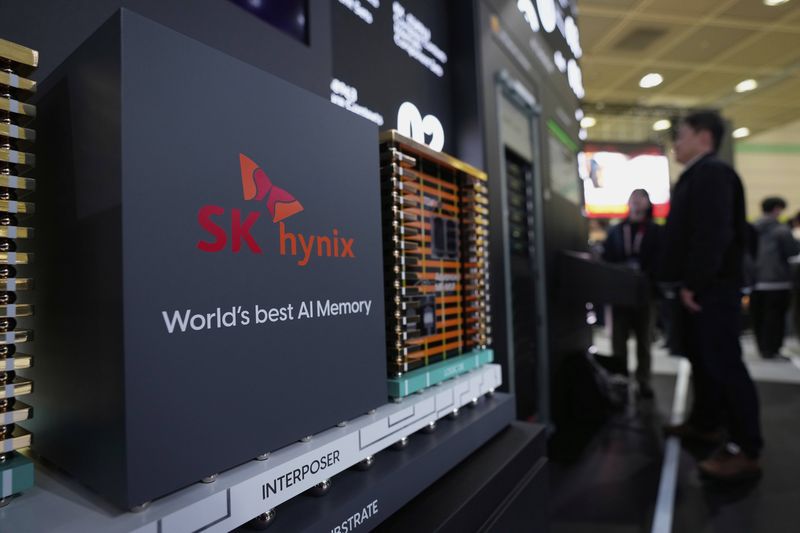
[Financial News] Foreign investors, who had been on a record-setting 24-session selling streak, the fourth-longest on record, turned to large-scale net buying centered on South Korea's leading semiconductor stocks, lifting the market.
Foreign investors aggressively bought the semiconductor duo
On the 12th, the KOSPI (Korea Composite Stock Price Index) closed at 8,123.62, up 4.63% from the previous session. During the day, it even recovered the 8,400 level. The rally was driven by foreign investors and institutions. In particular, foreigners returned to net buying in the KOSPI market for the first time in 25 sessions, purchasing a net 210.63 billion won.
That day, foreign investors' buying spree was concentrated on the two semiconductor giants. They bought a net 1.2854 trillion won in SK hynix and 874.1 billion won in Samsung Electronics, sending Samsung Electronics up 7.86% and SK hynix up 2.33%.
The key driver behind the rebound was expectations that Samsung Electronics would win an order for Google's next-generation artificial intelligence chip. According to U.S. tech outlet The Information, Google is reportedly considering handing part of the production of its 10th-generation Tensor Processing Unit (TPU), codenamed Icefish, to Samsung Electronics Foundry. Under the plan, TSMC would manufacture the core computing chip using a 1.4-nanometer process, while Samsung Electronics would produce the Memory I/O die, a key component that connects to high-bandwidth memory (HBM), using a 2-nanometer process. Analysts said Samsung Electronics' turnkey capabilities, spanning memory, foundry, and advanced packaging, worked in its favor.
Cash for profit-taking, leverage for short-term gains: a standout two-track strategy
What is interesting is that even during the large-scale net selling period that began last month, foreign investors deployed a sophisticated two-track trading strategy across the spot and derivatives markets.
From the 27th of last month through the 12th of this month, foreigners kept selling Samsung Electronics shares for 10 straight sessions and SK hynix shares for 23 straight sessions, unloading more than 2 trillion won in total. The move is seen as profit-taking after a sharp short-term rally and a reduction in portfolio exposure. As a result of the heavy selling, foreign ownership in the two stocks fell to its lowest level this year.
By contrast, their behavior in single-stock leveraged exchange-traded fund (ETF) products listed during the same period was completely different. Rather than simply selling leveraged products, foreigners frequently engaged in so-called ping-pong trading, selling on seven of the 12 sessions and buying on five. The aim was to actively exploit two-way volatility and generate short-term profits through high-frequency arbitrage.
Brokerage analysts interpret this as foreigners trimming their holdings in the underlying stocks to lock in gains after this year's sharp rally in semiconductor blue chips, while still using leveraged products to maximize profit opportunities based on the sector's solid fundamentals.
Im Eun-hye, head of the ETP Strategy Team at Samsung Securities, said, "Foreign investors account for 35% to 45% of trading volume in single-stock leveraged products, and they mainly carried out high-frequency arbitrage across the spot, futures, and ETF markets."
She added, "Single-stock leverage has advantages in terms of trading convenience, bid-ask spreads, and costs. Unlike their aggressive selling of the underlying shares, foreigners frequently alternated between long and short positions in leveraged products."
[email protected] Moon Young-jin Reporter