Small and medium-sized exporters vulnerable to currency hedging are hit first... "We need to open the way for forward exchange contracts and currency options"
- Input
- 2026-06-14 19:01:14
- Updated
- 2026-06-14 19:01:14
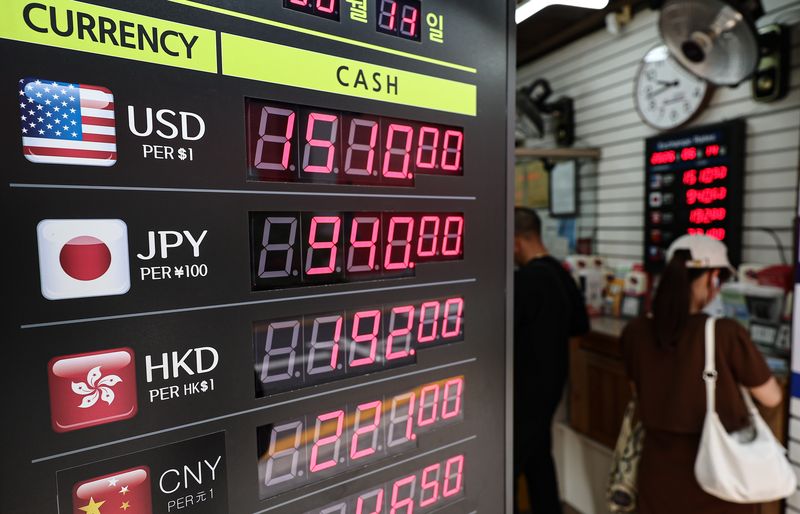
To minimize the damage from the strong won, experts say access to currency hedging must be improved and the government should build infrastructure to stabilize the market and help companies respond.
■ Low-cost carriers face weak load factors amid exchange-rate pressure
According to industry sources on the 14th, the cement industry, which has been on a worsening trend, is growing increasingly concerned as the price of thermal coal rises on the back of the stronger won. In particular, Ssangyong C&E, which holds large foreign-currency financial liabilities and also uses hedging tools, posted a net foreign exchange loss of about 4.84 billion won in the first quarter of this year because of volatile exchange rates.
Low-cost carriers (LCCs) are also under heavy pressure. Because they rely heavily on short- and medium-haul routes and have relatively weak financial buffers, they are more vulnerable to external shocks such as high oil prices and a strong won. According to Airportal, the load factors of LCCs in May ranged from the high 60% to the low 70% range. In the aviation industry, a load factor below 80% is generally seen as too low to secure profitability when fuel costs, lease payments and other exchange-rate burdens are rising.
An LCC industry official said, "The government is deferring airport usage fee payments, but that alone is unlikely to significantly ease financial pressure," adding, "Just as employment retention subsidies and support from the Key Industry Stabilization Fund were provided during the COVID-19 period, this is a time when active government support is needed."
■ High exchange rate shocks market prices
The domestic food industry is also seeing rising costs as the exchange rate climbs and the prices of raw and packaging materials increase.
According to Trading Economics, the price of Naphtha, used for packaging materials and PET bottles, has jumped by $245, or 49.6%, from $494 per ton at the start of the year to $739 now. Aluminum, used in canned products, rose by $328, or 10.4%, from $3,147 to $3,475 per ton over the same period, while palm oil, used to fry ramen and snacks, increased by $121, or 12.4%, from $974 to $1,095.
This is putting corporate management under strain. According to DART, a 10% rise in the won–dollar exchange rate reduced pre-tax profit by 14 billion won for Ottogi, 6 billion won for Daesang and 4 billion won for Lotte Wellfood.
Prices of IT devices are also surging. In addition to the sharp rise in component prices led by memory semiconductors, procurement costs for parts are ballooning, fueling fears that companies will have little choice but to raise prices to avoid losses.
In particular, price increases are spreading across the IT sector as a whole, including smartphones, PCs, laptops and video game consoles. Component prices have been on a long upward trend, and the aftermath of the Middle East war, including higher oil prices and rising transportation costs, is adding to the burden.
Samsung Electronics raised prices for Galaxy Book6 Ultra models by between 450,000 won and 900,000 won depending on the specifications. It also adjusted the launch prices of the Samsung Galaxy Book 6, by 170,000 won to 880,000 won, and the Samsung Galaxy Book 6 Pro, by 250,000 won to 680,000 won. LG Electronics' 2026 LG gram 16-inch model also climbed to 3.54 million won, up 13% from its launch price of 3.14 million won.
KIET said, "For industries where an inelastic import structure means exchange-rate shocks translate directly into cost shocks, support coverage and insurance limits for Foreign Exchange Fluctuation Insurance should be adjusted to reflect reality in order to prevent profitability from deteriorating," adding, "For small and mid-sized manufacturers, access to currency hedging products such as forward exchange contracts and currency options should be expanded, and effective Foreign Exchange Risk Management Consulting should be provided to strengthen resilience across the supply chain."
[email protected] Kim Dong-ho, Jang Min-kwon, Park Kyung-ho, Kim Hyun-chul Reporter