Insurers See Better Asset Management Returns, but Rising Capital Volatility Weighs on Them [The Two Faces of Rising Rates (3)]
- Input
- 2026-06-14 19:00:57
- Updated
- 2026-06-14 19:00:57
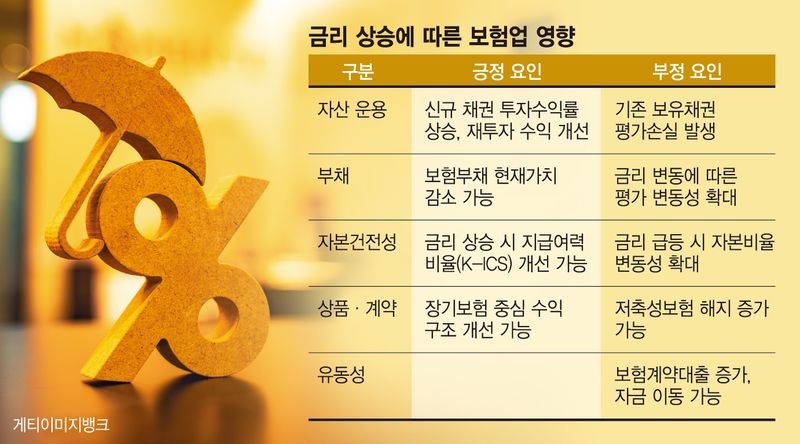
However, the picture is more complicated because insurers also face burdens such as larger valuation losses on existing bond holdings, greater volatility in capital soundness, and the risk of customer fund outflows.
■ Expectations for better investment returns as rates rise
According to the financial sector on the 14th, market consensus is leaning toward a shift to a rate hike, given inflationary pressures and remarks by Shin Hyun-song, Governor of the Bank of Korea, suggesting higher interest rates. As a result, insurance, a highly rate-sensitive sector, is attracting renewed interest.
The biggest reason insurers are hoping for higher rates is the prospect of improved asset management returns. Insurance companies invest premiums collected from customers in bonds such as government and corporate debt, generating profits through long-term management. Rising rates matter because this structure lifts returns over time. When bonds purchased during the low-rate period mature, insurers reinvest the funds in the market. If rates are higher at that point, they can secure greater interest income. That also increases the likelihood of better overall portfolio returns in the medium to long term.
Rate changes also affect liabilities. Insurers value future policy payout obligations at present value, and when rates rise, the higher discount rate can reduce the present value of insurance liabilities. An industry source explained, "In a rising-rate environment, returns on new investment assets improve, which can expand investment income over the long term." The source added, "The impact may be especially large for life insurance companies, which hold a high share of long-term bonds."
■ Burdens such as valuation losses and capital volatility
Still, higher rates do not translate directly into better earnings for insurers. As rates rise, the market value of existing bond holdings falls, reducing asset valuations and potentially increasing capital volatility.
Since the introduction of IFRS 17 and the Korean Insurance Capital Standard (K-ICS), rate fluctuations have been reflected even more directly in insurers' financial statements and soundness indicators. Because asset and liability values move at the same time, the impact on financial soundness can vary depending on the direction and size of rate changes.
There are also differences within the insurance sector. Life insurance companies have a higher share of long-term products such as whole life and annuity policies, so changes in liability values caused by rate movements tend to be more pronounced. By contrast, non-life insurance companies offer a wider range of products, including auto and general insurance, and loss ratio fluctuations also come into play, making the impact of rates more complex.
There are also some liquidity-related concerns. If higher rates make deposits and bonds more attractive, policy cancellations in savings-type insurance products or fund shifts could occur.
In the industry, the duration of the high-rate environment is seen as more important than the rate hike itself. Improved returns on new investments emerge gradually over time, while valuation changes in assets and liabilities are reflected immediately.
A financial sector official said, "In the past, rising rates were often seen as a simple positive for the insurance sector, but since the introduction of IFRS 17, the impact has varied depending on asset and liability structures." The official added, "Even under the same rate environment, changes in performance and financial soundness are likely to differ from company to company."
[email protected] Hong Ye-ji Reporter