"I Will Sign During a Video Conference" ... Trump Races Toward a 'Half Agreement' [Iran Ceasefire Signature Imminent]
- Input
- 2026-06-14 18:17:32
- Updated
- 2026-06-14 18:17:32
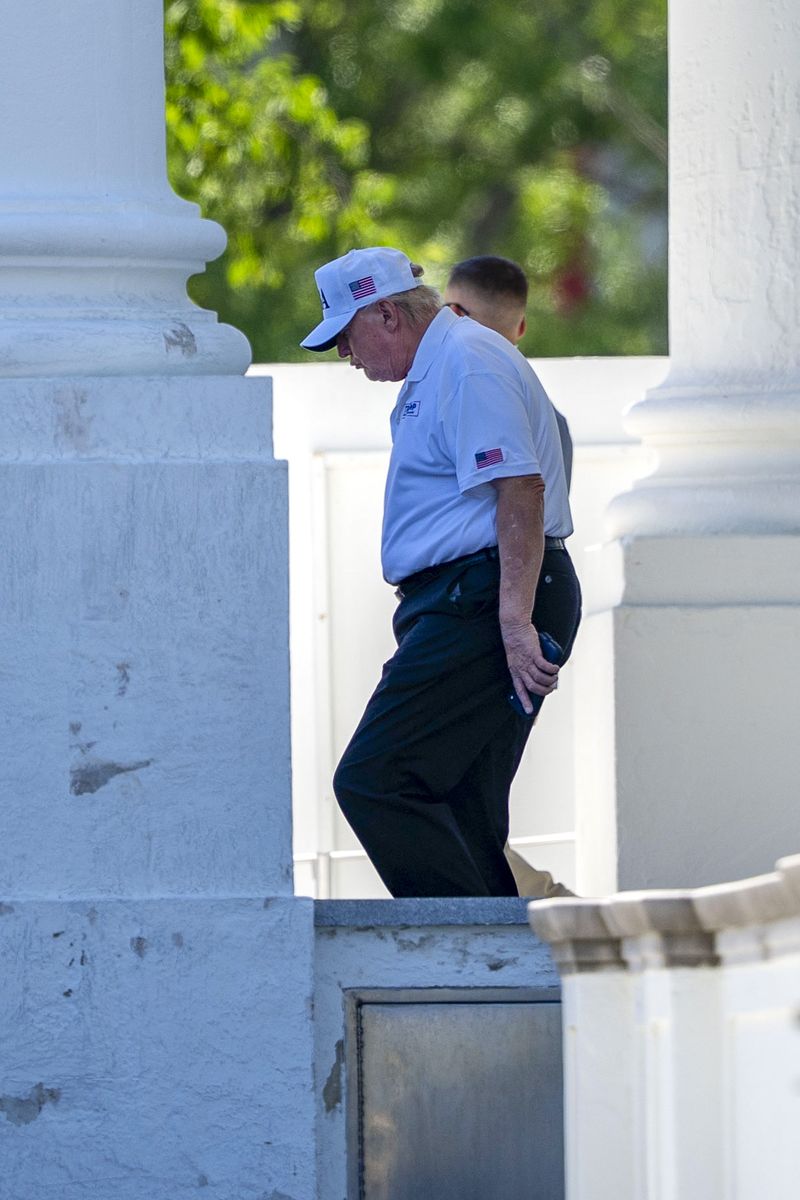
The urgency of Donald Trump, who must also calm surging global oil prices and domestic public sentiment, appears to have been reflected in the talks, leading him to accept the last-resort option of remote electronic signing instead of an in-person ceremony. For now, the immediate crisis has been eased by opening the Strait of Hormuz and giving Iran some economic breathing room, but key issues such as how to handle highly enriched uranium (HEU) have been pushed back by 60 days, leaving the agreement as a temporary ceasefire with a potential flashpoint still unresolved. Uncertainty remains, however, because Iran has not yet confirmed the final signing time. ■ Why the impatient Trump chose electronic signing The most notable point in this round of negotiations is the signing method.
According to Axios and other U. S. media on the 13th local time, the original plan was for U. S.
Vice President JD Vance and Mohammad Bagher Ghalibaf, Speaker of the Parliament of Iran, to meet in Geneva, Switzerland, for an in-person signing. That plan was later changed at the last minute to a video conference and electronic signing on the 14th. On the surface, the reason is scheduling. Trump is set to leave on the 15th for the Group of Seven (G7) summit in France, and it has long been a convention in U.
S. politics for the vice president to remain in the country during a presidential overseas trip. But diplomats see a deeper meaning: securing the deal itself has become more important than the form it takes. Trump has repeatedly criticized the 2015 Iran nuclear deal, the Joint Comprehensive Plan of Action (JCPOA), which he withdrew from, and has promised a stronger agreement.
But the current memorandum under discussion is closer to a political framework for restarting nuclear talks than to a completed denuclearization deal. Trump's emphasis on immediately reopening the Strait of Hormuz before denuclearization in his post announcing the signing also fits that context. Rising international oil prices and energy supply concerns after the war have increased pressure on the U.
S. economy as well. The Strait of Hormuz is a strategic chokepoint through which about 20% of the world's seaborne crude oil trade and about 25% of liquefied natural gas (LNG) shipments pass.
The International Energy Agency (IEA) recently warned that if the blockade drags on, the global oil market could enter the 'red zone,' or danger stage. In other words, stabilizing oil prices and restoring normal traffic through the strait have become more urgent than the nuclear issue itself. In the process, the United States appears to have chosen a more realistic compromise than its initial demands.
Washington had insisted on the immediate removal of HEU from the country, the dismantling of nuclear facilities, and strict international verification, but those issues remain on the agenda for follow-up negotiations in the current deal. ■ A war that never began? 'Let's just take a two-month break' If the currently known agreement is signed, the United States could move one step closer to its goals of reopening the Strait of Hormuz and stabilizing global oil prices. Islamic Republic of Iran could also ease some of its economic pressure by securing the possibility of limited sanctions relief and broader access to frozen assets.
For Iran, which has suffered from severe foreign exchange shortages and power shortages amid prolonged war and sanctions, that alone would be meaningful. The problem is that the hardest issues have all been pushed back. Iran holds uranium enriched to 60%, just below weapons-grade level.
The United States wants it removed from the country or destroyed, but Iran has insisted that it remain under management on its own territory. The scope of inspections by the International Atomic Energy Agency (IAEA) and the verification method are also major points of disagreement. Trump said, "We will secure the nuclear dust at the right time, dilute it, and destroy it.
" He had previously insisted on removing it to the United States, but later shifted to saying it could be destroyed in Iran. The success or failure of this agreement will depend on what kind of denuclearization roadmap is prepared over the next 60 days. Another variable is Israel.
Prime Minister Benjamin Netanyahu is concerned that a ceasefire is being pursued before Iran's nuclear capabilities are fully eliminated. As the U. S.
-Iran ceasefire talks have gained momentum, Israel has recently intensified its offensive against Lebanon and taken independent action.
-Iran ceasefire talks have gained momentum, Israel has recently intensified its offensive against Lebanon and taken independent action.
[email protected] Kim Kyung-min Reporter