G7 Gathers for the First Time Since the Iran War, as It Seeks to Mend Fences with Trump and Clean Up the Fallout
- Input
- 2026-06-14 18:17:28
- Updated
- 2026-06-14 18:17:28
The New York Post and other foreign media outlets, citing senior U.S. government officials, reported on the 13th local time that "if progress is made on a deal with Iran, there is a lot that G7 member countries can do." The officials said, "Iran will open the Strait of Hormuz, and it must be kept open without tolls," adding, "If Iran does that, we will also lift the naval blockade on Iran." They continued, "Once the strait is open, the United States will actively move to clear mines," and said, "If G7 members can take part, it will help restore normal conditions as quickly as possible."
Trump also stressed in a phone interview with the Italian daily Corriere della Sera on the 12th that "European allies could be very helpful after a peace agreement with Iran."
An official from the Élysée Palace, the host office of the French president, also placed priority on consultations over Middle East issues, saying, "The first session will be an opportunity to see whether we can set common goals with President Trump, especially on Middle East issues." The official added that "the key issue is the reopening of the Strait of Hormuz." The official said, "We want to deploy a maritime coalition and resume navigation through the Strait of Hormuz so that Iran and the United States can continue negotiations on substantive issues." France, together with the United Kingdom, is leading a multinational initiative to ensure freedom of navigation in the Strait of Hormuz after the Iran War.
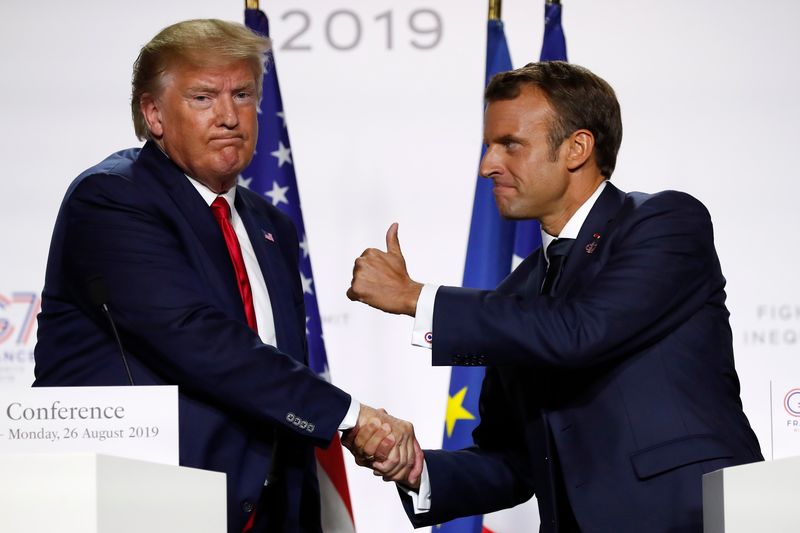
The meeting carries particular weight because it is the first to be held since the outbreak of the Iran War. The lineup of participants also underscores the character of the summit. In addition to the leaders of the seven member countries — the United States, the United Kingdom, France, Germany, Italy, Japan and Canada — and the European Union (EU) leadership, many Middle Eastern countries have been invited. President Lee Jae-myung of South Korea, as well as the leaders of Brazil, India and Kenya, were also invited. Besides his meeting with French President Emmanuel Macron, Trump is expected to hold bilateral talks with the leaders of some invited countries, including the United Arab Emirates (UAE), Qatar and Egypt.
Since the United States and Europe have clashed over military support for the US since the Iran War broke out in late February, the summit is also expected to serve as an important diplomatic stage to test Western unity. While solutions to the Middle East war will be the top agenda item, discussions will also cover key mineral supply chains that are heavily dependent on China, ways to address global economic imbalances and issues related to Artificial Intelligence (AI).
[email protected] Yoon Jae-joon Reporter