Ahn Gyu-back: "I Will Recommend a Target Year for OPCON Transfer to the Presidents of South Korea and the United States by the End of This Year"
- Input
- 2026-06-14 13:32:12
- Updated
- 2026-06-14 13:32:12
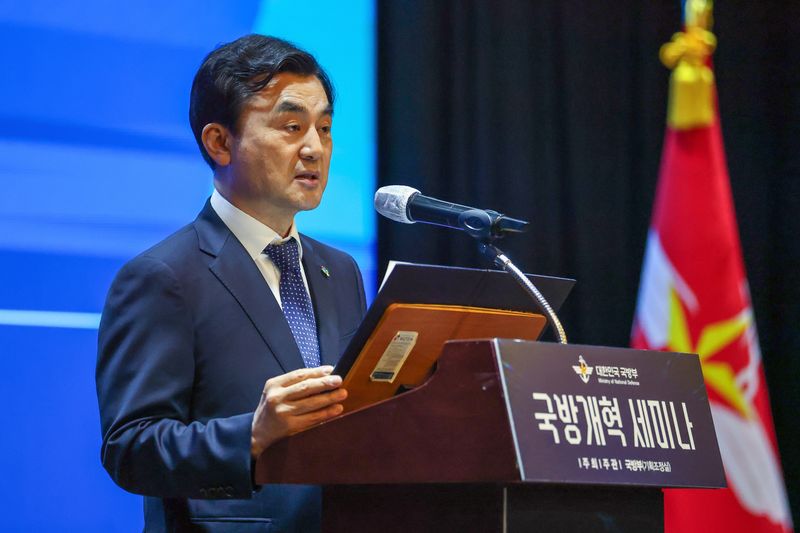
The Ministry of National Defense is pushing a roadmap to complete the transfer by 2028, the final year of the Trump administration, after finishing this year's second-stage verification, Full Operational Capability (FOC), and then moving on to the final third-stage assessment, Full Mission Capability (FMC).
Appearing on KBS Sunday Diagnosis Live on the 14th, Ahn said, "The Full Operational Capability (FOC) verification will be discussed with the U.S. defense secretary at the Security Consultative Meeting (SCM) in November this year," adding, "Based on that, we will make a recommendation to the presidents of both countries." He added, "Then we will determine the X-year, or target year, for restoring OPCON."
The Lee Jae Myung administration has been pursuing OPCON transfer within its term, by 2030.
When asked about differences in views between South Korea and the United States over the timing of the OPCON transfer, he acknowledged the disagreement, saying, "There can be different views." However, Ahn stressed, "This is the time when we need the capability to narrow those differences." He added, "In a battlefield that changes day by day, where new weapons appear the next day after today, conditions are something like Baeknyeonhacheong, meaning it is extremely difficult for something to be achieved no matter how much time passes."
He also emphasized, "South Korea and the United States promised to restore OPCON under conditions, and we have faithfully assessed those conditions accordingly. I believe we should discuss those matters after OPCON is restored."
Regarding South Korea's nuclear-powered submarine project, being promoted under the name of the Jangbogo N Project, he said the goal is to build the first vessel in the mid-2030s at a brisk pace. Earlier, the Lee Jae Myung administration said the launch ceremony for the first nuclear-powered submarine would likely take place around 2035, near the end of the next administration's term. It also said the submarine would be fully deployed before 2040, near the end of the term of the administration after that.
Ahn said, "South Korea has all the necessary conditions, including submarine and nuclear technology," adding, "The only thing we lack is nuclear fuel, and we plan to seek U.S. cooperation and support for low-enriched uranium below 20 percent."
When asked whether domestic construction of the nuclear-powered submarine had been agreed with the United States, he said, "It is not yet an agreement," but added, "Building it in another country would be less efficient in terms of cost and technology. Our consistent position is that it must be built at home with our own technology, and the U.S. is also in the process of understanding that." The Ministry of National Defense is pushing ahead with the nuclear-powered submarine program as a national industrial development project spanning more than 40 years, linking shipbuilding, nuclear energy and defense industries.
[email protected] Kim Kyung-soo Reporter