KEF Says Minimum Wage Should Be Applied Differently by Industry, Citing Hospitality and Restaurants' Inability to Bear the Cost
- Input
- 2026-06-14 12:38:38
- Updated
- 2026-06-14 12:38:38
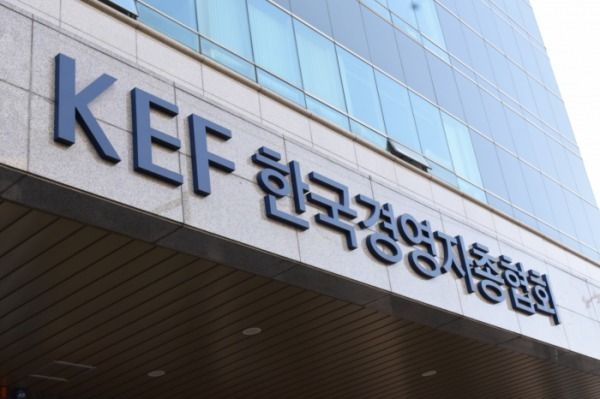
[Financial News] Korea Enterprises Federation (KEF) said on the 14th that, as the minimum wage has risen sharply, it believes the wage should be applied differently by industry next year.
In a report released that day titled 'The Need for and Implications of Applying the Minimum Wage Differently by Industry,' KEF said the minimum wage has climbed steeply, but some sectors, including hospitality and restaurants, have a high share of workers earning less than the minimum wage. It argued that the current minimum wage is out of step with employers' ability to pay.
The minimum wage, which stood at 1,865 won in 2001, will rise to 10,030 won in 2025, a 437.8% increase. That is 5.7 times the inflation rate of 77.4% over the same period and 2.5 times the nominal wage growth rate of 174.7%.
KEF noted that the labor market's acceptance of the current level has weakened significantly because some industries cannot absorb such a minimum wage.
As evidence, KEF pointed to the sharp rise in the ratio of the minimum wage to median wages and in the share of workers earning below the minimum wage.
The ratio of the minimum wage to median wages reached 87.1% in hospitality and restaurants, while it was in the 40% range in finance and insurance. KEF said the Organisation for Economic Co-operation and Development (OECD) and the International Monetary Fund (IMF) have noted that if the minimum wage is too high relative to median wages, it can have negative effects such as job losses.
The share of workers earning less than the legal minimum wage also varied widely by industry.
The rate was relatively low at 3.7% in manufacturing and 6.1% in finance and insurance, but it reached 31.6% in hospitality and restaurants. In hospitality and restaurants, the below-minimum-wage rate jumped from 6.4% in 2001 to 31.6% in 2025.
KEF said major advanced economies already apply minimum wages differently based on various criteria, and argued that South Korea also needs industry-specific application to improve acceptance of the system.
Among OECD member countries, major advanced economies and industrial competitors, including the United States, Japan and France, already apply minimum wages differently by region, industry, age and skill level rather than using a single nationwide wage.
KEF said Switzerland sets a lower minimum wage for agriculture and floriculture than the general minimum wage, while some U.S. states operate state minimum wages below the federal minimum wage.
Ha Sang-woo, a director at KEF, said, "Applying the same minimum wage uniformly to all industries does not fully reflect reality when payment capacity and productivity differ greatly by sector." He added, "For industries where even the current minimum wage is clearly difficult to bear, differentiated application is needed to improve acceptance of the system on the ground."
[email protected] Kim Hak-jae Reporter