[Exclusive] Election watchdog studied only three areas where early voting was strong... Did it trigger a ballot paper shortage?
- Input
- 2026-06-14 13:24:39
- Updated
- 2026-06-14 13:24:39
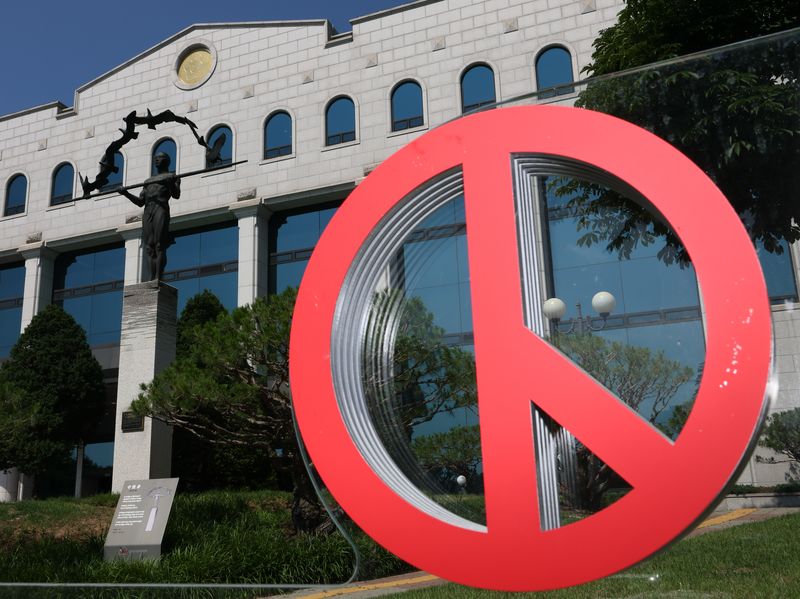
[Financial News] It has been confirmed that the National Election Commission (NEC), while commissioning a research project to improve election administration under the banner of 'blocking allegations of election fraud,' actually conducted field research in only three early-voting-heavy areas. The final report also included a plan to reduce ballot paper printing, a measure that was not found in the interim report. Questions are being raised about the validity of the process used to reach the study's conclusions.
According to the project plan and interim report for the 'Measures to Improve Election Procedures and Administration' study, which Financial News obtained on the 12th through the office of People Power Party lawmaker Kim Eun-hye and which was commissioned by the NEC and carried out by KIPA, the research team held in-depth interviews on site at only three locations: the election offices in Dobong District and Gangseo District in Seoul, and Bucheon in Gyeonggi Province. These areas are traditionally considered strongholds for the ruling bloc and places with a high share of early voting.
The opinions gathered also focused on the workload of early voting and the need to streamline procedures. Rather than reviewing the election management system nationwide, the study appears to have placed more weight on identifying difficulties in early voting operations.
In fact, the plan and reports mainly covered discussions on mail handling for early voting, management of observers, aging equipment, adjustments to early voting hours, and ways to improve work systems.
During the in-depth interviews, comments were made such as, "Since the introduction of early voting, the volume of mail has increased exponentially, and when staff have to scan barcodes one by one, they sometimes end up working through the night."
By contrast, it has not been confirmed whether the study examined issues that current voters have pointed to as causes of 'poor elections,' such as managing ballot paper demand on election day, allocating supplies by polling station, or securing additional stock in emergencies. Songpa District and Gangnam District, where demand is concentrated on election day, were also excluded from the survey.
Based on this, the final report on improving election procedures explicitly stated that ballot paper printing should be reduced further. The rationale was that many ballots are discarded even though printing had already been set at about 70 percent of the number of eligible voters for presidential elections and about 60 percent for local elections.
The NEC then began adjusting its ballot paper printing standards in August last year. A task force made up of NEC staff drew up a plan to lower the minimum printing threshold to 50 percent of eligible voters, and the proposal was finalized by the secretary-general at the end of last year.
Politicians and academics are calling for a full investigation into how the commission pushed ahead with reducing ballot paper printing nationwide based on research conducted in only a few areas.
Kim Eun-hye criticized the move, saying, "The fact that the basis for reducing ballot papers was designed around areas where early voting is strong proves that the study lacked objectivity and validity from the outset." She added, "The erosion of voting rights was already a disaster waiting to happen."
She went on to say, "What was done under the pretext of eliminating poor voting ended up producing the worst form of poor voting," and stressed that "this only makes clearer why the NEC needs a remedy at the level of dismantlement."
Hyun Jae-ho, a professor at the Institute for Peace and Democracy Studies, Korea University, said, "If this is a nationwide study, a fair assessment is only possible when the sample includes areas with high early-voting turnout, low turnout, and moderate turnout." He added, "It is possible that the study failed to fully capture situations in which voters concentrate at specific polling stations on election day, or issues involving reserve ballot stock and distribution."
[email protected] Kim Ye-ji Park Hyun-sung Reporter