SpaceX's Record-Breaking IPO Lists on NASDAQ, Breaks the $2 Trillion Market Cap Barrier and Ushers in Musk's 'Trillionaire' Era
- Input
- 2026-06-13 10:41:27
- Updated
- 2026-06-13 10:41:27
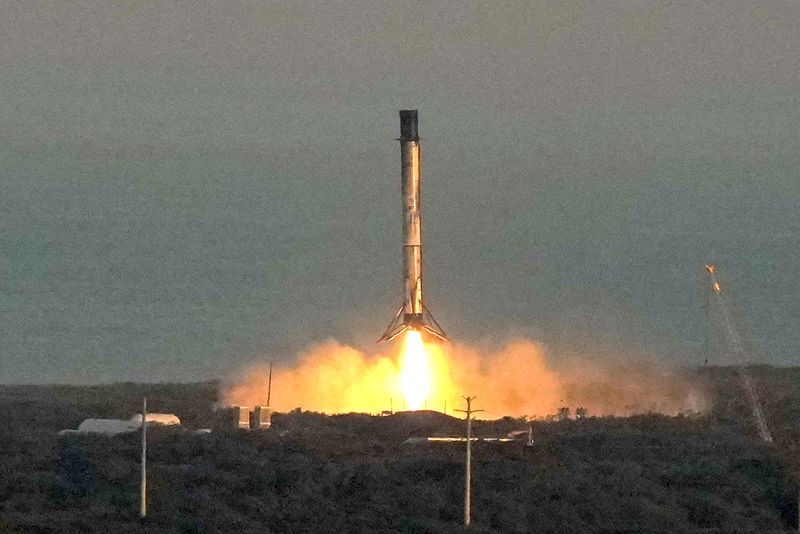
Through this offering, SpaceX raised as much as $75 billion. That is nearly three times the previous record for the largest IPO in history, set by Saudi Aramco in 2019 at $25.6 billion. Based on the closing price, its market capitalization reached $2.1 trillion, instantly lifting it to sixth place among U.S. listed companies, behind NVIDIA, Alphabet Inc., Apple, Microsoft, and Amazon.com, Inc. With the surge in his stake value after the listing, major shareholder Elon Musk has become the first person in human history to surpass $1 trillion in total assets, entering the ranks of a 'trillionaire.'■ "Hidden weakness behind the dazzling rally"... The financial reality of a $41.3 billion cumulative deficitHowever, the capital market is not cheering without reservation. The financial results in SpaceX's prospectus (S-1), which deserve close attention, still show the company trapped in a deep loss-making pit. According to the company's disclosure, its cumulative deficit since its founding in 2002 is reported to have reached nearly $41.3 billion.
Last year's total revenue came to $18.7 billion, supported by growth in Starlink, its low-Earth-orbit satellite internet service. But aggressive investment in Starship rocket development led to an annual net loss of $4.9 billion. In the first quarter of this year, it also posted a quarterly loss of $4.28 billion, showing that the cost of advancing launch vehicle recovery technology is weighing on its finances. Starlink subscribers, which drive 60% to 70% of current revenue and have surpassed 10 million users, are serving as the company's only cash cow. Even so, critics say that is still not enough to cover the tens of trillions of won required each year for space infrastructure investment.■ Wall Street scholars warn of a "30% bubble" vs. IB industry calls it an "irreplaceable innovation engine"Because of this financial Achilles' heel, local experts are sharply divided in their assessments. Aswath Damodaran, a professor at NYU Stern School of Business and a world-renowned valuation scholar, said in interviews with local media including CNBC that "SpaceX's current offering price has pulled forward too much of its future long-term value, and there is at least a 30% bubble," adding that "a fair enterprise value would be around $1.2 trillion." Nicholas Owens, an analyst at Morningstar, Inc., also said that "the intrinsic value of the launch and Starlink businesses is around $780 billion" and warned that "the current share price reflects fandom for Elon Musk rather than fundamentals, so short-term volatility should be watched with extreme caution."
By contrast, the investment banking industry takes a more optimistic view. David George, a partner at Andreessen Horowitz, said that "SpaceX holds a monopoly on space infrastructure that no private company in human history has ever successfully achieved" and argued that "there is no competitor on Earth close to Starship's technology, which recovers a football-field-sized launch vehicle with robotic arms."
Some experts also say that the success or failure of Musk's planned deployment of a 'space AI data center' in orbit starting in 2028, along with the construction of Texas semiconductor factory 'TeraFab,' will be the only key factors capable of easing concerns over the company's lofty valuation.
[email protected] Lee Jong-yoon Reporter