"It's a Good Place to Live Here" ... A Reporter Spent 8 Hours Sleeping at the Airport and Met the People There [Recorder of the Low Places]
- Input
- 2026-06-14 07:00:00
- Updated
- 2026-06-14 07:00:00
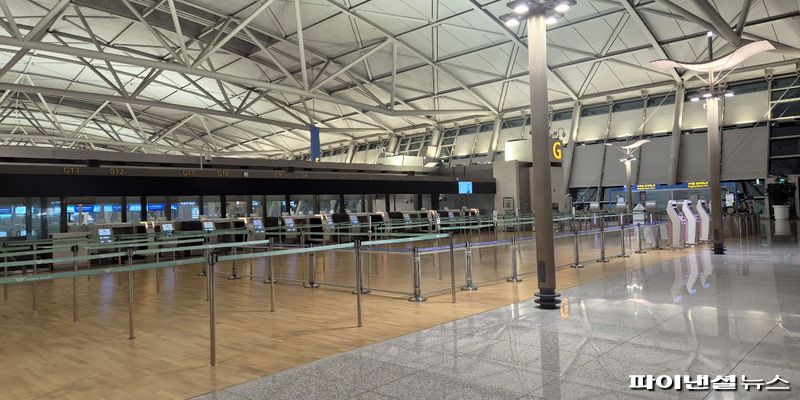
Some people stay at the airport to wait for a flight, while others remain there because they have nowhere else to go. Even when they sit on the same long bench, one side waits for departure time, while the other waits for the night to pass. The reporter stayed at Incheon International Airport from late at night until morning to see how travelers and homeless people share the same space.
[The Financial News] "Where are you traveling to?" "No, I'm just resting for a bit before I go."
At 10 p.m. on the 6th, in the departure hall of Incheon International Airport, the reporter stayed at the airport for about eight hours until 6 a.m. on the 7th to observe the lives of long-term homeless people who spend the night inside the airport. Even after some check-in counters closed, people remained on long benches and in front of shuttered stores, with luggage carts, blankets and plastic bags beside them. The reporter also lay down on one of the benches and spent the night there, meeting both homeless people and travelers.
People Left on the Long Benches in the Departure Hall
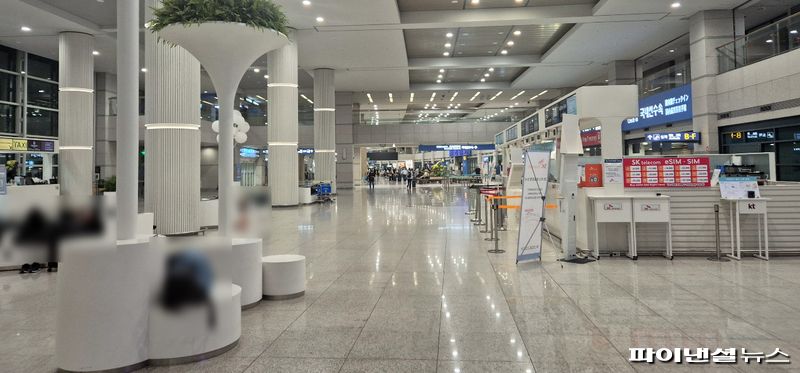
Around 11 p.m., the airport was filled with people staying for different reasons. Passengers waiting for early-morning flights sat on benches with their suitcases beside them. Some citizens were waiting for the first bus or the first Airport Railroad train. The reporter had also already bought a ticket for a ride at 6:30 a.m. on the 7th.
But some people's belongings were different from those of ordinary travelers. In addition to suitcases, their luggage carts carried blankets, plastic bags, cup noodle containers and items that looked like daily necessities. Some had lined up several luggage carts together, while others settled at the end of a corridor or on benches near the wall.
The reporter also lay down on a bench at one side of the airport and tried to sleep. The bench was hard, and it was difficult to turn over. Before long, the reporter's back began to hurt. Announcements, the sound of suitcase wheels and cleaning equipment passing by continued until dawn.
An elderly man was lying on the bench opposite. A suitcase and a luggage cart were beside him, along with what looked like a blanket. When asked whether he had been there the whole time, he replied, "I just come and go." When asked where he was going, he said, "I'll move in a bit." When the reporter tried to continue the conversation, he turned his head away.
A Place to Sleep Inside the Airport
People who spend the night at the airport often choose spots close to restrooms and drinking water stations. There were restrooms throughout the departure hall and connecting corridors, and some restrooms also had drinking water stations in front of them. That made it easy to get water and wash out empty cup noodle containers after eating. They might need to use the same container for the next meal.
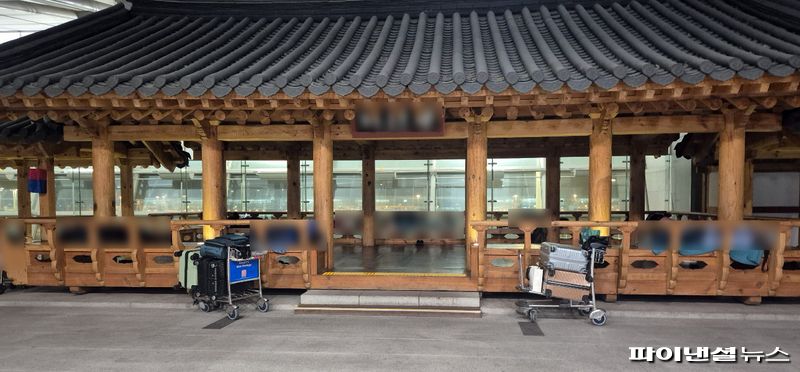
Quiet rest areas with fewer people were also places where long-term stayers gathered. That morning, luggage carts and suitcases were placed around a rest area shaped like a traditional Korean house inside the airport. Some people looked like travelers, but others were staying for long periods with daily necessities loaded onto their carts. The area was less crowded and quieter than the middle of the departure hall, so it was easier to sleep there. It was also less noticeable when organizing belongings.
After midnight, the reporter repeatedly moved between the departure hall, the corridor in front of closed stores, the path leading to the platform, the area around the restrooms and the traditional-style rest area. The person who had been lying on the same bench was still there at 2 a.m. A man pushed his luggage cart to another floor and then returned to a similar area. Movement inside the airport was possible, but the places where people stayed did not stray far from restrooms, drinking water stations and quiet resting areas.
One man was organizing cup noodle containers beside his luggage cart. When asked how he ate, he said, "I just eat on my own, or sometimes I skip it." When asked whether the airport was better than being outside, he gave a short answer: "It's better than being out in the cold."
Another man was asked whether he came to the airport often. He replied, "I'm not here all the time. I come and go." When asked whether the airport was better than being outside, he said, "You can't stay outside when it rains." Most of the long-term stayers the reporter met at the airport did not explain their circumstances in detail. When the questions continued, they either spoke less or moved away.
Luggage Carts That Catch Travelers' Eyes
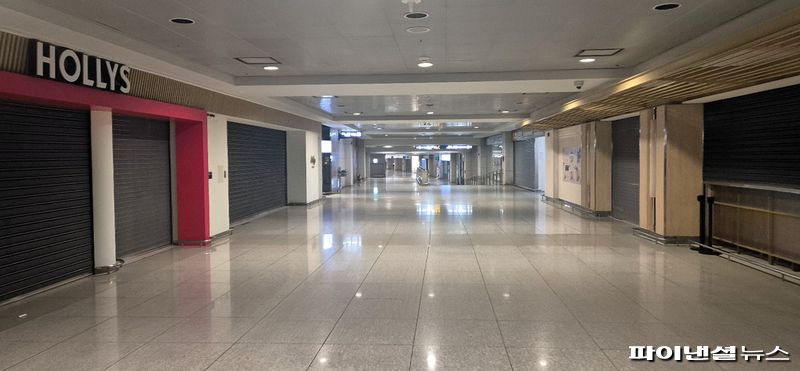
Airport users did not see airport homelessness as simply an inconvenience. While they expressed discomfort about odors and people occupying space, they also reacted cautiously to the circumstances of those who came to the airport because they had nowhere else to go.
A traveler in his 30s who was waiting for an early-morning flight said, "At first, I thought they were just people waiting for check-in." He added, "They had a lot of luggage and stayed in the same spot, so they seemed like someone staying here for a long time." He said, "It's not so much scary as it is distracting," and added, "Still, if they are here because they have nowhere else to go, it's hard to just criticize them."
A citizen in his 50s who was waiting for the first Airport Railroad train said, "The airport is bright at night and has restrooms, so I do think it's better than being outside." He added, "But if there is a lot of luggage in the corridor or if it smells, it can only be uncomfortable for users."
One airport insider, who is familiar with the situation inside the airport, said long-term stayers come there because of heating, cooling and safety. "It's cool in the summer and warm in the winter," he said. "It's cleaner and brighter than Seoul Station or an underpass, so I think that's why people come to the airport."
He added, "Some people are seen for a long time, while others move from place to place." He said, "Some may have lost contact with their families, while others may simply have no money at all. Everyone has a different situation." He continued, "Some people buy food, while others pull their luggage around and change locations."
Between Complaints and Guidance
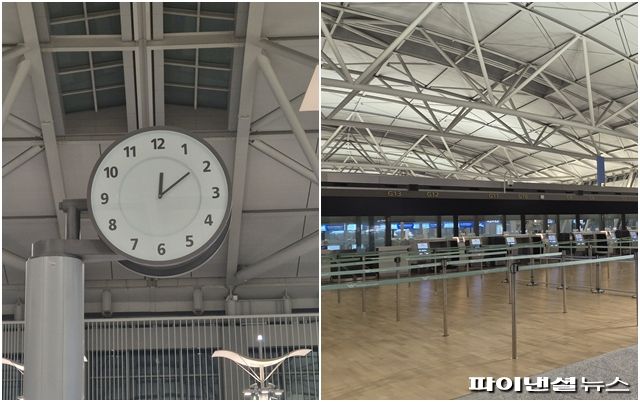
The airport was quiet in the early morning. On one side of the departure hall, passengers waiting for the first flights stood in line with their suitcase handles in hand. While the sound of cleaning equipment moving across the floor and the announcements continued, people lying on long benches folded what looked like blankets or retied their luggage. The airport was returning to being a space for travelers, but some long-term stayers still remained in the same area.
It is not easy for airport staff to deal with these people. They cannot simply be removed from a public facility just because they have stayed too long. The airport is a space anyone can use, and late at night there are still many users waiting for the first train or early flights. From the outside, it is not easy to immediately tell whether someone is a traveler, a citizen taking a temporary rest, or a long-term homeless person.
The problem arises when the stay becomes prolonged and leads to complaints. If several luggage carts are left on one side of a corridor, if a long bench is occupied for too long, or if odors and noise become an issue, the inconvenience spreads to other users.
"If they make a mess or cause a disturbance, we have no choice but to speak to them," said one airport official. "But it is difficult to force them out. Sometimes it leads to complaints, so staff are careful."
The fact that the airport is a space used by foreign travelers also adds pressure on the airport. It is the first place people see after arriving in the country and the last place they stay before leaving. For that reason, if someone is lying in a corridor or if luggage and odor problems become visible over a long period, it can quickly affect the airport's image and trigger complaints from users.
He said, "The airport is a place that looks like the country's first impression, so when someone is lying in the corridor or there is an odor problem, complaints come in." He added, "But the question of where those people should go is a different matter."
"Operating Programs That Support Social Reintegration"
Incheon International Airport Corporation separately tracks long-term homeless people. An airport official said, "We have identified a total of six people across T1 and T2." He explained that this figure is based on people who have stayed for more than two weeks and that the number changes constantly.
The airport said that when it finds homeless people, it encourages them to return home voluntarily or contacts family members and hands them over. If they do not comply, the airport continues on-site guidance and monitoring. If there is damage to facilities, theft or disruptive behavior that affects airport operations, the case is reported to the Airport Police Corps for transfer.
Support for self-reliance is also underway. The airport said it is operating an outreach program in cooperation with Incheon Tomorrow Opening House, a self-reliance shelter run by Incheon Metropolitan City Government, where professional counselors speak with homeless people and support their return to society, including admission to self-reliance centers. The program is carried out twice a month for all homeless people in T1 and T2, with one daytime and one nighttime session each.
We record the stories of real lives in print. Even if the writing is rough, we capture the words gathered on the scene as they are. From alleyways and markets to someone's workplace, the ordinary days we have passed by come back to readers. To receive [Recorder of the Low Places] more conveniently, please subscribe to the reporter page.
[email protected] Han Seung-gon Reporter