"Lowered His Average Price, Yet Still Down 27%"... The Uneasy Feeling of Averaging Down, and Why the Real Loss Can Be Even Bigger [World of Retail Investors]
- Input
- 2026-06-14 06:00:00
- Updated
- 2026-06-14 06:00:00
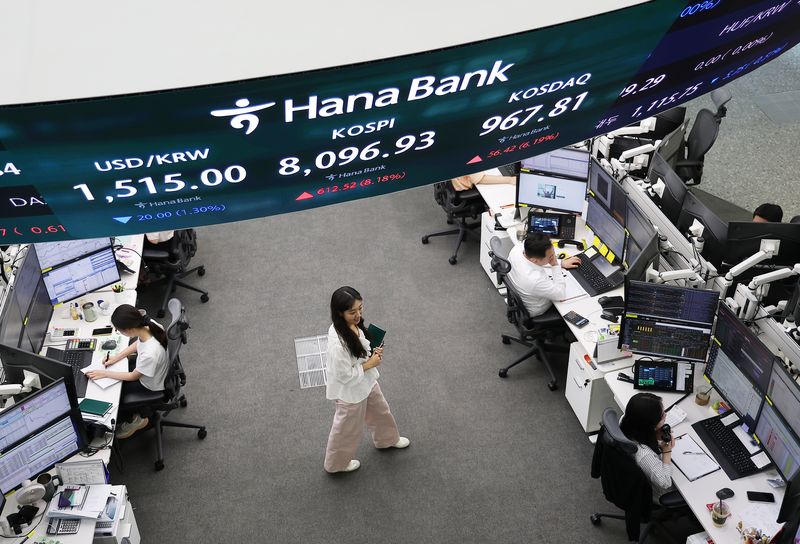
[The Financial News] On the 12th, office worker A, 37, let out a sigh as he stared at his smartphone screen. The KOSPI had suddenly surged more than 7%, triggering a buy-side circuit breaker. LG Electronics, the stock that had been weighing on him, also kept rising and turned red, but his account was still in the negative.
A was a retail investor who had belatedly jumped into LG Electronics in hopes of a so-called "Jensen Huang effect." On the 2nd, when news broke that NVIDIA CEO Jensen Huang would visit South Korea, LG Electronics shares soared intraday to 438,000 won. That same day, A bought more than 100 shares of LG Electronics at around 370,000 won.
But on the day Huang actually set foot in South Korea, the market moved in a completely different direction from what A had expected. Profit-taking orders flooded in, and LG Electronics fell to 226,000 won within 10 days. After seeing a devastating -38.9% loss in his account, A bought 50 more shares in the 210,000-won range, lowering his average price to around 310,000 won.
However, LG Electronics gave back all of its gains on the morning of the 12th and closed slightly lower at 225,500 won. A's return improved sharply from before he averaged down, but it still stood at -27.4%, leaving him with a bitter feeling. "I can't tell whether I should say it helped because I averaged down, or whether I should have avoided averaging down altogether," he said with a wry smile.
The mathematical effect of averaging down and the psychological unease it creates
Mathematically, A's averaging down clearly had an effect. If he had held only the original 100 shares, his loss rate today would have been 37.4%, with a paper loss of 13.85 million won. After averaging down, however, the loss rate fell to 27%, and the loss amount was reduced by 1.075 million won. The conditions for breaking even also changed. Before averaging down, the stock would have had to rise to 370,000 won for him to recover his principal. Now, he would break even if it returned to 316,700 won. In other words, the breakeven point fell by 53,000 won.
Butunlike staged buying, where funds are allocated in a disciplined and planned way, averaging down in a sharp selloff is closer to an impulsive escape.If an investor recklessly increases the position before a bottom has been confirmed, simply to lower the average price, asset volatility can grow exponentially. The process of adding more money to reduce the visible loss and force the average price down for psychological comfort can easily turn intopouring water into a bottomless bucket.
Another worry after averaging down: "When should I sell?"
Another question that follows averaging down is when to sell."Buying is an art, selling is an art"As the old stock market saying goes, deciding when to sell is always the hardest choice. After an unexpected averaging-down move, investors may struggle to decide when to close a losing position and end up delaying the sale again and again.
The desire to recover the principal makes the decision even harder. The mindset of "I have already put money in, so I need to get back to even" can block rational judgment. The breakeven level of 316,700 won begins to function like a target the stock must reach.
If the stock recovers, averaging down can be a useful strategy because it lowers the breakeven point. But investors must also remember that if the stock falls further, the loss becomes even larger.That is why experts consistently say it is important to set a target price and a stop-loss level from the moment of the first purchase, and not to change those rules even after averaging down.d.
I don't want to become someone who keeps saying, "I should have bought, I should have sold, I should have held..." Yet stocks, real estate, and investing all seem to work out for everyone else but me. No matter how much I study, the world of investing remains difficult. If you want to receive[World of Retail Investors]comfortably, please subscribe to the reporter's page.We also welcome tips from retail investors who have investment stories they would like to share.
[email protected] Kim Hee-sun Reporter