Police-Prosecutors Joint Investigation Headquarters Begins Analyzing NEC Seized Materials... Also Conducts Search of Servers
- Input
- 2026-06-12 11:41:15
- Updated
- 2026-06-12 11:41:15
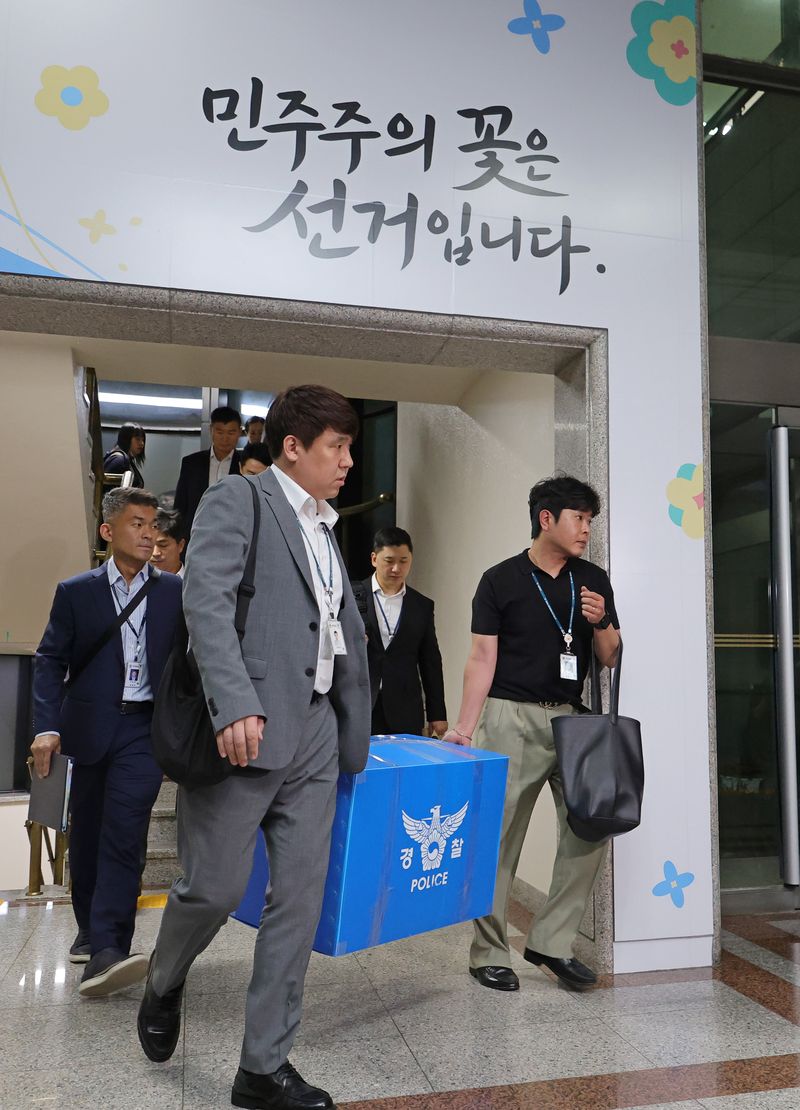
According to legal sources on the 12th, the joint investigation headquarters, which was launched to uncover the truth behind the alleged infringement of voting rights, is organizing meeting minutes, budget documents, and other materials seized the previous day from the NEC and the Seoul Metropolitan City Election Commission, classifying them by target and purpose.
On the 11th, the team searched seven locations from 9 a.m. to around 10 p.m., including the NEC in Gwacheon, the Seoul Metropolitan City Election Commission, and the election commissions in Songpa, Seocho, Gangnam, Gwangjin, and Dongjak districts. The operation involved three prosecutors, about 10 prosecution investigators, and more than 100 police officers.
While searches at most locations have been completed, the search of electronic data stored on the NEC server is still under way. Given the large volume of materials, the joint investigation headquarters plans to proceed with both securing server data and analyzing the seized items already obtained.
The team is reported to have secured ballot printing plans, meeting minutes, budget documents, and files related to the local elections that were prepared during the election process. The ballot records, which include details on storage locations, quantities, and remaining ballots on election day, were also included among the seized materials.
The search warrant reportedly named more than 10 suspects, including former NEC Chairperson Rho Tae-ak, former NEC Secretary-General Heo Cheol-hoon, and the chairpersons and administrative heads of regional election commissions. The charges include violations of the Public Official Election Act, dereliction of duty, and occupational embezzlement and breach of trust.
Based on the materials obtained, the team plans to verify the decision-making process and rationale behind the printing of ballots before the election. In particular, it is expected to focus on why the NEC reduced the number of printed ballots to about 50% of the number of eligible voters, and whether it had anticipated the possibility of shortages in advance.
Another key point of review is the communication exchanged between polling stations and the election commission on election day. Since some polling stations ran short of ballots, forcing voters to wait or preventing them from voting on time, the investigation is also expected to examine whether the NEC's reporting and response system after the shortage was appropriate.
If signs of illegality are found during the analysis of the seized materials, additional compulsory measures may be taken against the officials named as suspects. Summonses for working-level officials at regional election commissions are also expected to take place soon.
[email protected] Choi Seung-han Reporter