[Editorial] Despite the Boom, Employment Falls Sharply; Overcoming K-shaped Growth Is Urgent
- Input
- 2026-06-11 19:31:38
- Updated
- 2026-06-11 19:31:38
According to the Bank of Korea's growth contribution by industry, the computer, electronic and optical equipment sector, which includes semiconductors, grew 12.5% quarter on quarter in the first quarter. That far outpaced the 3.9% growth rate for manufacturing as a whole. Its contribution to growth was also overwhelming. The Bank of Korea said semiconductors accounted for 55% of the increase in Gross Domestic Product (GDP) in the first quarter. In other words, overall growth rose, but the contribution from other industries was limited once semiconductors were excluded. The phrase 'an economy of, by, and for semiconductors' is not an exaggeration.
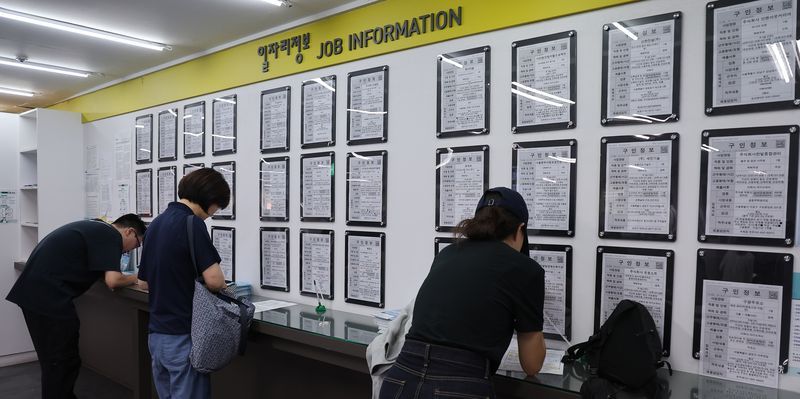
Another problem is that the boom is not translating into jobs. According to the May employment trends released on the 11th, the number of employed people aged 15 and older fell by 40,000 from a year earlier. It was the first decline in 17 months. Youth employment plunged by 255,000, marking the weakest level since the pandemic. Job losses in manufacturing, including autos, have also continued for 23 straight months.
The structural nature of the semiconductor industry is seen as the main reason. Semiconductors are a classic capital-intensive industry. Even when production and exports rise, the effect on employment is limited. Last year, semiconductor production rose 12.8% in the fourth quarter, but wage and salary jobs increased only 1.9%. An analysis by KIET also found that the employment-inducing effect of semiconductors was only about one-third of the manufacturing average.
As a result, the shadow of K-shaped growth is deepening. Driven by the semiconductor boom tied to surging demand for Artificial Intelligence (AI), employees at some companies, such as Samsung Electronics and SK hynix, are enjoying the gains. By contrast, workers in autos, refining and domestic-demand manufacturing are struggling under the burden of high oil prices, a weak won and elevated inflation. The gap between industries is widening into an income gap. According to the National Data Office's Household Income and Expenditure Survey for the first quarter, the income gap between the top 20% and bottom 20% of households widened to its largest level in six years. If performance bonuses in the semiconductor sector begin to flow in earnest, distribution indicators could deteriorate further.
Now is the time to focus on the quality of growth, not just its pace. The decline in employment should not be blamed solely on external factors such as geopolitical instability in the Middle East or cyclical swings in the economy. Temporary shocks must not harden into structural unemployment. Policymakers should encourage greater investment by suppliers to major semiconductor firms and create policy links so that tax revenue and added value generated in the semiconductor industry can flow into domestic-demand and employment-linked sectors. Only when the warmth generated by semiconductors spreads across the broader economy can it truly be called growth. The next task for the Korean economy is not to raise the growth rate, but to overcome K-shaped growth.