Aptos: "Financial infrastructure must shift to cross-border blockchain" [Tokenomy Korea 2026]
- Input
- 2026-06-11 15:08:27
- Updated
- 2026-06-11 15:08:27
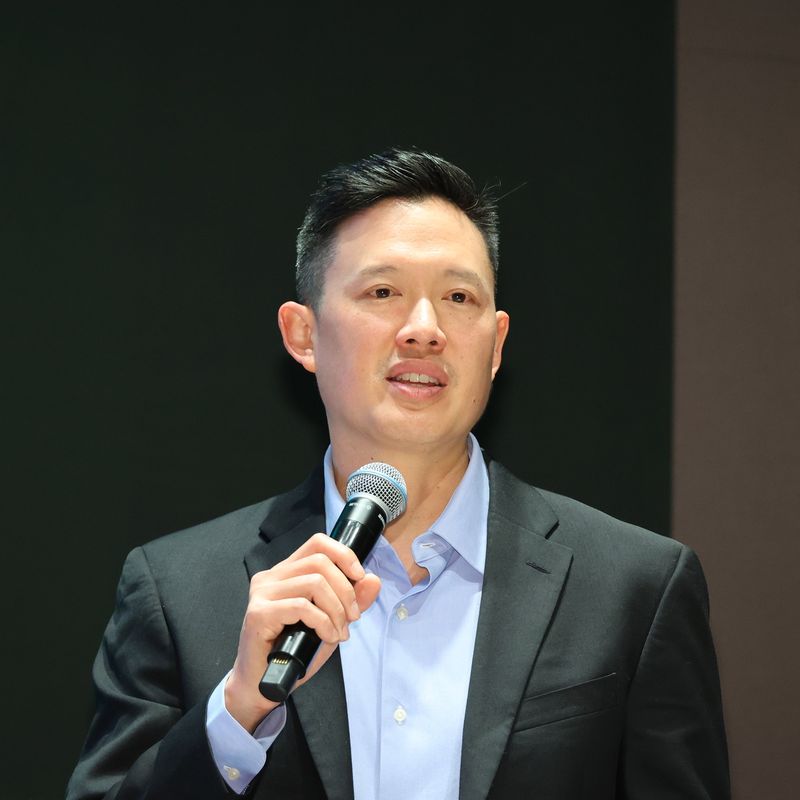
[Financial News]"Imagine a world where the Korea Exchange, NASDAQ, Hong Kong Exchanges and Clearing Limited, and the London Stock Exchange are all connected. That is the vision of a globally integrated financial market made possible by blockchain."
At the Tokenomy Korea 2026 lecture co-hosted by Financial News and the Digital Asset eXchange Alliance (DAXA) at KRX on the 11th, Avery Ching, co-founder and CEO of Aptos Labs, stressed that "financial infrastructure must become more trustworthy and secure to handle trillions of dollars in global capital flows."
Ching opened his lecture by recalling his experience leading Meta Platforms' digital currency project. He said that while building a large-scale financial network involving global companies such as Uber, Mastercard, and Visa, he realized that financial infrastructure for billions of users would require a technology stack fundamentally different from existing systems.
He pointed to inefficiency in time and cost as the main limitation of the current financial system. "Financial markets operate 24/7 on a global basis, but banking systems in each country close on weekends and at night," he said. "Time zone differences between countries delay capital movement and create unnecessary settlement risks."
The U.S. securities market shortened its post-trade settlement cycle from two days, or T+2, to one day, or T+1, starting in 2024. Even so, Ching said restrictions remain on cross-border fund transfers during weekends and overnight hours. "If capital is tied up in a waiting state, customers and companies lose potential returns," he said. "In financial structures that go through multiple intermediaries, costs and delays arise at every step."
As a solution to these problems, Aptos Labs proposed blockchain-based financial infrastructure. "If fragmented financial networks are connected into a single infrastructure, assets and funds can move quickly and securely," he said. "But that requires not only technology, but also regulation, security, and investor protection measures."
Ching identified stablecoins and Real-World Assets (RWA) tokenization as key use cases for future blockchain-based financial infrastructure. Stablecoins are virtual assets linked to the value of fiat currencies such as the U.S. dollar and are used for payments, remittances, and transaction settlement. "The stablecoin market has already surpassed $200 billion, and its use will expand further as institutional demand grows," he said.
elikim@fnnews.com Kim Mi-hee Reporter